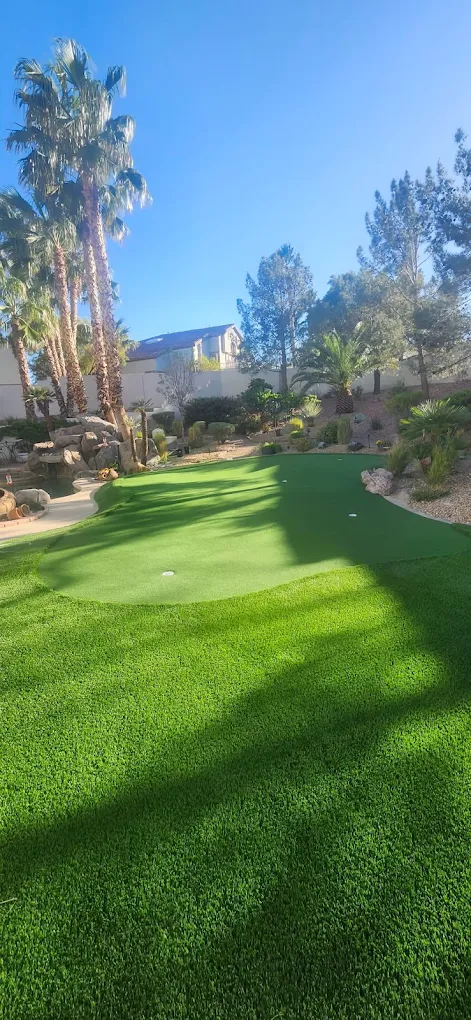
Why Artificial Turf Fades Faster in Henderson
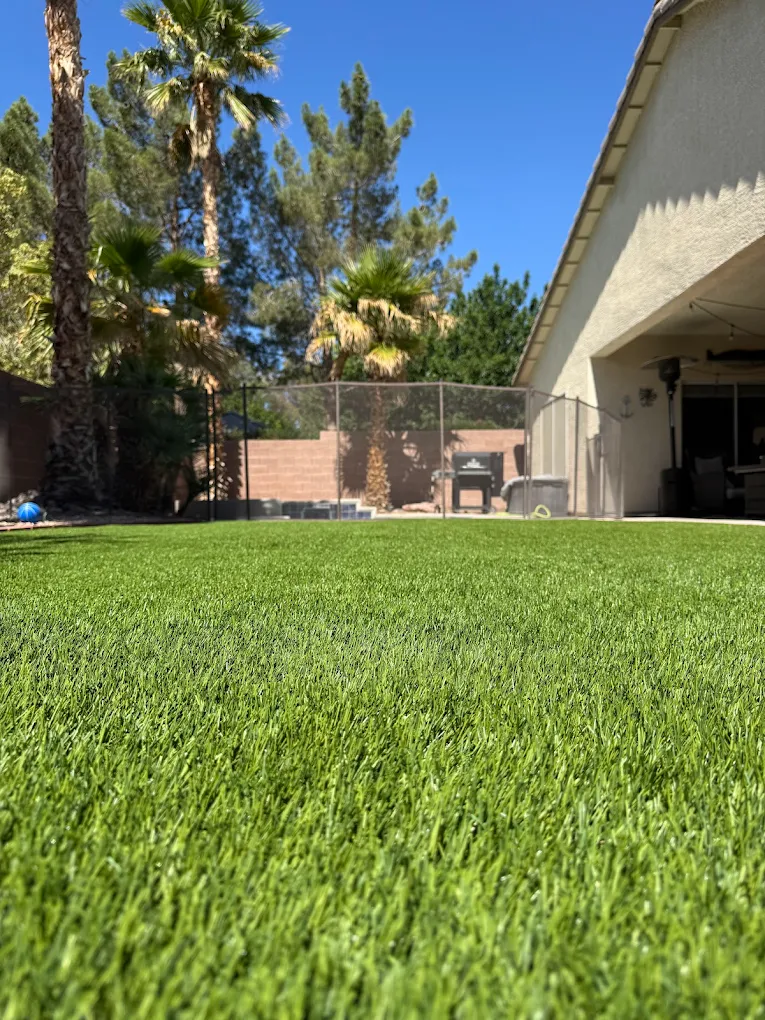
Artificial turf fading in Henderson is driven primarily by the extreme UV radiation that bombards the valley for nearly 300 days each year. At UV index readings consistently above 10 during summer months, the polymer chains in polyethylene and polypropylene turf fibers break down through photodegradation, causing the pigments embedded in those polymers to lose their color intensity. This process happens everywhere artificial turf is installed, but the rate in Henderson is roughly 2 to 3 times faster than in temperate or cloudy climates, making fade prevention a critical concern for homeowners across Summerlin, Henderson, and Paradise.
Heat compounds the UV problem big time. When turf surface temperatures reach 150 to 170 degrees during Henderson summers, the elevated temperature accelerates the chemical degradation that UV radiation initiates. The combination of intense UV and extreme heat creates a synergistic effect where the total fading exceeds what either factor would produce alone. This is why even turf products with good UV stabilizer ratings can fade noticeably in Henderson within 3 to 5 years if no additional protective measures are taken.
Hard water mineral deposits and embedded desert dust also contribute to the appearance of fading, though these are technically surface issues rather than true pigment degradation. A layer of white calcium scale or tan desert dust over turf fibers mutes the green color and creates the impression of more fading than has actually occurred. Distinguishing between true UV fading and surface-condition dulling is important because the remedies are completely different.
Choosing Fade-Resistant Turf Products
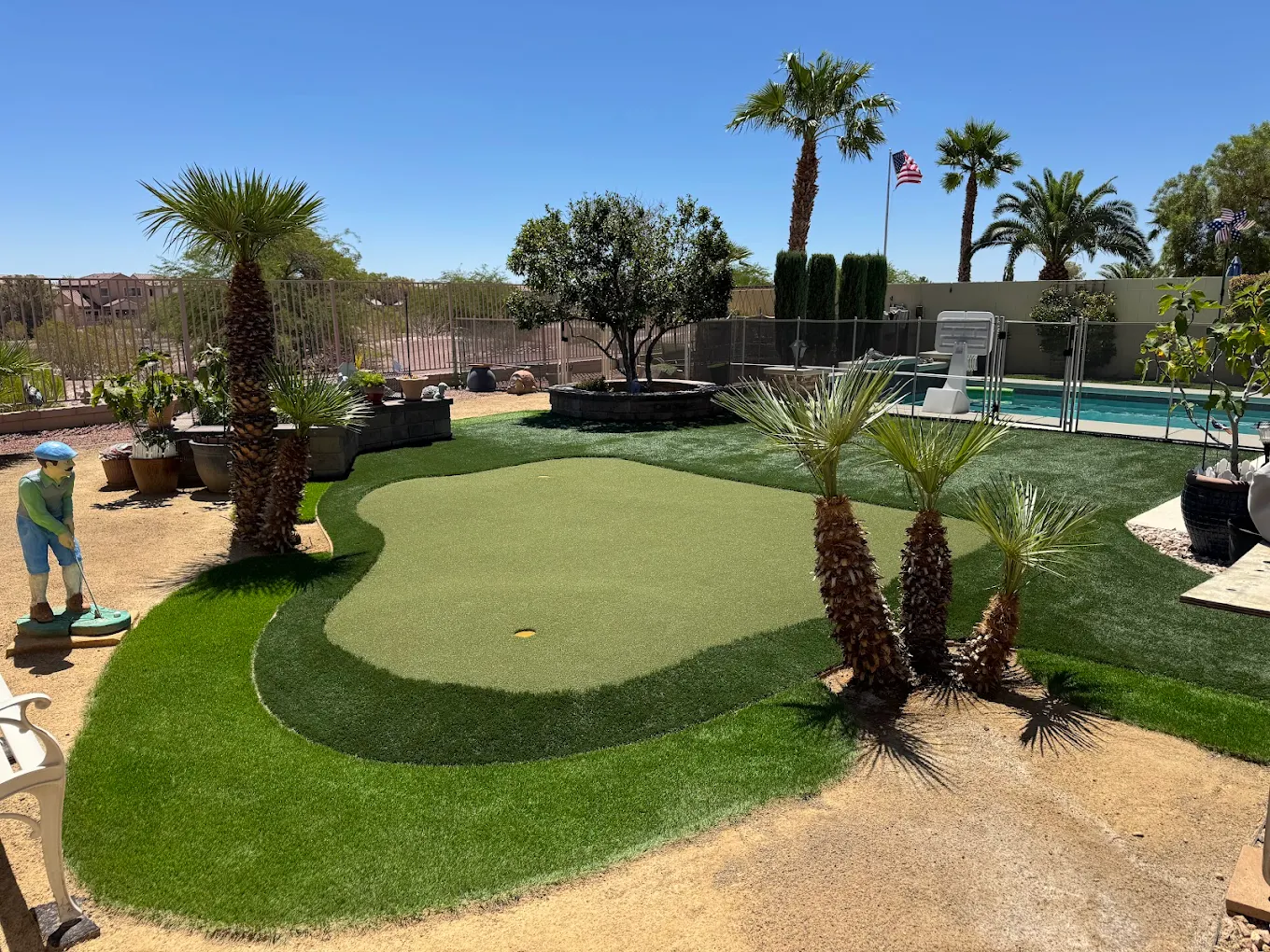
The most impactful fade prevention decision you can make happens before installation, when you select the turf product. Premium turf products designed for desert markets incorporate higher concentrations of UV stabilizers, use fade-resistant pigment systems, and employ polymer formulations engineered to resist photodegradation. These products cost 15 to 30 percent more per square foot than standard options but deliver 3 to 5 additional years of acceptable color performance in Henderson conditions.
Look for products that specify their UV testing hours and the testing standard used. Products tested to 5,000 hours or more under ASTM G154 or G155 testing protocols have demonstrated meaningful UV resistance under accelerated aging conditions. For the extreme Henderson environment in neighborhoods like Centennial Hills and Green Valley, products with 8,000 or more tested hours provide the best long-term fade resistance. Ask your installer for warranty documentation that specifically covers color retention as a separate warranty from structural integrity.
- Select turf with 8,000+ hours of tested UV resistance for Henderson installations
- Choose multi-toned color blends that mask gradual fading better than solid colors
- Verify the warranty specifically covers color retention, not just structural integrity
- Opt for lighter olive and sage tones that show fading less dramatically than deep greens
- Confirm the product was tested under ASTM G154 or G155 accelerated weathering standards
Using Shade to Prevent Fading
Shade is the single most effective ongoing fade prevention measure for existing turf installations. A shade structure that blocks direct UV radiation during peak hours between 10 AM and 4 PM can reduce fading rates by 50 to 70 percent in the covered area. For homeowners in Enterprise and Southern Highlands who have already installed turf and are noticing early signs of fading, adding a shade structure over the most visible portions of the turf is often the best investment for extending the remaining color life.
The shade does not need to be complete to be effective. Even dappled shade from a pergola with spaced slats or filtered shade from a mature tree provides meaningful UV reduction. The key is reducing the cumulative UV dose the turf receives during peak radiation hours. Properties in Spring Valley and Paradise with existing shade from structures, trees, or neighboring buildings should position their highest-quality turf in these naturally protected zones and use more budget-friendly products in fully exposed areas that will fade regardless.
If adding a permanent shade structure is not feasible, portable shade sails that can be deployed during summer and removed during winter provide seasonal UV protection at a fraction of the cost of permanent construction.
Want Us to Handle It Instead?
Get a free quote for your Henderson property. Same-day appointments available.
How Regular Cleaning Preserves Turf Color
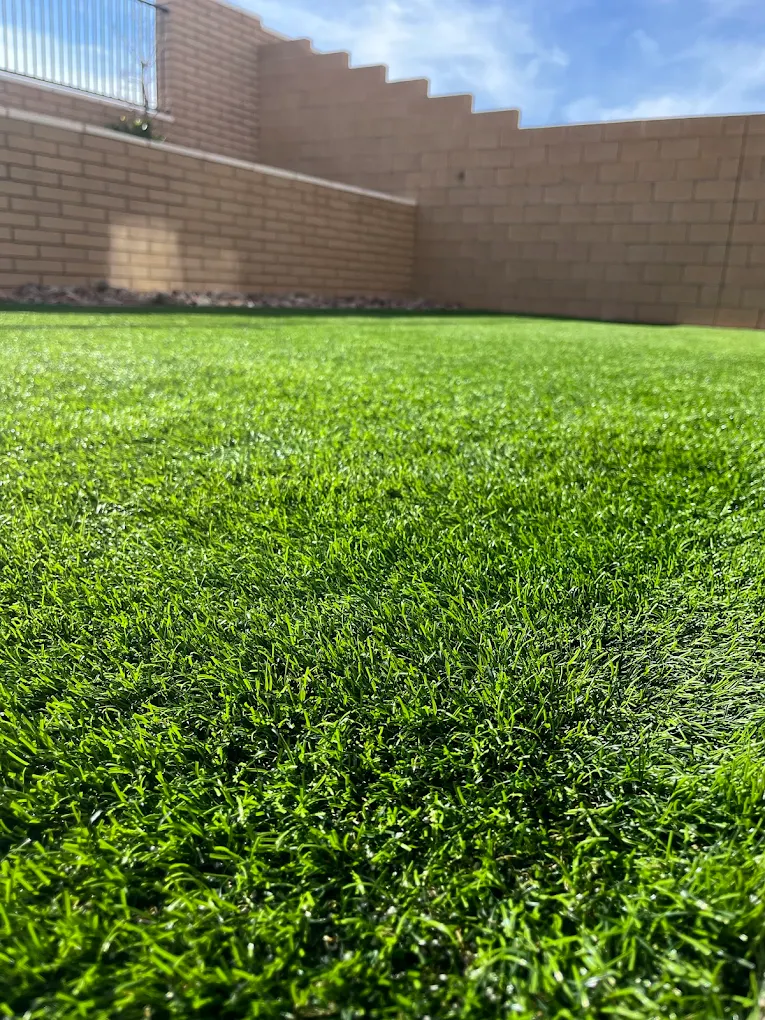
Regular cleaning preserves turf color in two important ways. First, removing surface contaminants like dust, mineral deposits, and organic debris reveals the actual fiber color beneath, often showing that what appeared to be fading was partially surface dulling. Second, clean turf fibers reflect UV radiation more effectively than dirty ones, because contaminant layers absorb and re-emit radiation in patterns that increase fiber exposure to damaging wavelengths.
A monthly cleaning routine focused on color preservation should include a thorough rinse to remove surface dust, a vinegar or citric acid treatment to dissolve mineral deposits, and a cross-grain brushing to restore fiber orientation and expose all sides of the fiber to light evenly. This routine takes 30 to 45 minutes for an average yard and provides noticeable color improvement in Henderson and North Henderson installations that have been showing progressive dulling.
Professional deep cleaning every 6 to 12 months goes further by removing embedded contaminants that surface cleaning misses. Professional-grade equipment can extract debris from within the infill layer and from the base of turf fibers where dust and minerals accumulate invisibly. After a professional cleaning, many Henderson homeowners are surprised at how much brighter their turf looks, realizing that a big portion of what they attributed to fading was actually surface contamination.
Preventing Window Reflection Damage
A frequently overlooked cause of accelerated fading in Henderson is concentrated UV reflection from energy-efficient windows. Low-E windows and dual-pane glass can redirect and concentrate sunlight onto nearby turf sections, creating hot spots where fading and even melting can occur at dramatically accelerated rates. This problem is especially common in newer Summerlin and Henderson homes with large windows facing south or west that overlook artificial turf areas.
If you notice localized fading or fiber distortion in specific spots rather than uniform fading across the entire surface, window reflection is likely the culprit. The solution involves either treating the offending windows with exterior anti-reflective film, installing awnings or screens that diffuse reflected light before it reaches the turf, or positioning shade elements between the window and the affected turf zone. Identifying and addressing window reflection issues early prevents permanent damage to localized turf sections that would otherwise require patching.
Window reflection damage can void your turf warranty, as many manufacturers classify it as an external cause rather than a product defect. Address any concentrated light reflections from windows promptly to protect both your turf and your warranty coverage.
When Fading Means It Is Time to Replace
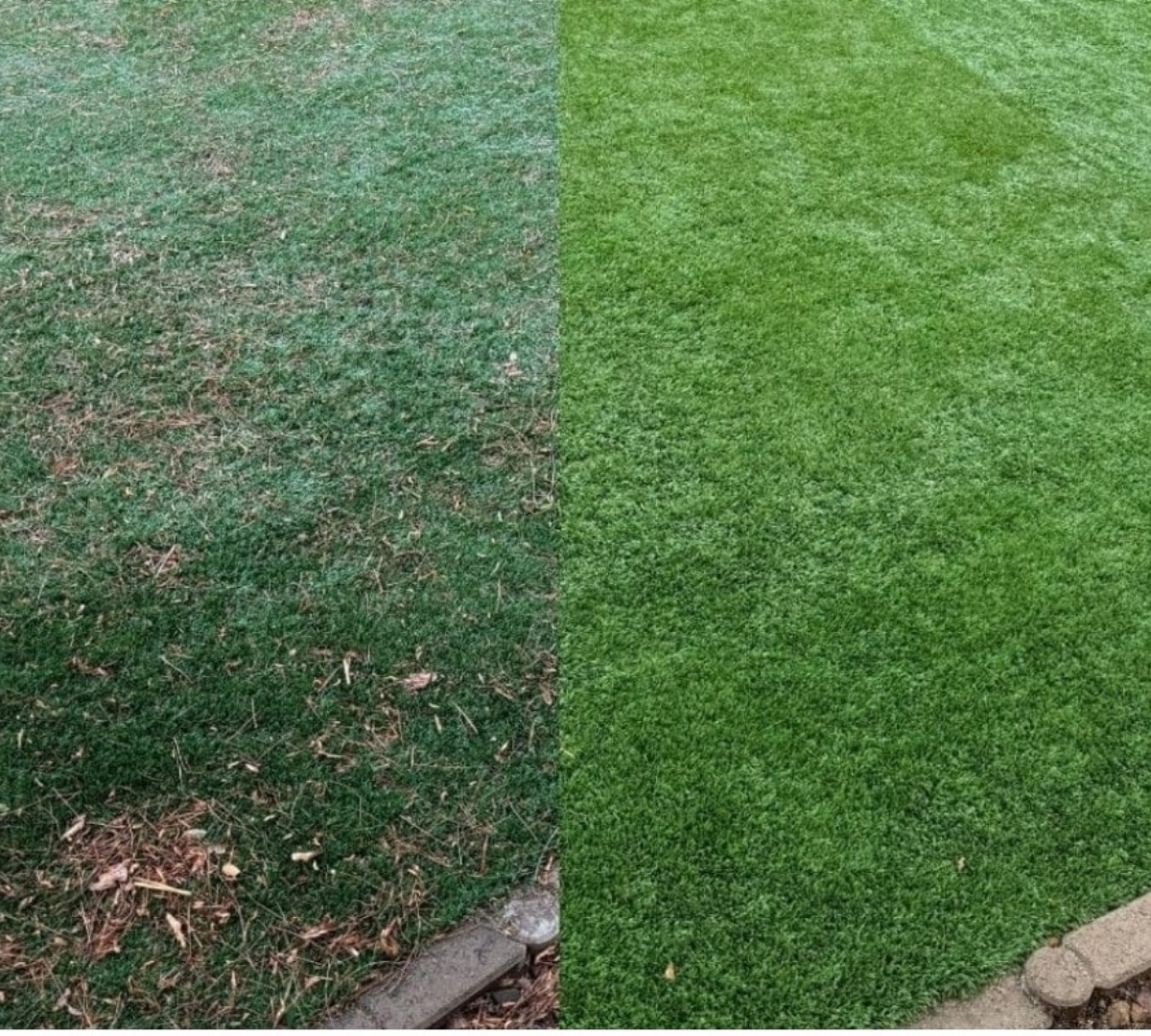
Despite your best prevention efforts, all artificial turf will eventually fade beyond the point where it looks acceptable, and recognizing when that threshold has been reached saves you from pouring maintenance time and money into turf that has reached the end of its aesthetic life. As a general guideline, when your turf has lost 40 percent or more of its original color intensity and the fading is uniform rather than surface-contamination related, replacement becomes the most practical option.
Several factors help determine whether your faded turf should be replaced or can be maintained further. If the fibers are still structurally sound, the turf still drains well, and the fading is mild to moderate, continued maintenance and shade addition can extend usable life. If fading is accompanied by fiber brittleness, infill compaction, and drainage problems, the turf has reached the end of its functional life and replacement is the appropriate investment for your Green Valley or Boulder City property.
When replacing faded turf, consider it an opportunity to upgrade to a product with better UV resistance and color technology than what was available when your original turf was installed. Turf manufacturing has advanced a ton in recent years, and current desert-rated products offer way better fade resistance than products from even 5 years ago. A replacement installation using today's premium products, combined with the shade and maintenance strategies you have learned, should deliver meaningfully longer color retention.