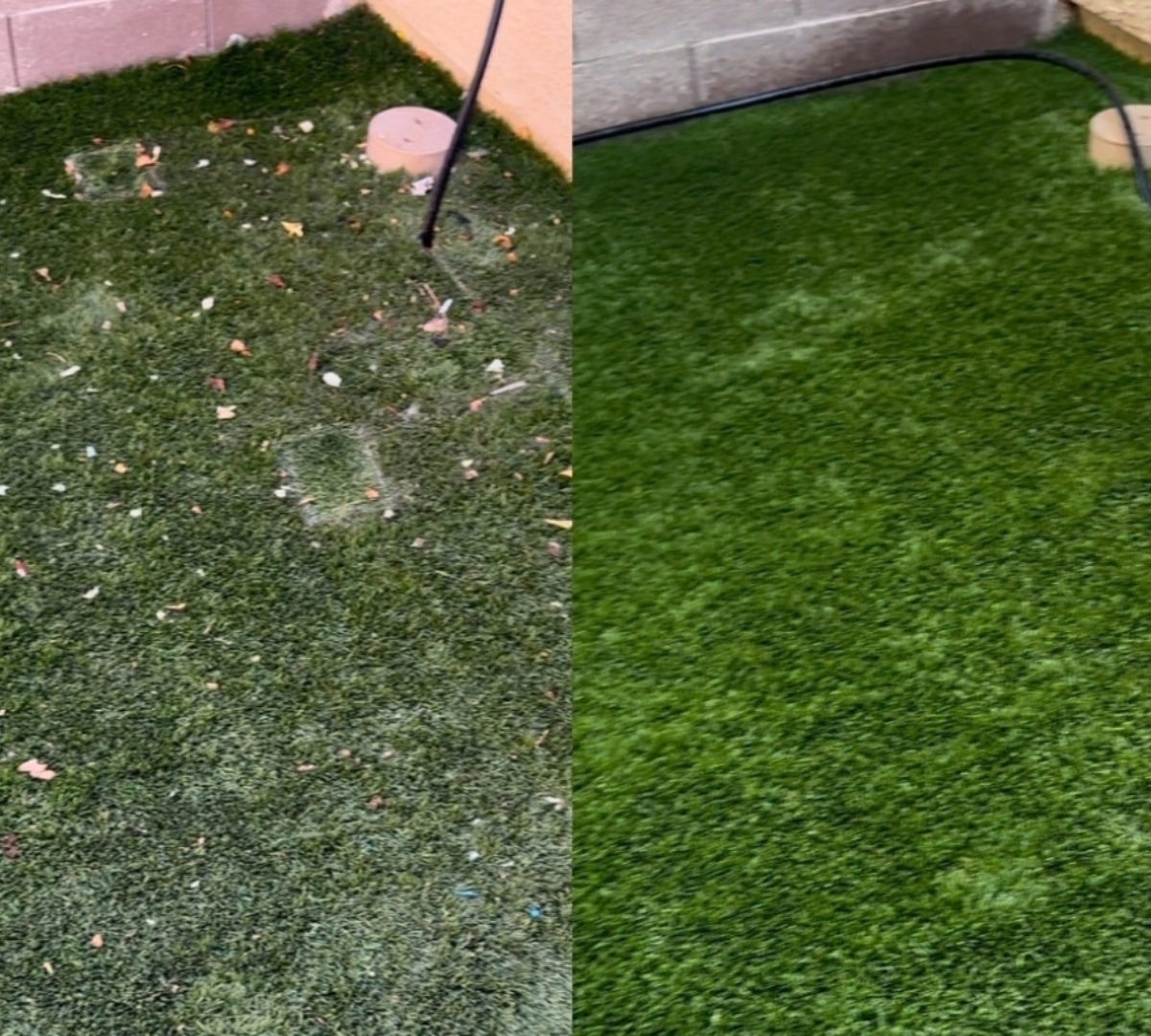
Why Henderson Water Is So Hard and What That Means for Turf
Henderson draws approximately 90 percent of its municipal water from Lake Mead, which contains naturally high concentrations of calcium, magnesium, and other dissolved minerals. The water hardness typically ranges from 278 to 350 parts per million depending on the season and specific distribution area, classifying it as very hard by USGS standards. For context, water above 180 ppm is considered hard, making Henderson water nearly double that threshold. Every time you rinse your artificial turf in Summerlin, Henderson, or anywhere in the valley, you are applying water that leaves mineral residue behind as it evaporates.
The rapid evaporation rate in the Henderson desert compounds the hard water problem big time. In humid climates, water lingers on surfaces long enough for minerals to remain suspended, and subsequent moisture can partially re-dissolve deposits. In Henderson, water evaporates from turf surfaces in as little as 15 to 30 minutes during summer, leaving 100 percent of the dissolved minerals deposited on fiber surfaces as a white, chalky residue. Each rinse cycle adds another layer, creating cumulative buildup that becomes increasingly difficult to remove.
The mineral composition matters as well. Henderson water is especially high in calcium carbonate, which forms the stubborn white scale you see on faucets, showerheads, and tile throughout the valley. On artificial turf, these calcium carbonate deposits bond to the polymer surface of turf fibers and create a rough, crystalline texture that attracts and holds dirt particles. This means hard water deposits not only look bad on their own but also make your turf get dirtier faster between cleanings across neighborhoods from Paradise to North Henderson.
Visible Effects of Hard Water on Turf
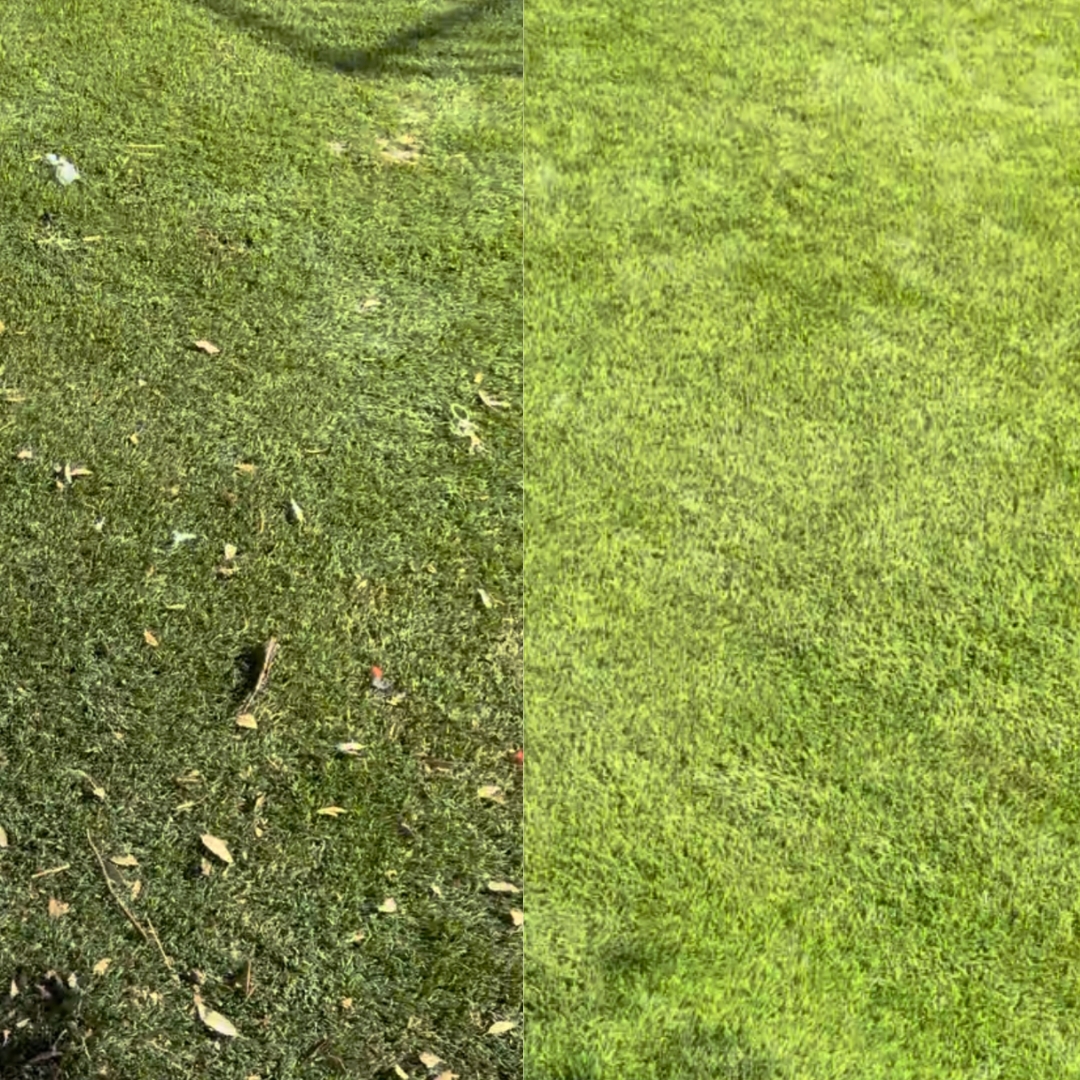
The most obvious sign of hard water damage is a whitish haze or film that develops on turf fibers over time, making the turf appear dull and faded even when it is otherwise clean. This film is most noticeable on darker turf colors where the contrast between the green fiber and white mineral deposit is stark. Homeowners in Green Valley and Spring Valley often mistake this mineral haze for UV fading, but the distinction is important because the treatment approaches are completely different.
Hard water deposits also cause turf fibers to feel stiff and gritty to the touch, reducing the soft, natural feel that quality artificial turf provides when new. The mineral crystals form a textured coating on the smooth polymer surface, creating a sandpaper-like quality that is unpleasant underfoot and accelerates wear on the fiber surface. In areas where sprinkler overspray regularly hits turf, such as the border zones between turf and traditional landscaping common in Enterprise and Southern Highlands properties, the buildup can become quite pronounced.
- White or grayish film on turf fibers that dulls the overall color
- Stiff, gritty fiber texture replacing the original soft feel
- Concentrated white scale around sprinkler heads and hose bib locations
- Accelerated dirt accumulation on mineral-coated fiber surfaces
- Crusty deposits visible at the base of fibers near the infill line
Removing Hard Water Deposits from Artificial Turf

A white vinegar solution is the safest and most effective DIY remedy for hard water deposits on artificial turf. Mix equal parts white vinegar and water in a garden sprayer and apply liberally to affected areas, allowing the solution to sit for 10 to 15 minutes before rinsing thoroughly. The acetic acid in vinegar dissolves calcium carbonate deposits without damaging turf fibers or affecting the turf backing material. For heavily scaled areas in Centennial Hills or Henderson yards, you may need two or three treatment cycles with rinsing between each application.
For more stubborn mineral deposits that vinegar alone cannot remove, citric acid powder dissolved in water provides a stronger treatment option. Mix 2 to 3 tablespoons of food-grade citric acid per gallon of water and apply with a garden sprayer, following the same soak-and-rinse process as the vinegar treatment. Citric acid is turf-safe and biodegradable but provides approximately twice the dissolving power of standard white vinegar. This method is especially effective for concentrated scale buildup around irrigation heads and along property edges where runoff from hardscape concentrates mineral deposits.
Commercial lime and scale removers designed for outdoor use can also be effective, but exercise caution and test any product on an inconspicuous area first. Products containing hydrochloric or phosphoric acid will dissolve mineral deposits rapidly but can potentially damage turf fibers or discolor them if left in contact too long. Always read the product label and verify compatibility with synthetic materials before applying to your artificial turf installation.
Apply vinegar treatments during the cooler parts of the day, either early morning or evening. In the midday Henderson heat, vinegar evaporates too quickly to dissolve mineral deposits effectively, reducing treatment efficacy.
Want Us to Handle It Instead?
Get a free quote for your Henderson property. Same-day appointments available.
Preventing Hard Water Buildup on Your Turf
The most effective prevention strategy is to minimize the amount of hard water that contacts your turf while still maintaining adequate cleaning. When you must rinse your turf, do so during the coolest part of the day to slow evaporation and give minerals more time to flush through the drainage system rather than depositing on fibers. Quick, thorough rinses that saturate and drain are more effective than prolonged spraying that allows surface water to evaporate in place on your Summerlin or Boulder City property.
For homeowners willing to invest in a more comprehensive solution, a dedicated outdoor water softener or filtration system connected to your turf-area hose bib dramatically reduces mineral deposition. These systems remove calcium and magnesium before the water reaches your turf, virtually eliminating hard water buildup. While the initial investment runs $500 to $1,500 for a basic outdoor softener, the reduction in cleaning effort and extended turf appearance can justify the cost for larger installations across Paradise and North Henderson.
- Rinse turf during cool morning or evening hours to minimize surface evaporation
- Use quick, heavy rinses rather than prolonged light spraying
- Install an outdoor water softener on your dedicated turf hose bib
- Apply preventive vinegar treatments monthly during heavy-use seasons
- Redirect sprinkler systems to avoid unnecessary overspray onto turf areas
How Hard Water Affects Infill Material
Hard water does not just affect the visible turf fibers. It also impacts the infill material beneath them. Calcium and magnesium deposits gradually coat infill granules, binding them together and reducing the infill's ability to drain water, cushion impact, and support fiber structure. Over several years without treatment, this mineral binding can create a semi-rigid infill layer that cracks underfoot rather than yielding, cutting the turf's comfort and performance.
Infill compaction from mineral binding also reduces drainage capacity, which becomes critical during the occasional heavy rains Henderson receives. When infill particles are cemented together by calcium deposits, water cannot percolate through as efficiently, increasing the risk of surface pooling after rain events. Professional infill agitation and treatment services can break up mineral-bonded infill and restore drainage capacity, a service that Henderson turf owners in Enterprise and Spring Valley should consider annually given the extreme water hardness in the valley.
Henderson water hardness fluctuates seasonally, typically running highest during summer months when Lake Mead levels are lower and mineral concentrations increase. Planning intensive turf rinsing for winter months when water is slightly softer can reduce cumulative mineral deposition.
Professional Descaling Services for Henderson Turf
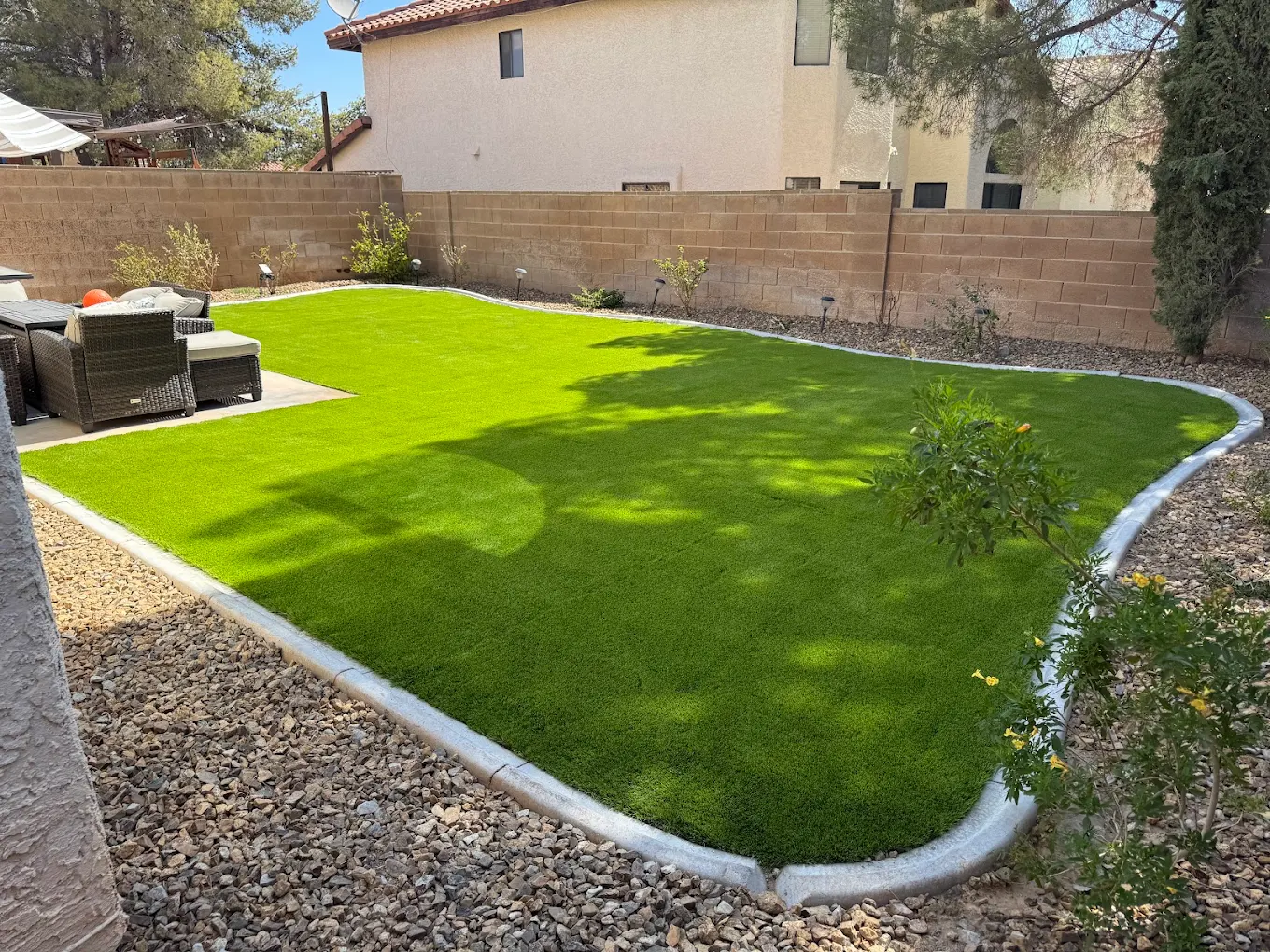
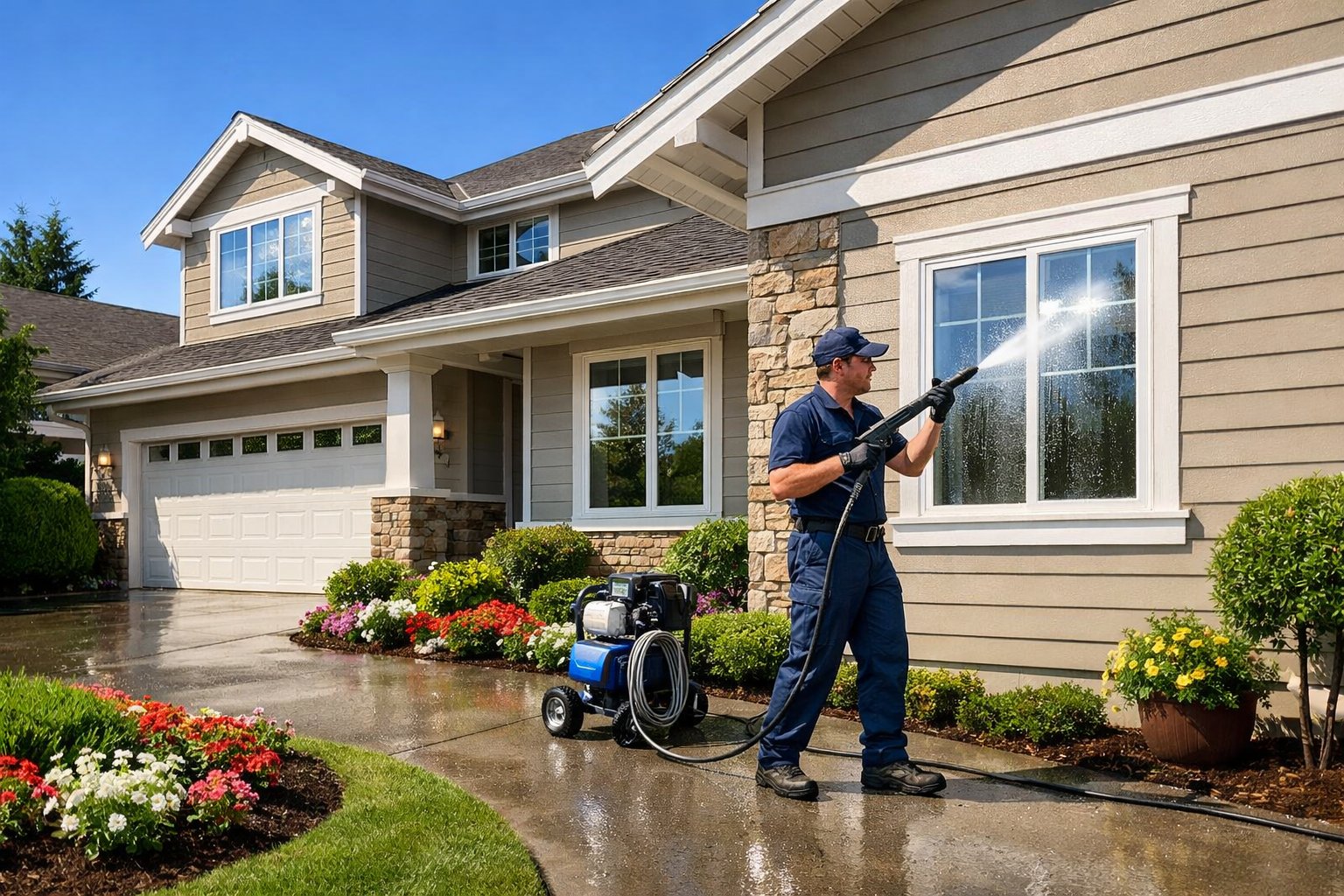
Professional turf cleaning services in Henderson typically include hard water descaling as part of their deep cleaning packages, using commercial-grade acidic solutions and specialized application equipment that provides more thorough and even treatment than DIY methods. Professional descaling reaches the base of turf fibers and the upper infill layer where homeowner-applied treatments often cannot penetrate effectively. For properties in Henderson and Southern Highlands with big mineral buildup, professional treatment can restore turf appearance dramatically in a single service visit.
The frequency of professional descaling depends on how often you rinse your turf and whether you have any water softening measures in place. Properties that rinse turf weekly with untreated Henderson tap water typically need professional descaling every 6 to 12 months to maintain optimal appearance. Properties with water softeners or those that minimize water contact may extend this interval to 18 to 24 months. Your professional turf cleaner can assess the level of mineral buildup during routine service visits and recommend an appropriate treatment schedule for your specific situation.