Understanding Henderson Desert Soil
The dirt under most Henderson properties is nothing like the loamy, organic-rich soil you find in other parts of the country. The valley floor is mostly alluvial deposits washed down from surrounding mountains over millions of years, creating layers of sandy, gravelly material interspersed with caliche, a calcium carbonate hardpan that can be as tough as concrete. Every property in Summerlin, Henderson, and across the metro sits on some variation of this profile.
Caliche is the big soil challenge in the Henderson valley. This naturally occurring calcium carbonate layer forms when mineral-rich groundwater evaporates in the dry climate, leaving behind a cemented slab that can be paper-thin or several feet thick. Caliche is basically waterproof, so any turf sitting above a caliche layer will have major drainage problems unless the installer plans for it during base prep.
The surface soil across many Henderson neighborhoods is a fine, silty sand that compacts easily but has almost no organic content and terrible moisture retention. Dry, it is loose and dusty. Wet, it turns slippery and unstable. Properties in North Henderson and Enterprise developed on previously undisturbed desert often have the trickiest soil, including caliche layers lurking just a few inches below the surface.
The Caliche Problem and How Installers Address It
When an installer hits caliche during dig-out, the game plan depends on how deep and thick the layer is. Shallow caliche within 6 to 12 inches of the surface usually needs to be broken through or partially removed to create enough drainage depth for the turf system. That typically means a jackhammer, a bobcat with a ripper attachment, or controlled mechanical breaking, all of which add time and cost to the project.
Here is the deal: caliche blocks drainage. A standard turf install relies on water soaking through the turf backing, through the aggregate base, and into the native soil below. When an impervious caliche layer blocks that final step, water pools on top with nowhere to go. In residential yards across Spring Valley and Paradise, this leads to waterlogged turf, displaced infill, bacterial growth, and eventually full system failure if nobody addressed the caliche during installation.
Seasoned Henderson installers tackle caliche with a mix of techniques. Breaking channels through the layer at regular intervals opens drainage paths to the permeable soil underneath. Perimeter French drains capture water from the base layer and route it to the property's storm drainage. In the worst cases, a full drainage membrane under the aggregate base funnels all water to collection points where it can be pumped or gravity-fed to an appropriate discharge spot.
Do not let an installer skip the soil assessment just because the top layer looks fine. Caliche often hides under 6 to 12 inches of loose soil and will not show up until digging starts. A professional soil probe before you sign a contract prevents expensive mid-project surprises.
Proper Base Preparation for Desert Soil
Base prep is the most important phase of any Henderson turf project. This is where cutting corners causes the most grief. A proper desert base starts with digging out 3 to 4 inches of native soil, checking the subsurface for caliche and drainage characteristics, and then building up a compacted aggregate base that gives you structural support, drainage, and a smooth surface for the turf. On typical alluvial soil in Centennial Hills and Green Valley, this is pretty straightforward. Properties with shallow caliche or heavy clay need extra measures.
The go-to base material in Henderson is decomposed granite or Class II road base compacted to 90 to 95 percent density. It provides excellent load-bearing capacity and drainage while staying put under foot traffic. Compaction is critical in desert soil because the fine sand underneath can migrate upward through loosely packed base, creating soft spots and uneven settling over time.
Grading the base correctly ensures water flows away from your home and toward drainage points instead of pooling in low spots. A minimum slope of 1 to 2 percent across the turf area is standard. Trickier drainage situations may call for steeper grades or supplemental drain features. In Henderson and Enterprise, where some neighborhoods sit on flat terrain with almost no natural slope, building adequate grade into the base prep is especially important.
- Dig out 3 to 4 inches of native soil and check subsurface conditions
- Deal with caliche through breaking, removal, or drainage engineering
- Lay 3 to 4 inches of compacted Class II road base or decomposed granite
- Hit 90 to 95 percent compaction density verified with a plate compactor
- Grade the base at a minimum 1 to 2 percent slope toward drainage outlets
- Lay weed barrier fabric between the compacted base and the turf
Want Us to Handle It Instead?
Get a free quote for your Henderson property. Same-day appointments available.
Drainage Solutions for Henderson Turf Properties
With impervious caliche soil and occasional intense monsoon rain, drainage engineering is a key piece of any Henderson turf install. French drains along the turf perimeter at base level collect water that filters through the turf and aggregate, routing it to the property's storm drainage or a suitable discharge point. These are especially important for properties in Southern Highlands and Boulder City where caliche sits close to the surface and the soil absorbs almost nothing.
Bigger installations or properties in low-lying valley areas may also need catch basins or dry wells to handle peak monsoon volumes. A well-designed drainage system needs to handle everyday turf rinsing and light rain plus the intense bursts that dump an inch or more of water in under an hour during monsoon season. Undersized drainage is one of the most common install mistakes we see in Henderson, usually because the installer used specs designed for moderate-rainfall regions instead of accounting for the desert's all-or-nothing precipitation pattern.
Why Soil Testing Matters Before Installation
A pre-install soil assessment is cheap insurance against expensive drainage and stability headaches that might not surface for months or years. A basic soil probe, which just means driving a steel rod into the ground at multiple spots across the install area, reveals caliche depth and thickness, soil composition variations, and natural drainage characteristics. It typically runs $100 to $300 and can save you thousands in remediation down the road.
Soil conditions can change dramatically within a single Henderson property. A yard in Paradise might have loose sandy soil on the east side and solid caliche at 8 inches on the west side, requiring completely different base prep approaches in the same install. Without testing, an installer working off a one-size-fits-all plan could build something that works great in one section and fails in another.
Ask your installer to do soil probing at a minimum of 4 points per 500 square feet of planned turf area. That catches most soil variations and gives enough data to design the right base and drainage system for your yard.
Managing Soil-Related Settling After Installation
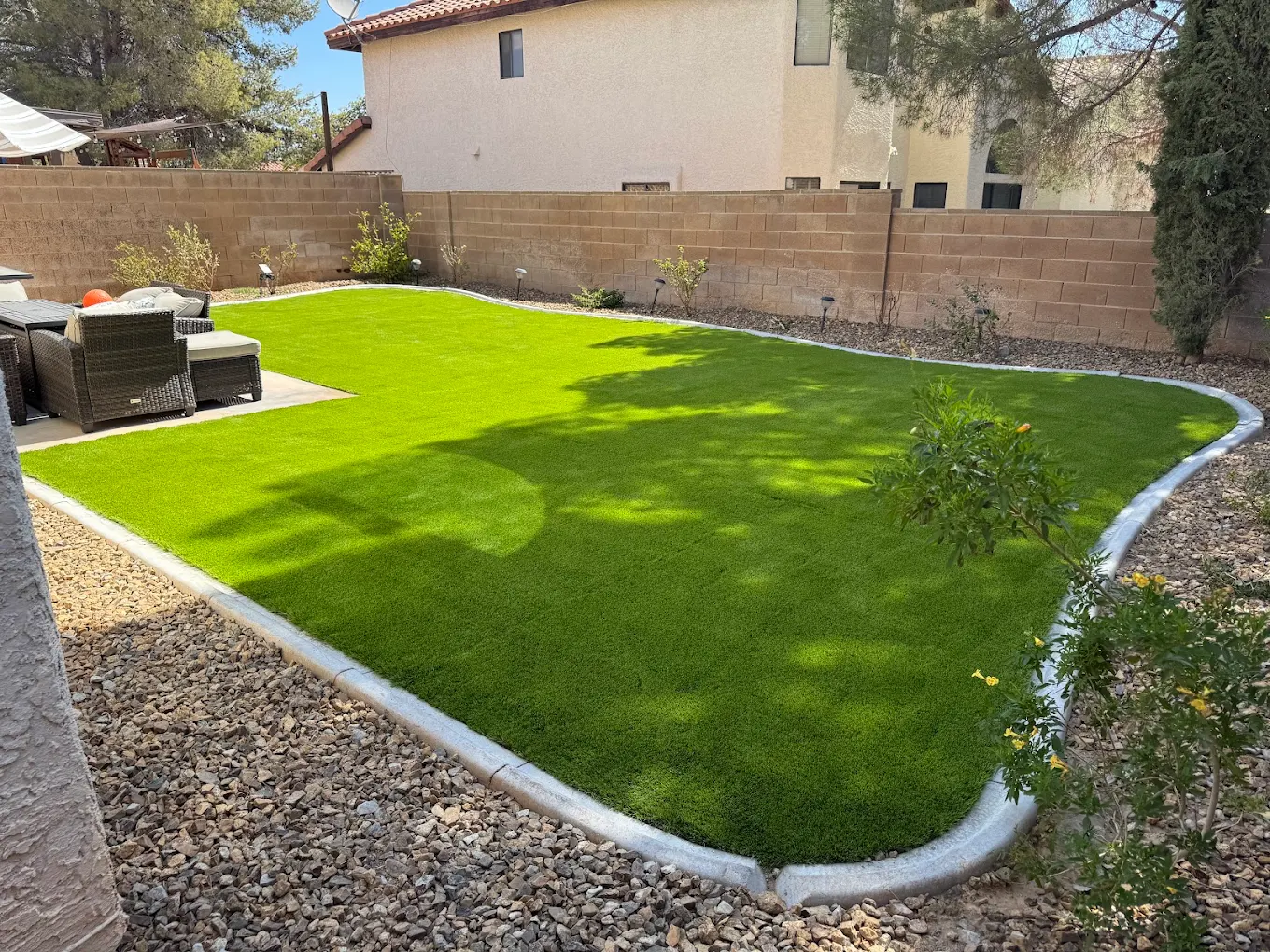
Even with solid base prep, some settling is totally normal during the first 6 to 12 months as the aggregate base and underlying soil adjust to the new load and moisture patterns. Minor low spots may pop up where compaction was slightly inconsistent or native soil settled under the base weight. These small imperfections show up as slight dips or unevenness in the turf surface and are an easy fix by adding infill to the low areas.
More serious settling happens when base prep was inadequate, caliche was not addressed, or drainage problems let water erode the base. Red flags include large depressions, standing water after rain, wrinkles or buckles in the turf, and seam separation. If you see these on your North Henderson or Summerlin property within the first year, call your installer right away. Most reputable companies cover settling correction under their installation warranty.
Long-term soil-related maintenance is minimal for a properly installed Henderson turf. Desert soil stays stable once compacted, and the absence of frost heave means the base stays flat indefinitely. Annual inspections checking for new settling, drainage performance after rain, and perimeter condition give you early warning of any issues that are way cheaper and easier to fix before they snowball.