What Monsoon Season Means for Henderson Turf

Henderson monsoon season runs from July through September, bringing a dramatic shift from the relentless dry heat of early summer. During these months, moisture surges from the Gulf of California and Gulf of Mexico push into the Mojave Desert, triggering sudden and intense thunderstorms that can dump an inch or more of rain in under an hour. For artificial turf installations across Summerlin, Henderson, and Spring Valley, this abrupt transition from bone-dry to flash-flood conditions creates unique maintenance challenges that require preparation.
The monsoon pattern is characterized by rapid-onset storms that combine heavy rain with strong winds, lightning, and often preceding dust storms known as haboobs. These events can deposit thick layers of fine desert sediment on your turf, followed immediately by heavy rainfall that drives that sediment deep into the turf fibers and infill. A single major monsoon event can undo weeks of regular maintenance, coating previously clean turf in a muddy film that hardens quickly once the desert sun returns.
Here is the good news. Despite the challenges, monsoon rains also provide a natural deep rinse that your turf rarely receives during the rest of the year. Henderson averages only 4.2 inches of annual rainfall, and a big portion of that falls during monsoon season. Homeowners in Paradise and Centennial Hills who prepare their turf properly before monsoon season actually benefit from this natural flushing, as the heavy rain helps wash away accumulated minerals and organic debris that garden hoses alone cannot fully remove.
Preparing Your Turf Before Monsoon Season
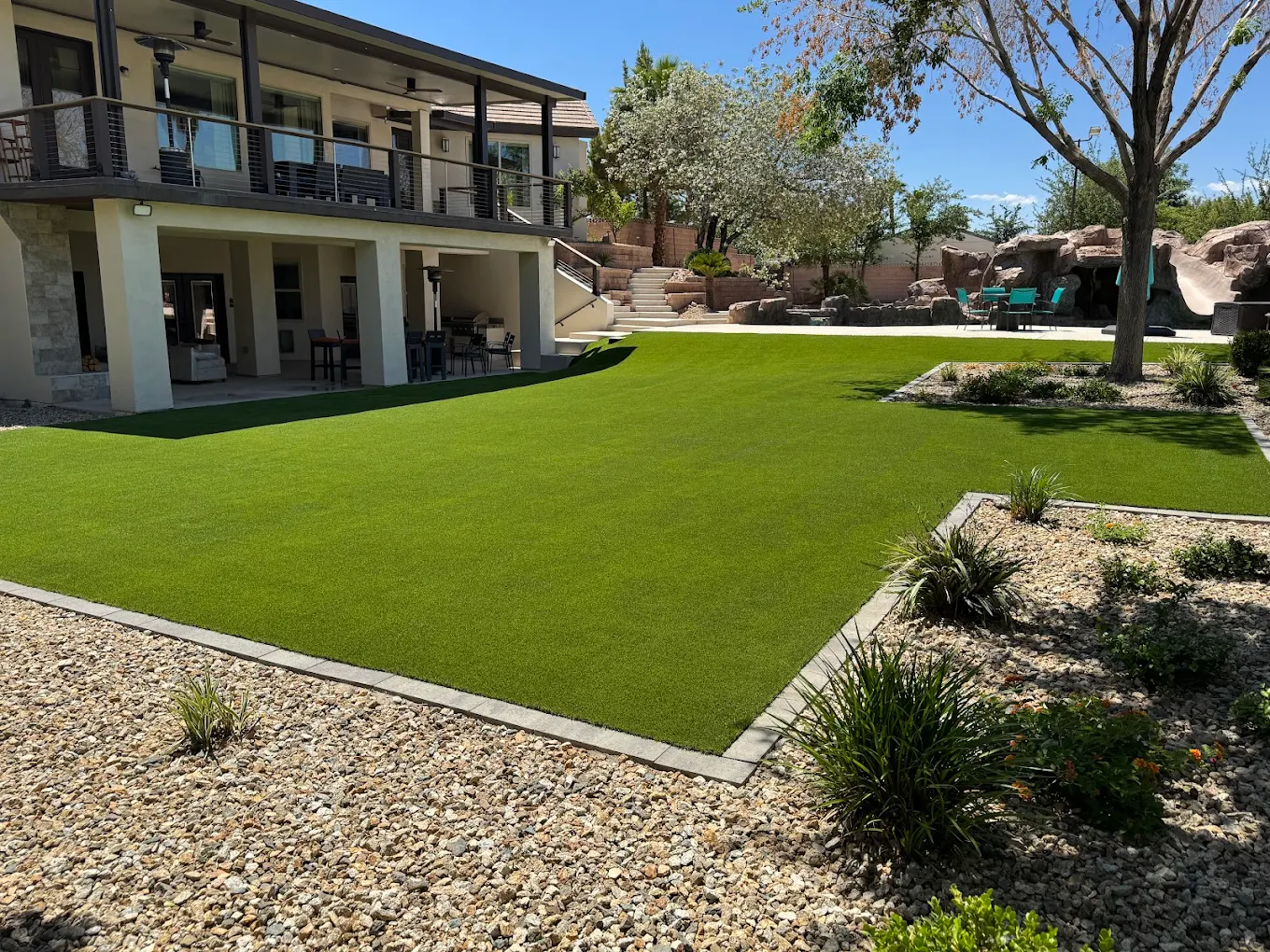
The time to prepare your artificial turf for monsoon season is late June, before the first storms arrive. A thorough pre-season deep cleaning removes accumulated dust and debris that would otherwise turn to mud during the first heavy rain. Professional cleaning at this point is especially effective because it starts your turf fresh for the season, ensuring that drainage perforations are clear and infill is properly distributed across your North Henderson or Enterprise yard.
Drainage inspection is the most critical pre-monsoon task. Check that all perimeter drainage is clear of debris, that French drains and catch basins are functioning, and that the turf substrate allows water to pass through freely. In neighborhoods like Green Valley and Southern Highlands where properties may have compacted caliche soil beneath turf installations, drainage capacity is already limited, and any additional obstruction can cause standing water during heavy monsoon rain.
- Schedule a professional deep cleaning in late June before monsoon season begins
- Clear all perimeter drains, gutters, and catch basins of accumulated debris
- Inspect turf edges and seams for lifting or gaps that wind could exploit
- Trim overhanging tree branches that could break and fall onto turf during storms
- Redistribute infill to ensure even drainage across the entire turf surface
- Secure any loose landscape fabric or edging that borders the turf installation
Never skip drainage inspection before monsoon season. A single blocked drain can cause water to pool on your turf for hours, promoting mold growth and infill displacement that requires costly professional repair.
Protecting Turf During Active Storms
During an active monsoon storm, there is limited action you can take, and safety should always come first. However, if you receive advance warning of an approaching storm, a few quick steps can minimize damage to your turf. Remove any furniture, toys, or loose objects from the turf area that could become projectiles in high winds or create imprint damage when pressed into waterlogged turf. Roll up removable shade sails that might collect debris or water weight that pulls anchors loose.
Post-storm is where your real work begins, and timing matters. After a major monsoon event passes through areas like Boulder City or Spring Valley, the desert sun returns quickly and begins baking any mud and debris deposited on your turf. If you can safely access your yard within 2 to 4 hours after a storm, a quick hose rinse while the debris is still wet prevents it from drying into a hard crust that is much more difficult to remove. Even a brief spray-down makes the subsequent detailed cleanup easier.
Want Us to Handle It Instead?
Get a free quote for your Henderson property. Same-day appointments available.
Post-Storm Cleanup Procedures
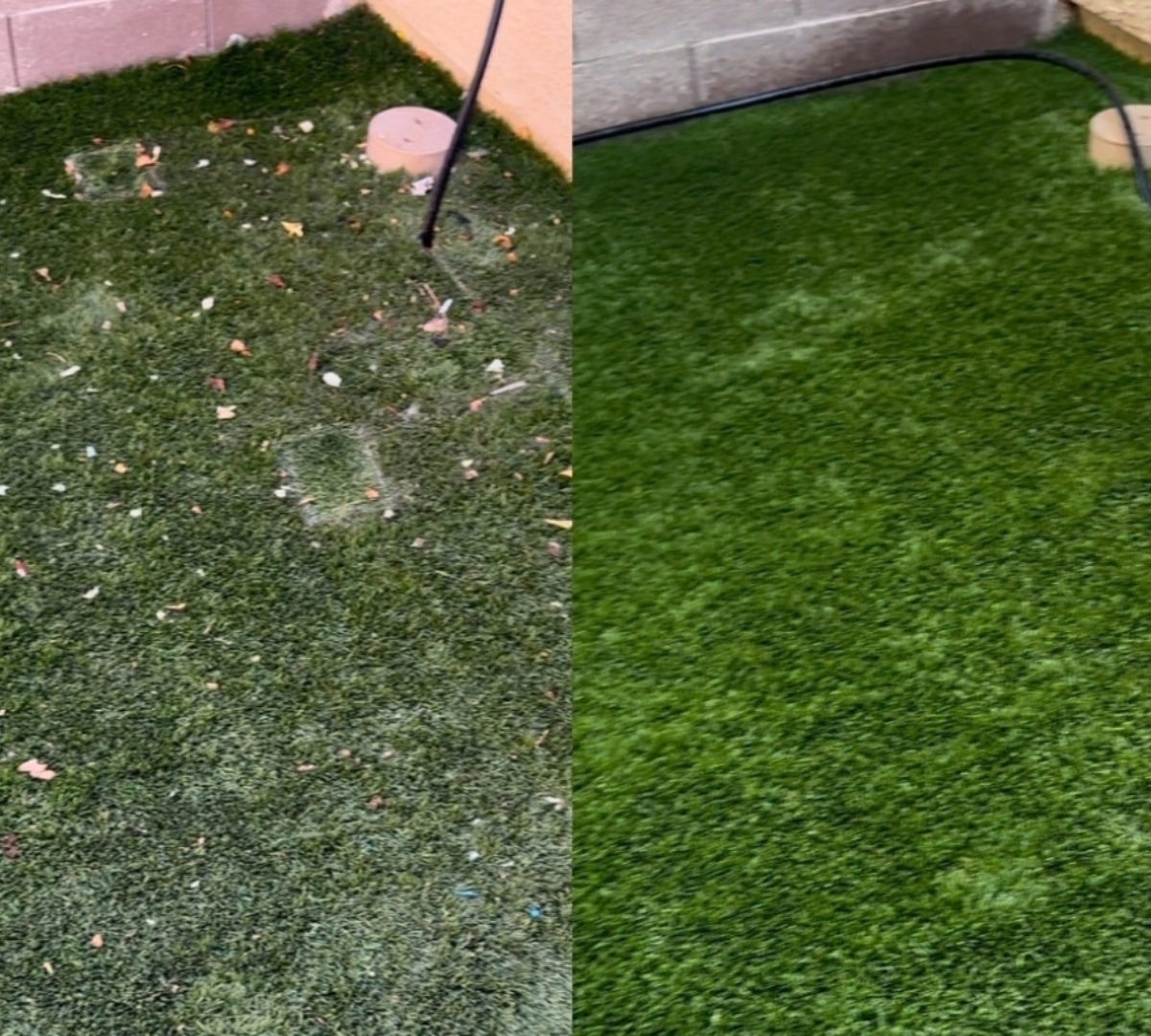
Effective post-storm cleanup follows a specific sequence that prevents further damage while restoring your turf to pre-storm condition. Start by removing large debris like fallen branches, leaves, and any objects blown onto the turf by wind. Work carefully to avoid pushing debris into the turf fibers, using a leaf blower on low settings or gentle raking to clear the surface before any water rinsing begins.
Once large debris is cleared, assess the state of the turf surface. If the storm deposited a visible layer of dust or mud, use your garden hose at a medium spray setting to rinse from one end to the other, working the dirty water toward your perimeter drainage. Avoid using a high-pressure setting, which can displace infill and drive contaminants deeper into the backing. For Summerlin and Henderson yards where monsoon runoff carries red desert clay, multiple rinse passes may be needed to fully clear the surface.
After rinsing, allow the turf to dry partially and then brush the fibers upright using a stiff-bristled broom working against the grain. Monsoon wind and rain tend to flatten turf fibers in one direction, and prompt brushing prevents the fibers from developing a permanent set. Check infill levels in areas where water may have washed material toward low points, and redistribute as needed to maintain even coverage across the surface.
Keep a post-storm cleanup kit ready by your back door during monsoon season: leaf blower, stiff broom, spray nozzle, and work gloves. Quick access means faster cleanup before debris bakes onto the turf surface.
Managing Drainage During Heavy Monsoon Rains
Artificial turf is designed to drain water through perforations in the backing material, typically at a rate of 30 to 50 inches per hour for quality products. However, monsoon storms can overwhelm this drainage capacity, especially when dust buildup has partially clogged drainage holes. Yards in North Henderson and Enterprise that sit on compacted caliche soil face additional drainage challenges because the substrate itself has low permeability, even when the turf backing drains effectively.
If you notice standing water on your turf after storms, the issue is almost always in the sub-base drainage rather than the turf itself. Proper turf installations include a compacted aggregate base layer that channels water to perimeter drains, and if this layer was not adequately designed for Henderson monsoon conditions, water will pool on the surface until it slowly percolates through. Addressing sub-base drainage issues before monsoon season is far more cost-effective than dealing with water damage, mold, and infill displacement after each storm.
Preventing Mold and Odor After Monsoon Rains
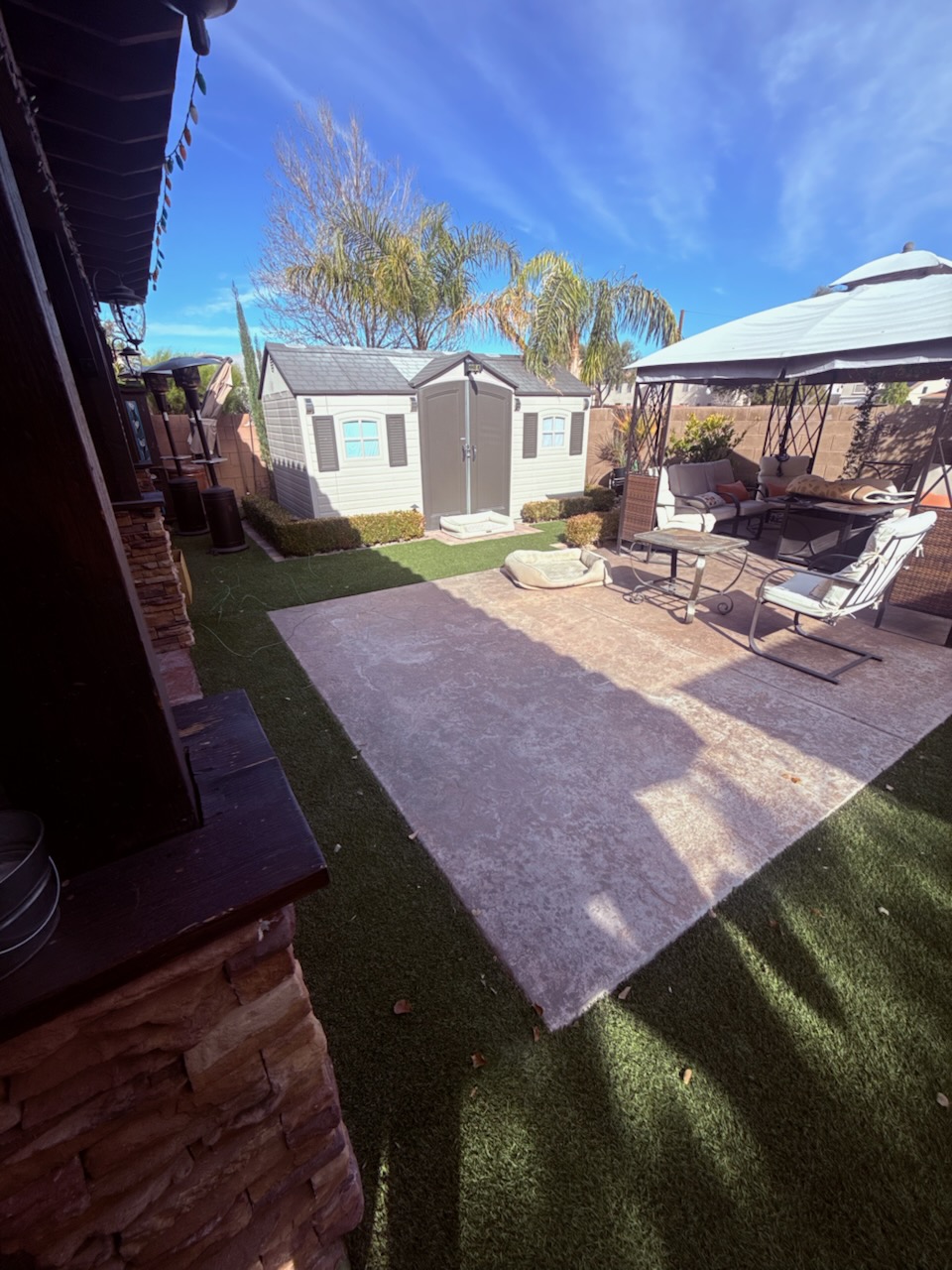
The combination of monsoon moisture and triple-digit temperatures creates ideal conditions for mold and bacterial growth on artificial turf. The warm, humid air following a monsoon storm can keep turf damp for 12 to 24 hours, which is sufficient time for mold spores to colonize organic debris trapped in the turf fibers. Properties in shaded areas of Henderson and Green Valley are especially susceptible because reduced airflow and limited sun exposure slow the drying process.
Proactive anti-microbial treatment after big monsoon rain events is the most effective prevention strategy. Enzymatic cleaners designed for artificial turf break down organic matter that feeds mold while creating conditions hostile to bacterial colonization. Apply these treatments within 24 to 48 hours after a storm, once the turf has dried enough to walk on but before any musty odors develop. Consistent post-storm treatment throughout monsoon season prevents the cumulative buildup that leads to persistent odor issues by late September.
Adequate airflow around your turf area also helps prevent post-monsoon moisture problems. Turf installations that are enclosed by solid walls on multiple sides trap humid air at ground level, extending drying times massively. If your Paradise or Centennial Hills property has limited airflow around the turf area, running a high-velocity fan or leaf blower across the surface after storms accelerates drying and reduces the window for mold establishment.