Two Popular Paths to a Water-Smart Henderson Yard
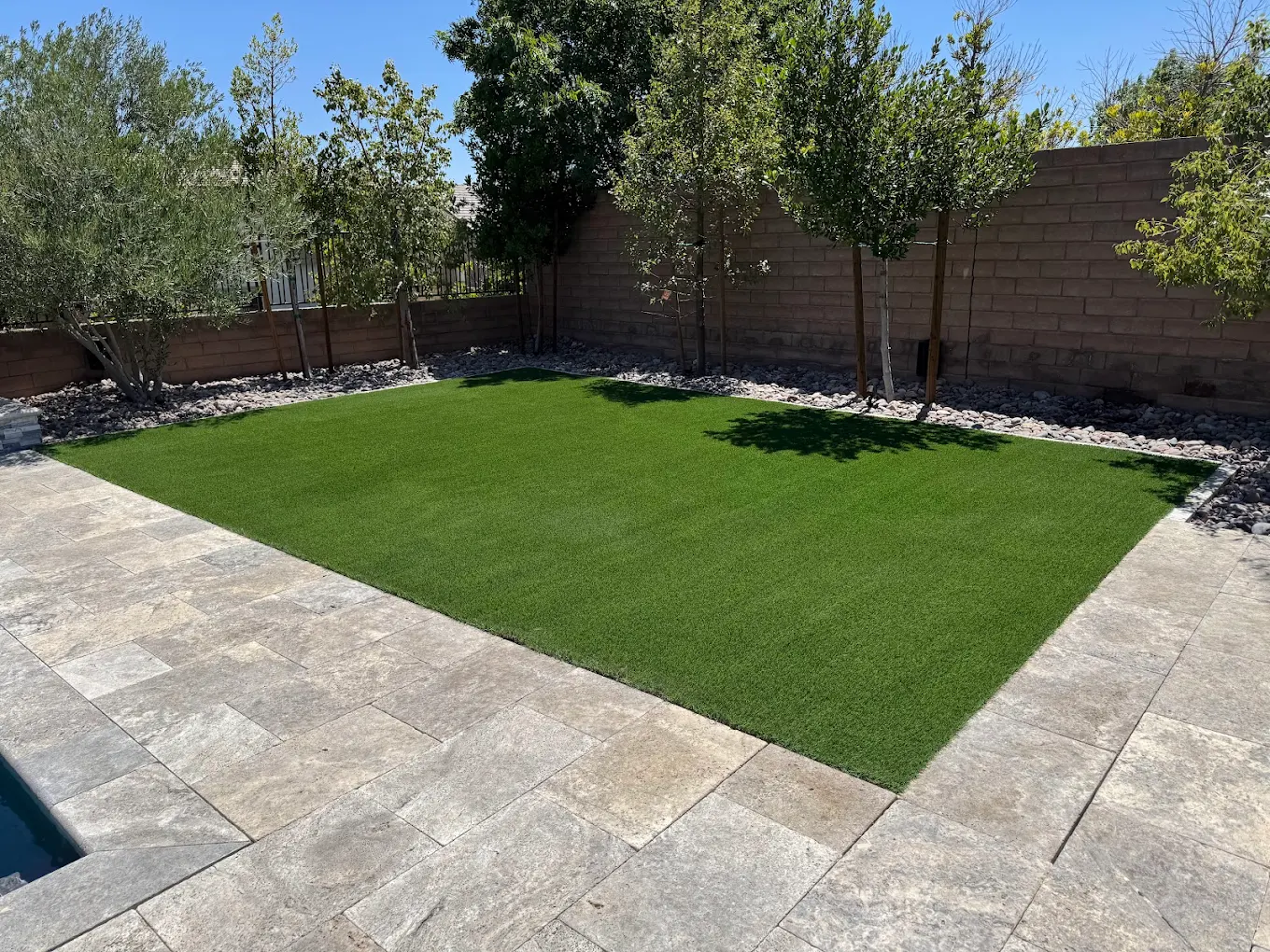
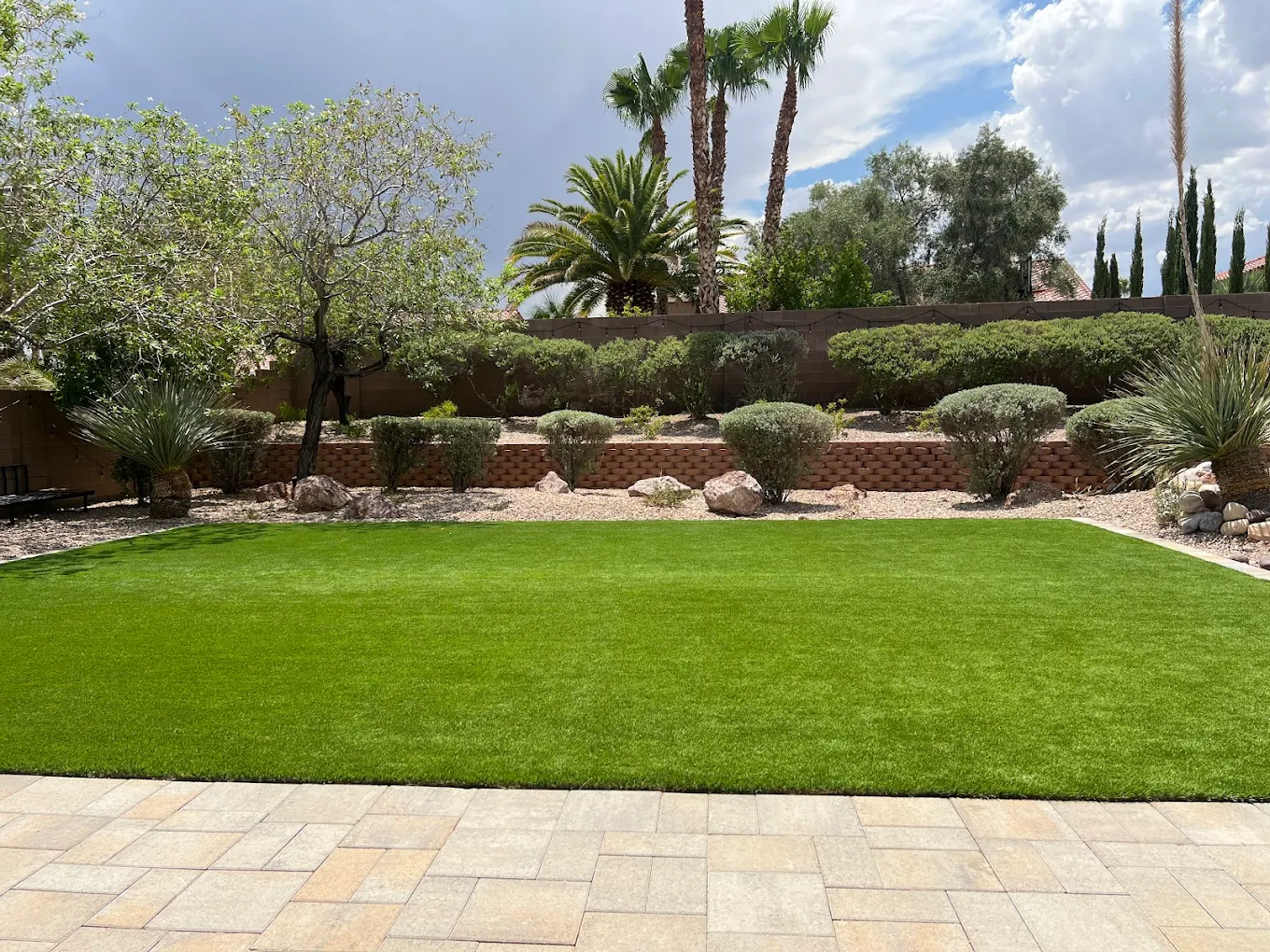
Henderson homeowners seeking to eliminate thirsty natural grass typically choose between two dominant options: artificial turf and desert rock landscaping. Both satisfy SNWA water conservation requirements and qualify for the water authority grass replacement rebate program. Both dramatically reduce water usage compared to natural grass, which can consume 73 gallons per square foot annually in the desert. But the two options deliver fundamentally different yard experiences.
Desert rock landscaping, sometimes called xeriscaping when combined with native plants, has deep roots in Henderson development history. Drive through established neighborhoods in Henderson, Green Valley, and Enterprise and you will see countless yards featuring decorative gravel, river rock, and boulders paired with drought-tolerant plants. Artificial turf has gained massive popularity more recently, offering the green lawn aesthetic without the water consumption that the desert simply cannot support.
This comparison examines how each option performs across the factors that matter most to Henderson homeowners: installation cost, ongoing maintenance, heat management, aesthetic flexibility, and overall livability in our extreme desert climate.
Installation and Lifetime Cost Analysis
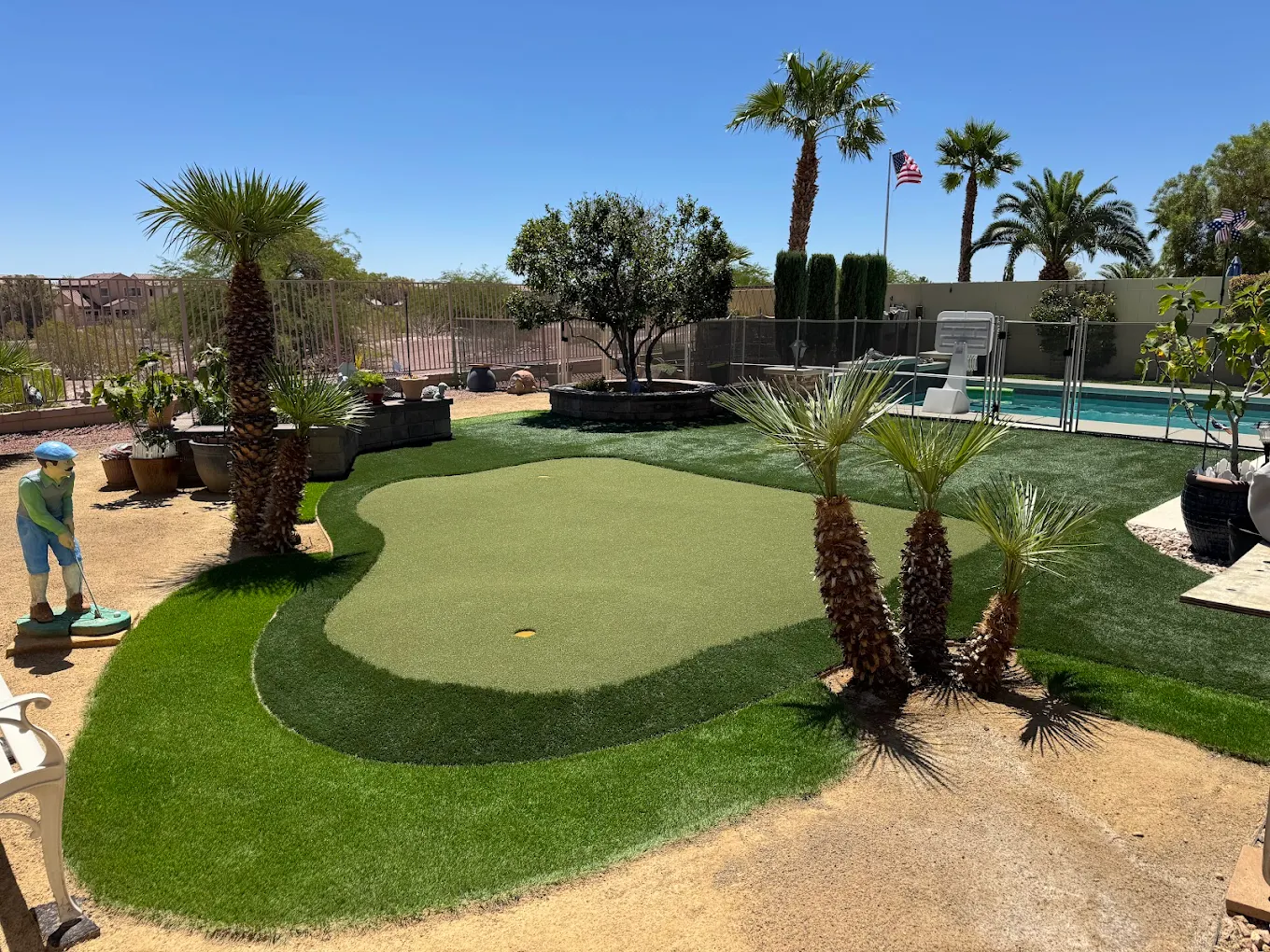
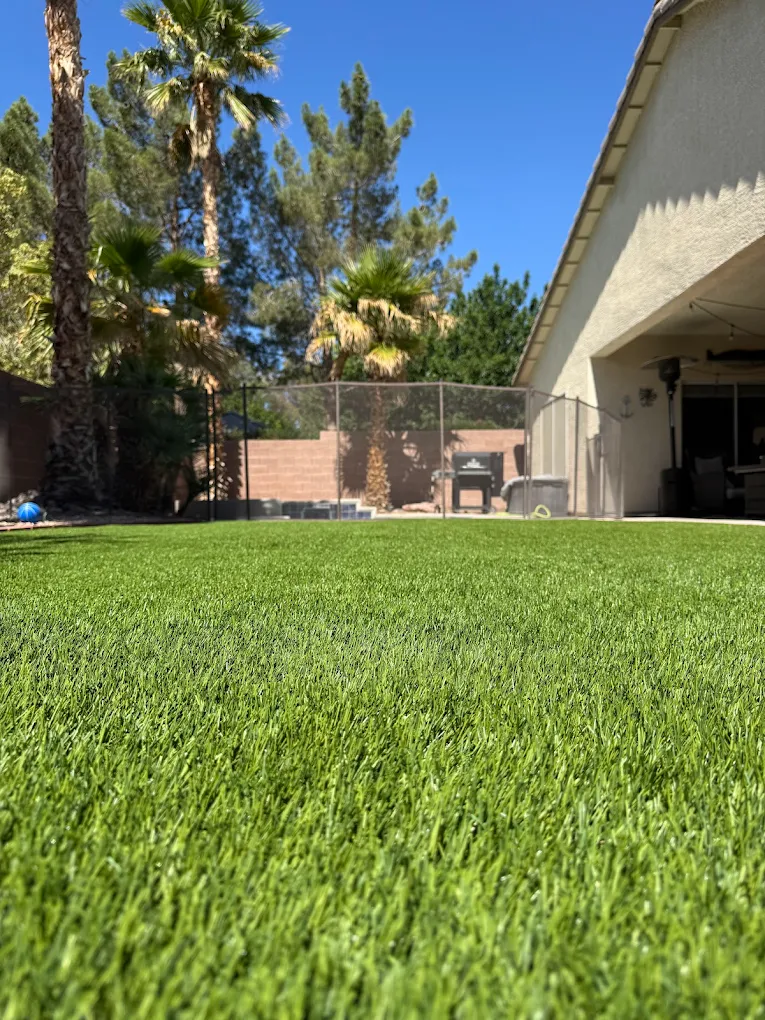
Desert rock landscaping is typically the more affordable option upfront. Basic desert rock installation runs $3 to $8 per square foot, including landscape fabric, edging, and decorative gravel or river rock. Adding boulders, accent plantings, and design features can push costs to $10 to $15 per square foot. Artificial turf installation ranges from $8 to $14 per square foot for quality products with proper base preparation in neighborhoods across Summerlin, Paradise, and North Henderson.
Long-term cost comparisons narrow the gap considerably. Desert rock yards require periodic weed treatment, rock replenishment as material settles and scatters, and eventual fabric replacement when the underlying weed barrier degrades after 7 to 12 years. These costs add $0.50 to $1.00 per square foot annually. Turf requires cleaning, occasional infill replenishment, and eventual replacement after 15 to 20 years, running $0.50 to $1.00 per square foot annually. Over a 20-year period, the total cost of ownership is surprisingly similar for most Henderson properties.
The SNWA Water Smart Landscapes rebate currently offers up to $3 per square foot for replacing natural grass with approved water-efficient landscaping. Both artificial turf and desert rock installations qualify for this program.
Surface Temperature and Heat Radiation
Heat management is a critical differentiator between these two options in Henderson. Artificial turf surfaces can reach 150 to 170 degrees Fahrenheit under direct summer sun, making barefoot use impossible during peak heat hours. Desert rock surfaces reach similar extreme temperatures and retain heat well into the evening hours, radiating stored thermal energy long after the sun sets. Light-colored gravel and decomposed granite perform somewhat better than dark river rock or lava rock.
The heat island effect is a meaningful consideration for both options. Large expanses of either turf or dark rock elevate ambient temperatures around your home, potentially increasing cooling costs. Desert rock yards with strategically placed shade trees and lighter-colored materials mitigate this effect. Turf yards benefit from shade structures and cooling infill technology. Homeowners in Boulder City and Centennial Hills who experience some of the valley hottest temperatures should factor heat radiation into their decision.
Want Us to Handle It Instead?
Get a free quote for your Henderson property. Same-day appointments available.
Maintenance: Rock vs Turf Reality Check
Desert rock yards are often marketed as zero-maintenance, but that claim does not hold up in practice. Henderson wind deposits leaves, trash, and organic debris that accumulates in rock beds and is harder to remove than from turf surfaces. Weeds are a persistent problem despite landscape fabric, with seeds finding their way into rock crevices and sprouting aggressively after monsoon rains. Pre-emergent herbicide applications every 3 to 4 months are essential for most rock yards in Spring Valley and Henderson.
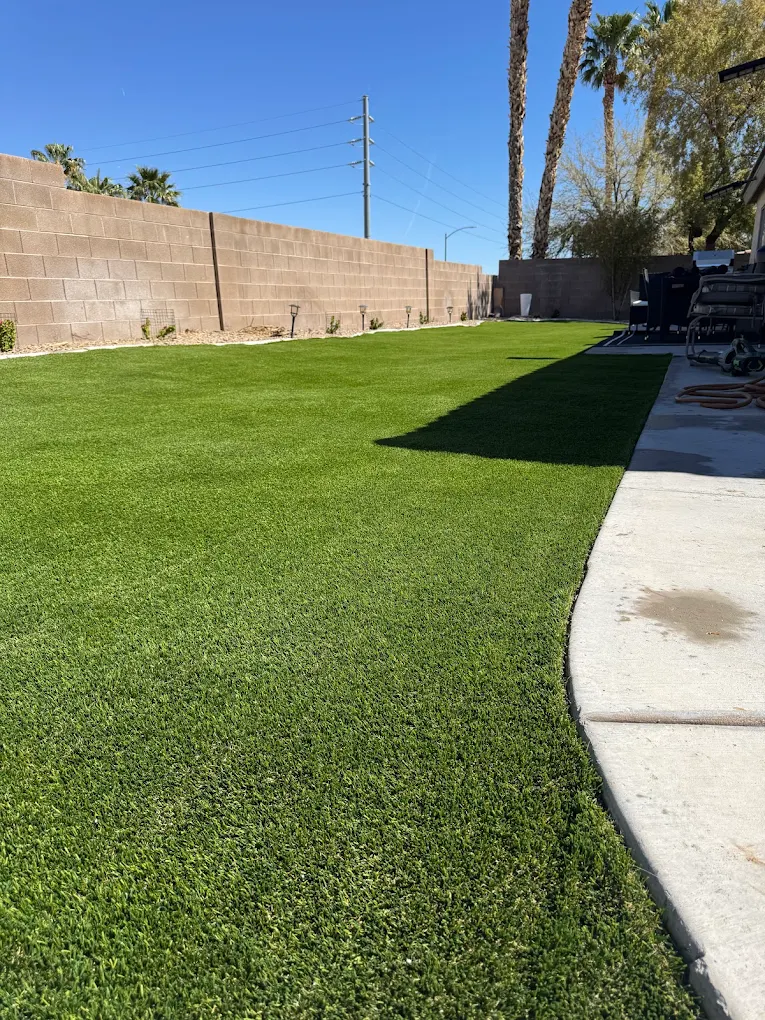
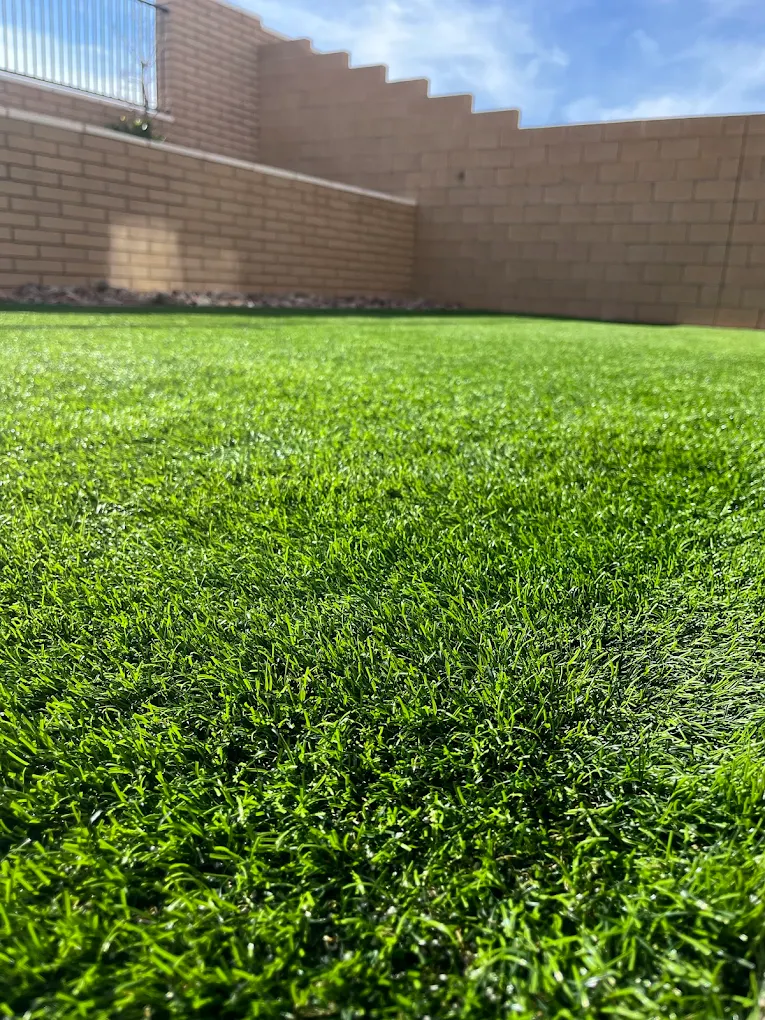
Artificial turf maintenance is more consistent but more frequent. Weekly blowing and occasional rinsing, monthly brushing, and periodic professional cleaning keep turf looking its best. Pet owners face additional cleaning requirements. The difference is that turf maintenance produces visible, immediate results. Rock yard maintenance often feels like a losing battle against weeds and debris accumulation. For homeowners who value a reliably clean, polished appearance, turf delivers more consistent results with predictable effort.
- Rock: weed treatment every 3 to 4 months, debris removal, periodic rock replenishment
- Turf: weekly debris removal, monthly brushing, professional cleaning every 6 to 12 months
- Rock: landscape fabric replacement every 7 to 12 years
- Turf: infill replenishment annually, full replacement every 15 to 20 years
- Both: edge maintenance and border upkeep to keep materials contained
Livability and Functional Use
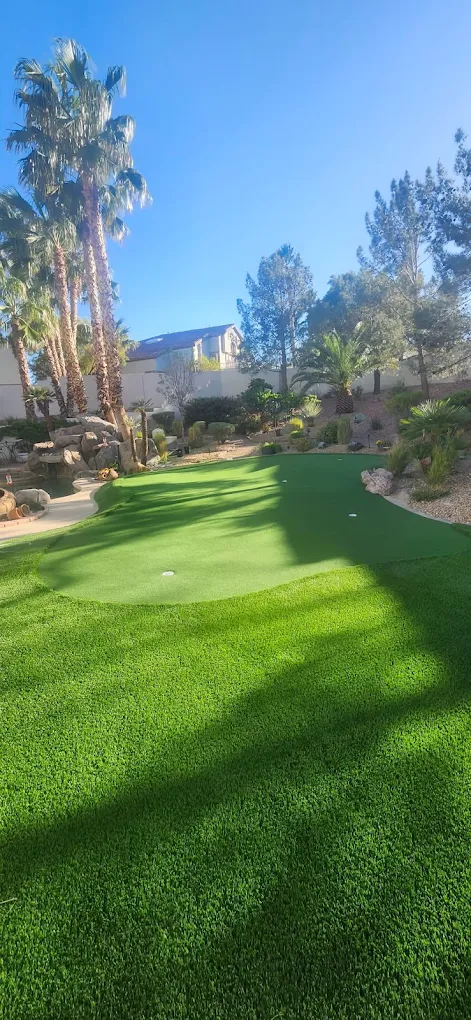
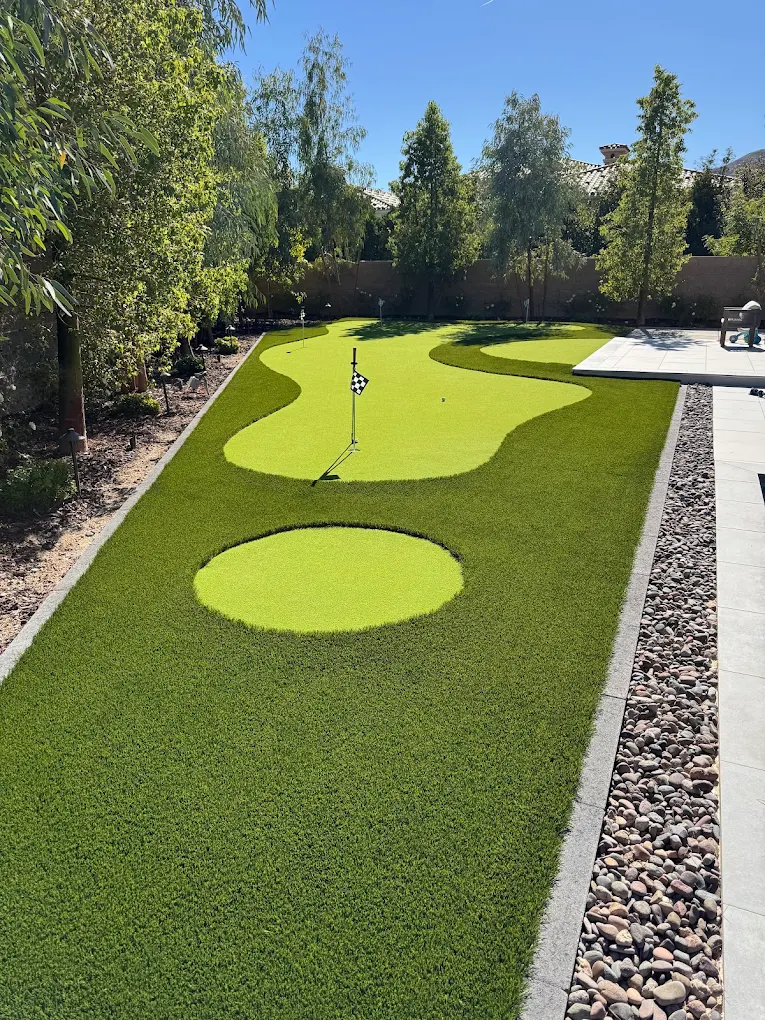
This is where artificial turf pulls ahead decisively for families and pet owners. Turf provides a soft, safe surface for children to play on, dogs to run on, and adults to lounge on comfortably. You can host barbecues, play catch, practice yoga, or let toddlers crawl across it. Desert rock offers none of these functional benefits. It is uncomfortable to walk on, impossible to play on, and provides no cushioning for falls. This is a serious concern for families with young children in neighborhoods like Enterprise and Southern Highlands.
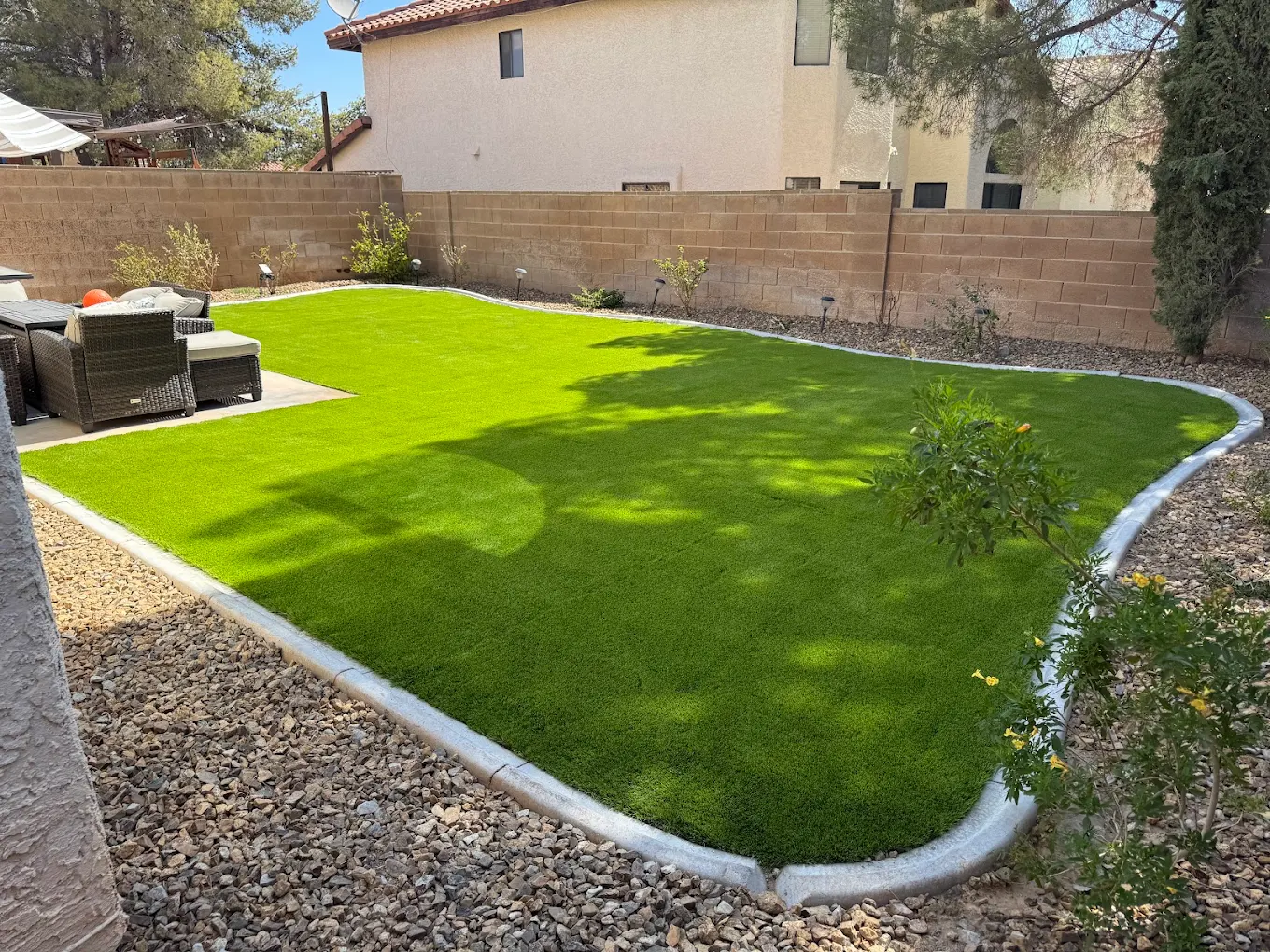
Desert rock excels in areas where functionality is less important than aesthetics and low maintenance. Front yards, side yards, drainage channels, and landscape borders are ideal rock applications. Many Henderson homeowners install turf in their backyards for living and entertaining, while using desert rock in the front yard and non-functional side areas. This combination optimizes both curb appeal and backyard livability.
For pet owners, turf is clearly the better choice for designated pet areas. Dogs struggle on rock surfaces and can injure paw pads on heated gravel. Turf drains pet waste effectively when cleaned regularly, while rock traps organic matter that creates persistent odor problems requiring costly treatment or rock replacement.
Curb Appeal and Property Value
Aesthetics are subjective, but market data shows that both well-maintained turf and professionally designed desert landscaping add value to Henderson homes. Real estate agents across the valley report that green, manicured turf creates stronger first impressions with buyers, particularly those relocating from states where green lawns are the norm. Desert rock landscaping with creative design elements and native plantings appeals to buyers who appreciate the Southwest aesthetic.
The key for both options is quality of installation and ongoing maintenance. A poorly maintained rock yard with weeds, scattered gravel, and dead plants hurts property value. Faded, matted turf with visible seams is equally unappealing. Homeowners in Green Valley and Summerlin who invest in quality installation and consistent maintenance see strong returns from either option. The best approach for maximizing property value is matching the material to the neighborhood aesthetic and maintaining it impeccably.