The Great Backyard Debate: Turf or Pavers?
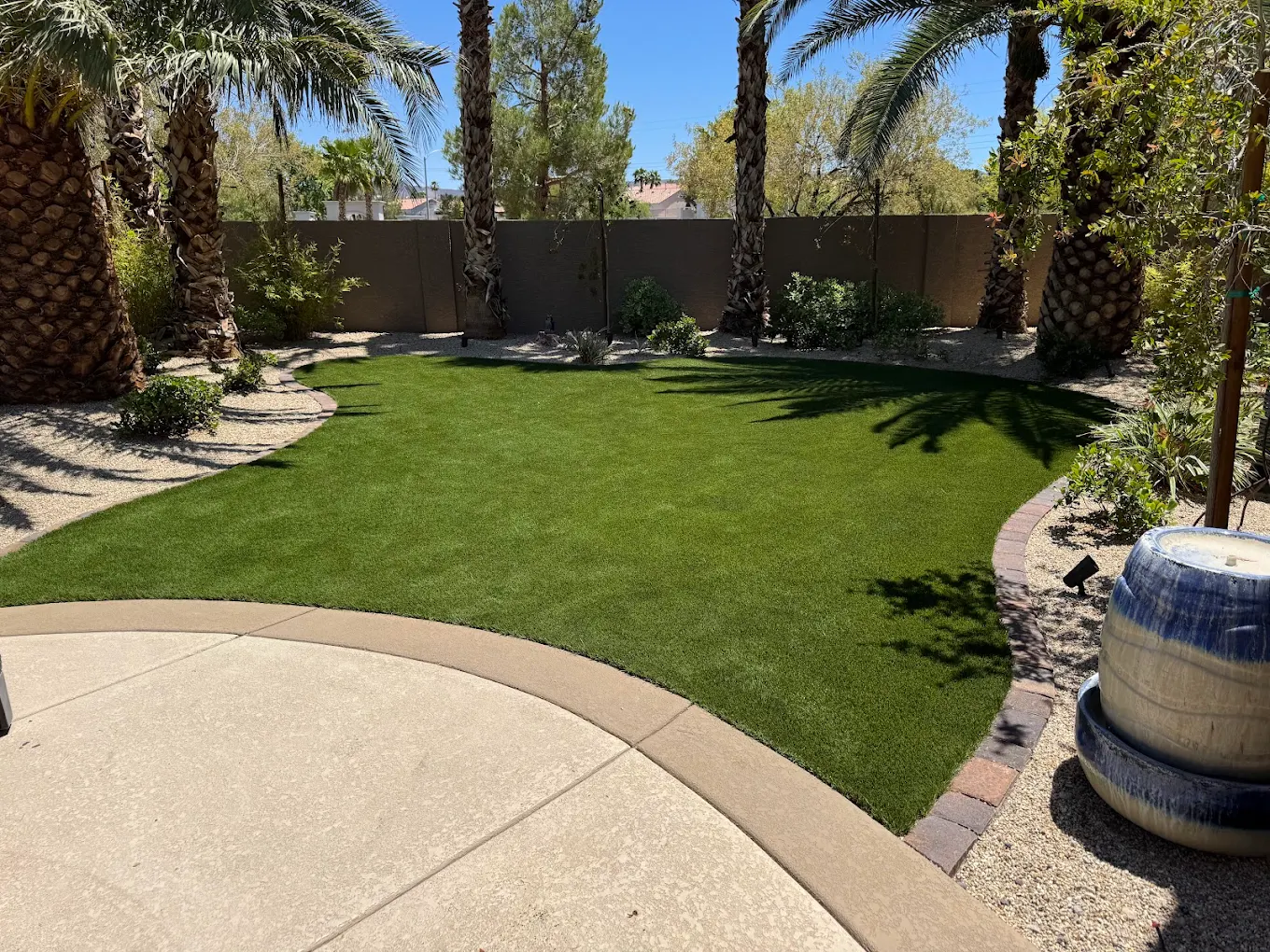
When Henderson homeowners start planning a backyard renovation, the decision often comes down to two popular choices: artificial turf or pavers. Both options eliminate the water-intensive natural grass that the Southern Nevada Water Authority actively discourages, and both deliver a polished, low-maintenance outdoor space. But the way each material handles desert heat, foot traffic, and long-term upkeep differs significantly. This is a decision worth researching before you commit.
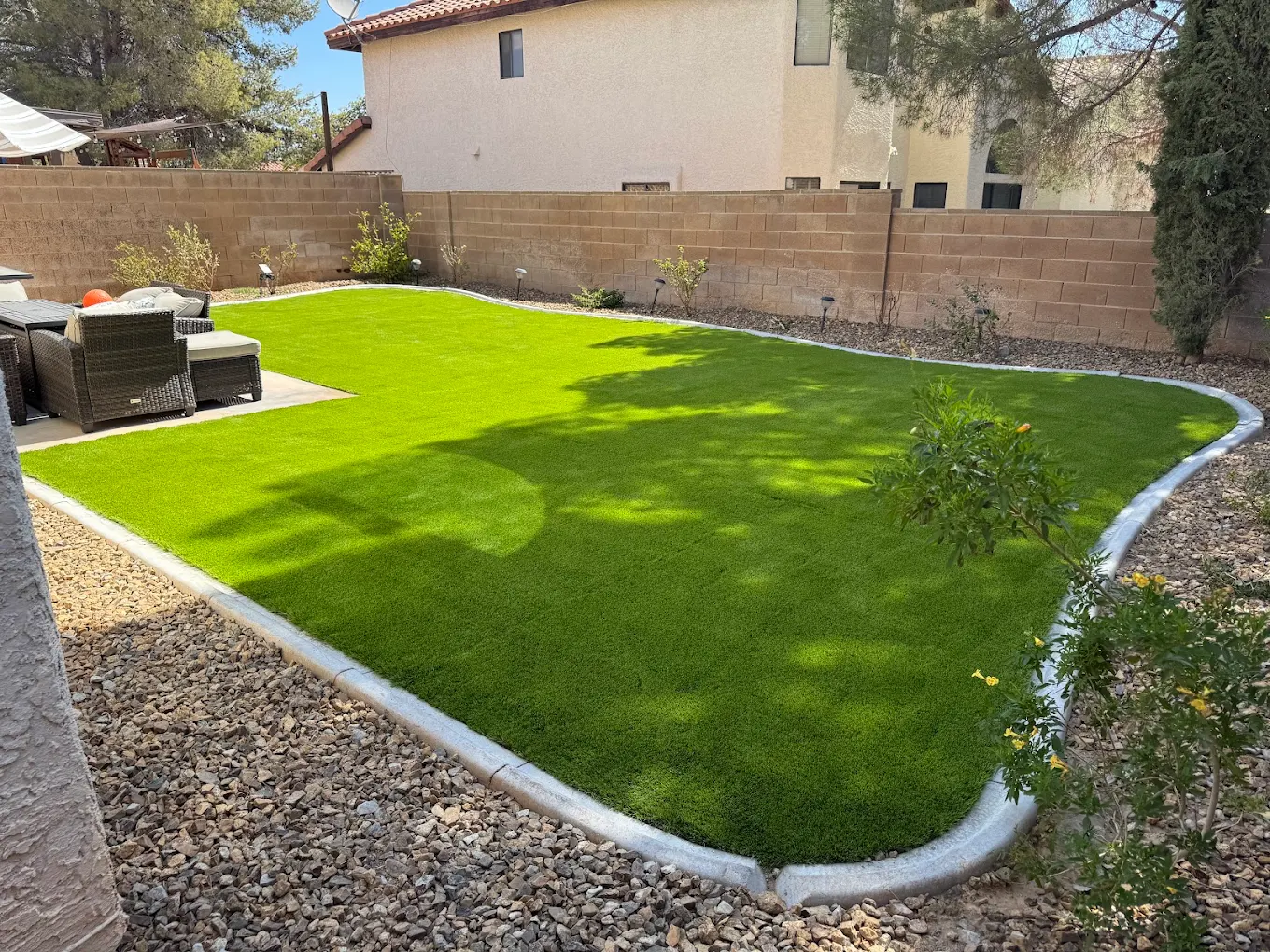
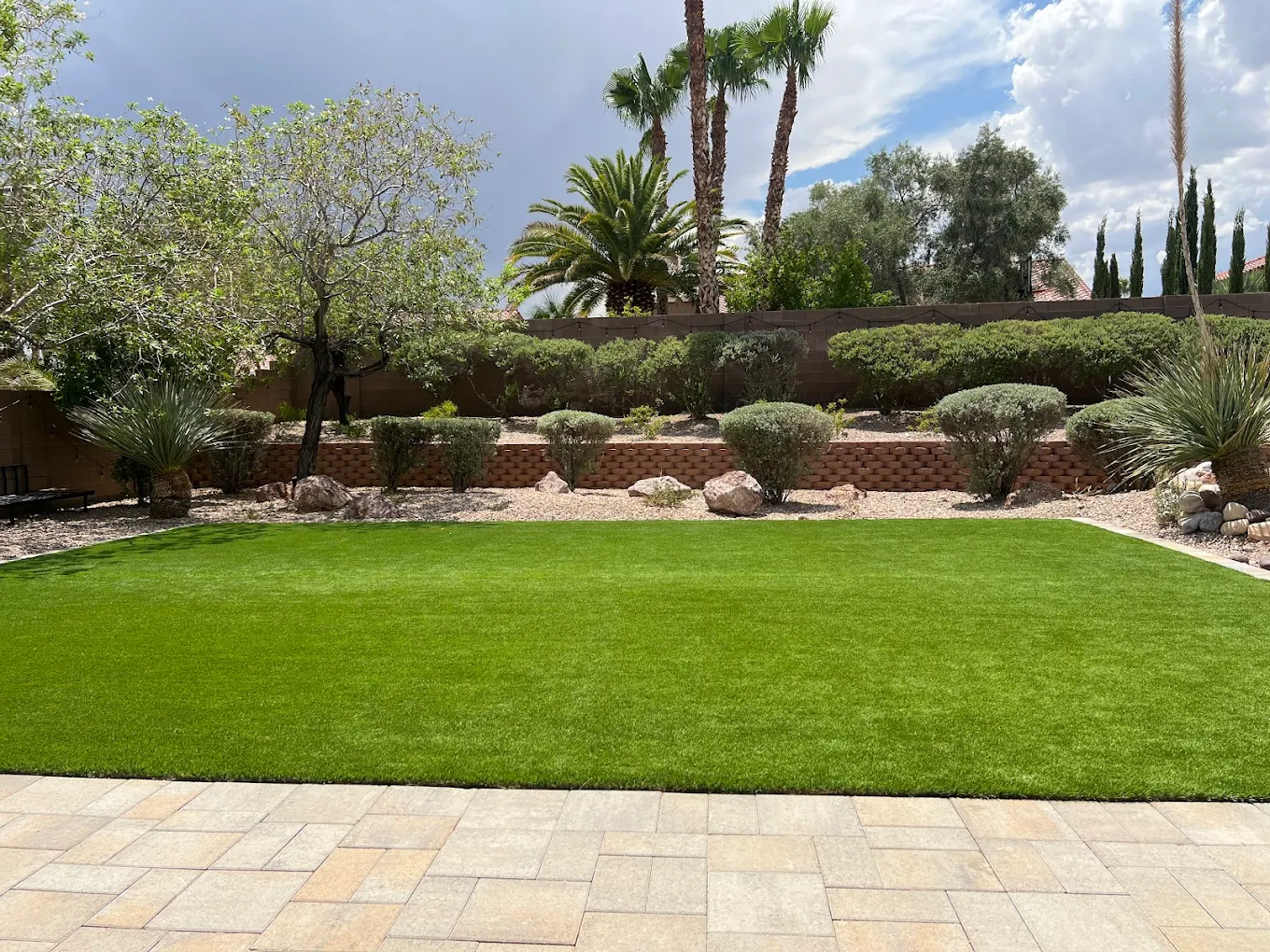
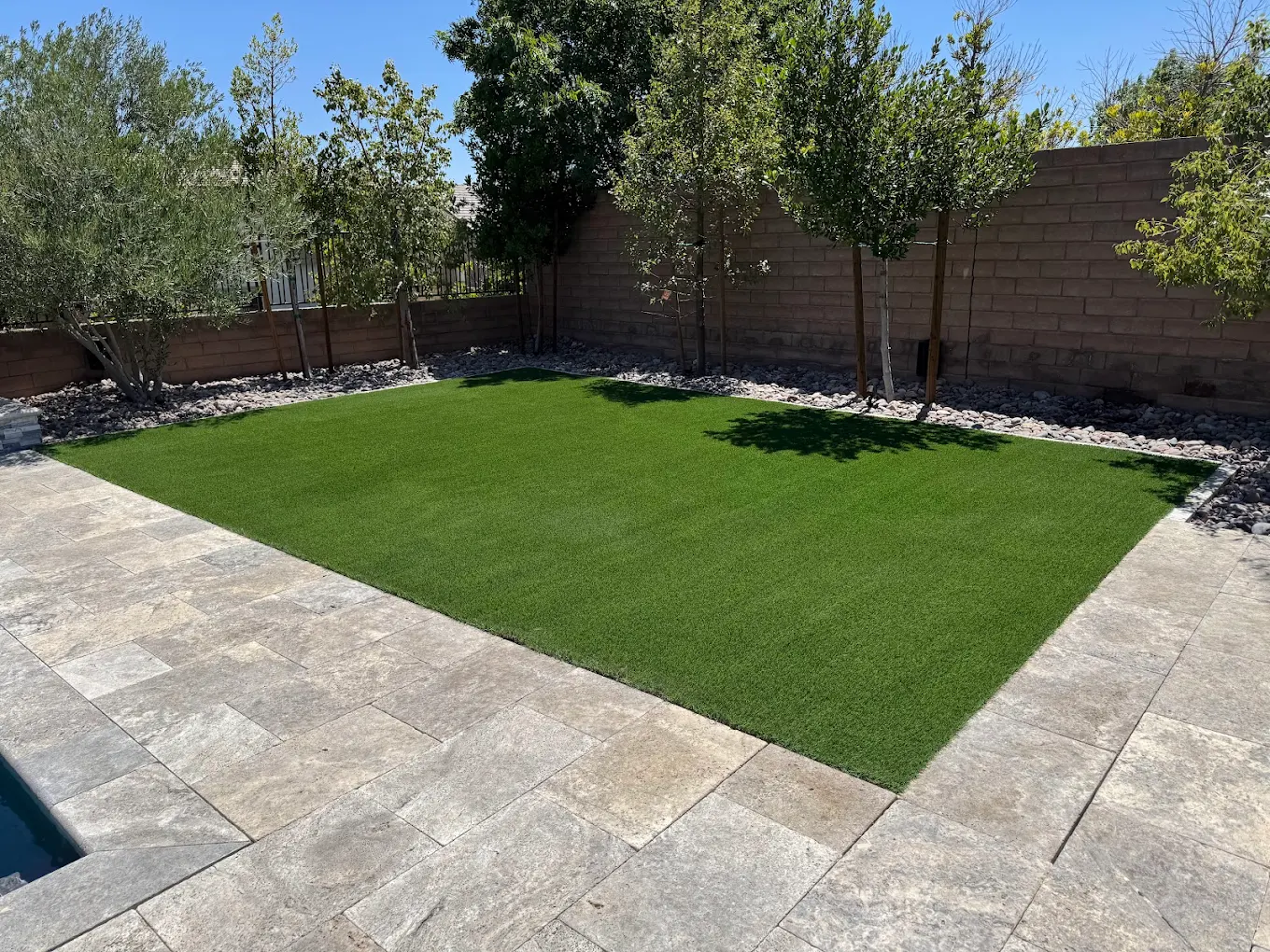
Across neighborhoods like Summerlin, Henderson, and Enterprise, you can find stunning examples of both materials used to great effect. Some homeowners opt for a combination, using pavers for dining and cooking zones while laying turf in play areas and pet runs. Understanding the strengths and weaknesses of each option in the context of our extreme desert climate will help you invest wisely and enjoy your backyard for years to come.
This comparison covers the factors that matter most in Henderson: surface temperature, water savings, installation cost, maintenance demands, and overall comfort. We will also look at how each material holds up under the relentless UV exposure and triple-digit heat that define our summers.
Installation and Long-Term Cost
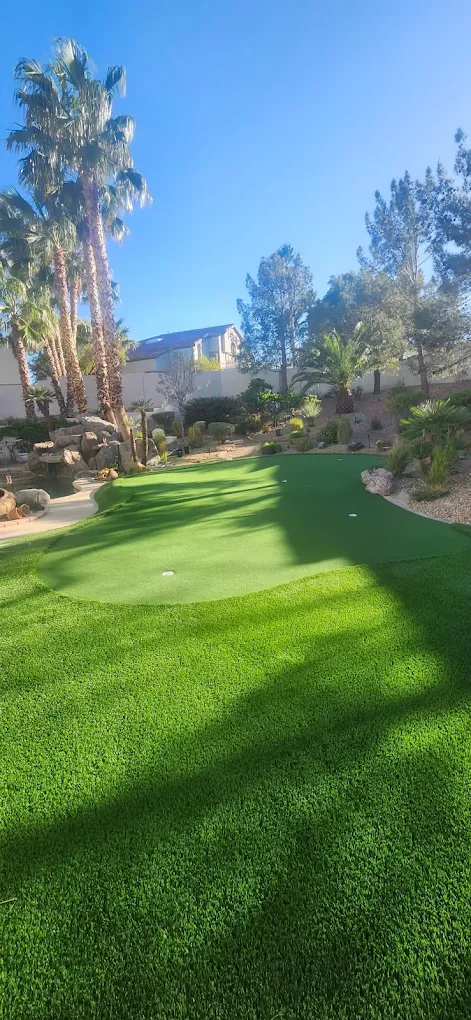
Artificial turf installation in Henderson typically runs between $8 and $14 per square foot, including base preparation, infill, and labor. Pavers, depending on the material and pattern, range from $10 to $25 per square foot for standard concrete pavers and can climb above $30 per square foot for natural stone. Both represent a significant upfront investment compared to basic gravel or desert rock, but both also add measurable value to your property in neighborhoods like Green Valley and Southern Highlands.
Long-term costs favor turf in most scenarios. Artificial turf requires periodic infill replenishment, occasional professional cleaning, and eventual replacement after 15 to 20 years, adding up to roughly $0.50 to $1.00 per square foot annually. Pavers need periodic re-leveling as the desert soil shifts, joint sand replenishment, and sealing every two to three years, which can total $0.75 to $1.50 per square foot annually. Neither option requires water beyond occasional rinsing, keeping utility bills low.
Check with the SNWA for current rebates on removing natural grass. The water authority rebate can offset a significant portion of your turf or paver installation costs.
Surface Temperature and Comfort
Surface temperature is arguably the most important factor for Henderson backyards, and this is where the two materials diverge sharply. On a typical July afternoon when ambient temperature hits 110 degrees, artificial turf can reach 150 to 170 degrees Fahrenheit under direct sunlight. Pavers also get hot, typically reaching 130 to 150 degrees depending on color and material, but lighter-colored travertine and concrete pavers stay noticeably cooler than dark turf surfaces.
Homeowners in Centennial Hills and Paradise who spend significant time barefoot in their backyards often prefer pavers in sun-exposed areas for this reason. Turf manufacturers have introduced cooling technologies like lighter-colored fibers and heat-reflective coatings that reduce surface temperatures by 15 to 20 degrees. Shade structures, misters, and strategic tree placement also mitigate heat on turf surfaces effectively.
Comfort underfoot is another consideration. Turf provides a soft, cushioned surface ideal for children and pets. Pavers offer a firm, stable surface better suited for furniture, grills, and heavy foot traffic. Many Henderson homeowners find the ideal solution is using both materials in different zones.
Want Us to Handle It Instead?
Get a free quote for your Henderson property. Same-day appointments available.
Ongoing Maintenance Requirements
Maintenance is where artificial turf holds a clear advantage for most Henderson homeowners. Weekly upkeep involves blowing off debris, occasional rinsing, and brushing high-traffic areas to keep fibers upright. Monthly deep cleaning with an enzymatic cleaner keeps odors at bay, especially for pet owners in Spring Valley and Henderson. The entire routine takes 15 to 30 minutes per week for an average-sized yard.
Pavers demand a different kind of attention. Desert dust and sand constantly fill the joints, and weeds can sprout aggressively between pavers even in arid conditions. Joint sand needs replenishment every one to two years, and the surface requires sealing to prevent staining and UV degradation. Pavers can also shift and become uneven as the caliche-heavy Henderson soil expands and contracts with temperature swings, requiring periodic re-leveling that most homeowners hire professionals to handle.
- Turf: 15 to 30 minutes weekly for blowing, rinsing, and brushing
- Pavers: periodic weed removal, joint sand replenishment, and sealing every 2 to 3 years
- Turf: professional deep cleaning recommended every 6 to 12 months
- Pavers: professional re-leveling may be needed every 3 to 5 years
- Both: occasional spot cleaning for spills and stains
Durability and UV Resistance
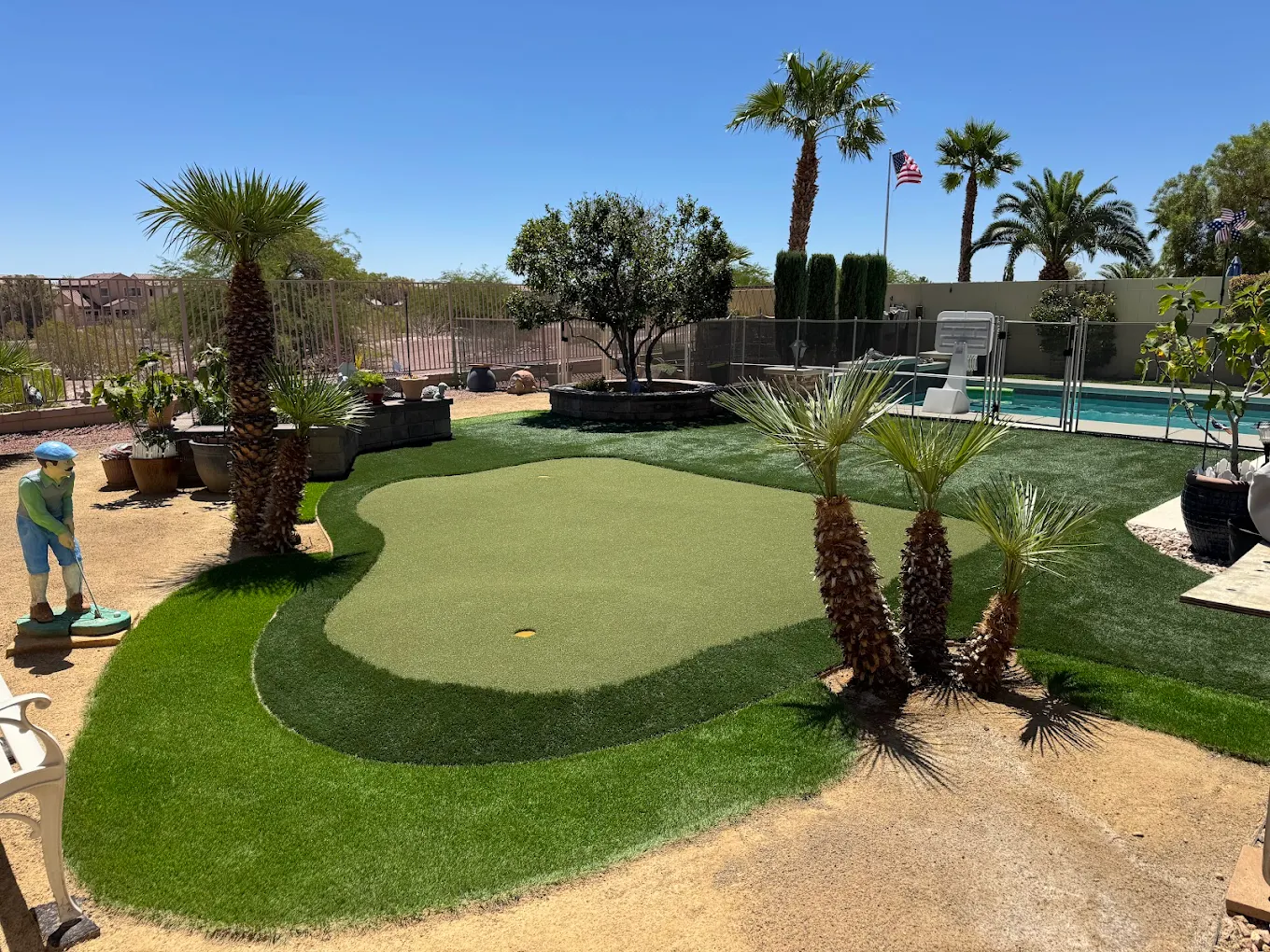
Henderson delivers some of the most intense UV radiation in the country, and both turf and pavers must withstand it year after year. Quality artificial turf with UV stabilizers maintains its color and structural integrity for 15 to 20 years before needing replacement. Budget turf without proper UV protection can fade and become brittle within 5 to 8 years, making product selection critical for homeowners in sun-drenched neighborhoods like Boulder City and North Henderson.
Pavers, particularly concrete and natural stone varieties, handle UV exposure exceptionally well. Concrete pavers may fade slightly over decades, but they remain structurally sound for 25 to 50 years with proper installation and maintenance. Natural stone like travertine is virtually immune to UV damage. This longevity advantage makes pavers attractive for permanent hardscape features, while turf works better in areas where you might want to change the layout down the road.
When to Choose Turf, Pavers, or Both
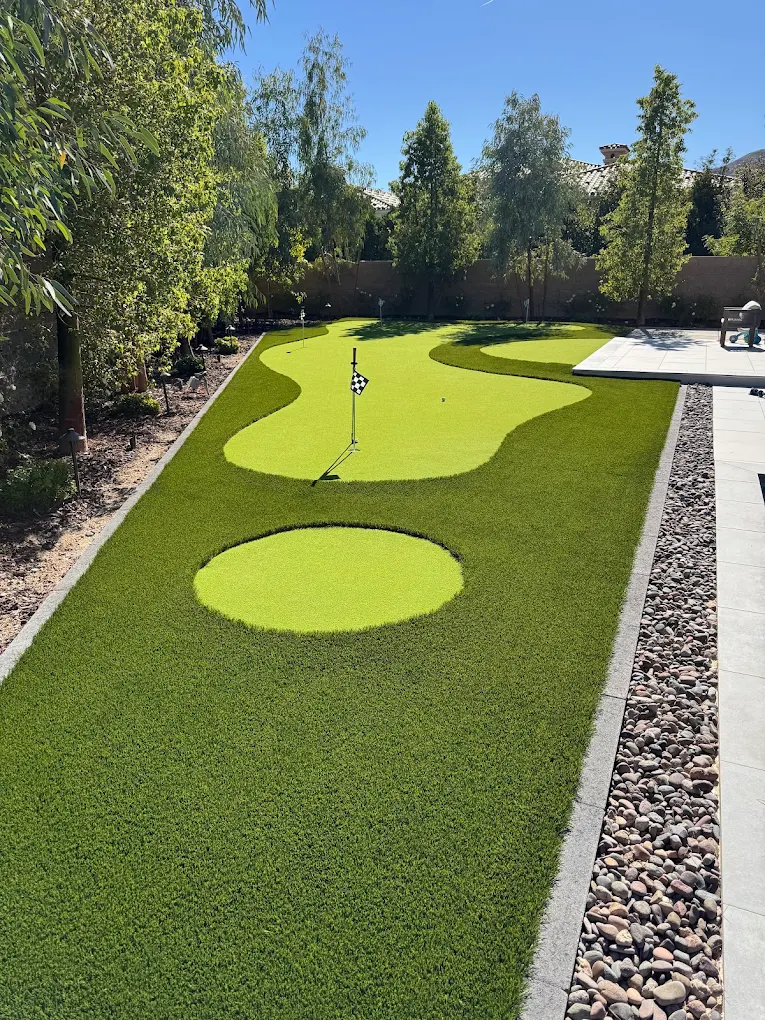
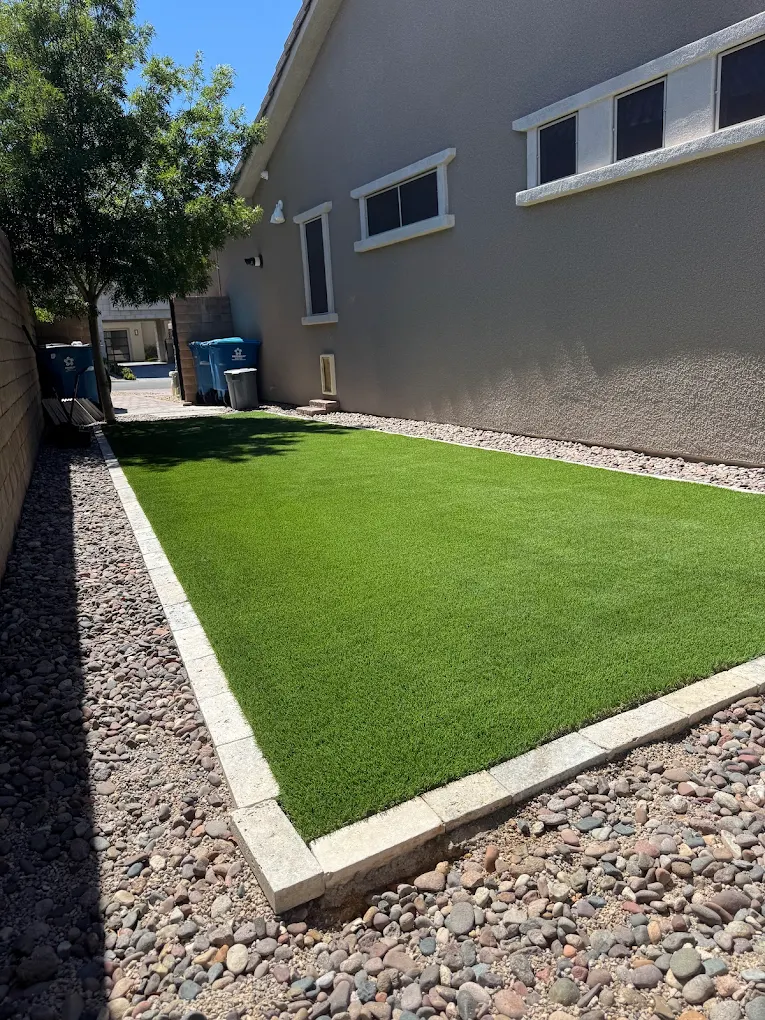
Artificial turf is the better choice when you want a soft, green play surface for kids and pets, when you prioritize the look of a traditional lawn, or when you want the lowest possible weekly maintenance burden. It excels in open yard areas, side yards, putting greens, and dog runs throughout Henderson neighborhoods from Enterprise to Centennial Hills.
Pavers make more sense for outdoor kitchens, fire pit areas, pool decks, walkways, and dining zones where furniture stability and a hard surface matter. They also perform better in areas with heavy vehicle traffic like driveways and RV pads. For homeowners who entertain frequently, the clean, structured look of pavers creates an elegant outdoor living room feel.
The smartest approach for many Henderson backyards is combining both materials. Use turf for the open green space and pet areas, then transition to pavers for cooking, seating, and high-traffic walkways. This hybrid design gives you the best of both worlds and creates visual interest through contrasting textures and materials.
Many Henderson landscape designers recommend a 60/40 split: 60 percent turf for green space and 40 percent pavers for functional hardscape. This ratio balances aesthetics, comfort, and utility for most family backyards.