What Is Hybrid Grass and How Does It Work?
Hybrid grass systems combine synthetic turf fibers with natural grass to create a surface that offers the durability of artificial turf with the feel and environmental benefits of real grass. The most common approach weaves synthetic fibers into a natural grass root zone, where the synthetic components provide structural stability while natural grass grows around and through them. Originally developed for professional sports stadiums, hybrid grass technology has expanded to golf courses, high-end commercial properties, and some residential applications.
The appeal of hybrid grass is understandable. It promises the best of both worlds. Natural grass provides cooling, oxygen production, and the authentic look and feel that no fully synthetic product can perfectly replicate. The synthetic fibers protect the root zone, prevent divots, and maintain surface consistency during heavy use. For professional sports venues in moderate climates, hybrid grass has proven its value. But the question Henderson homeowners in Summerlin, Henderson, and Paradise need to ask is whether this technology can function in a desert environment.
Understanding the practical requirements of hybrid grass reveals why the Henderson market remains firmly oriented toward full artificial turf. Water needs, maintenance complexity, and climate compatibility all factor into a comparison that looks very different in the desert than it does in temperate regions.
Water Requirements: The Dealbreaker for Henderson
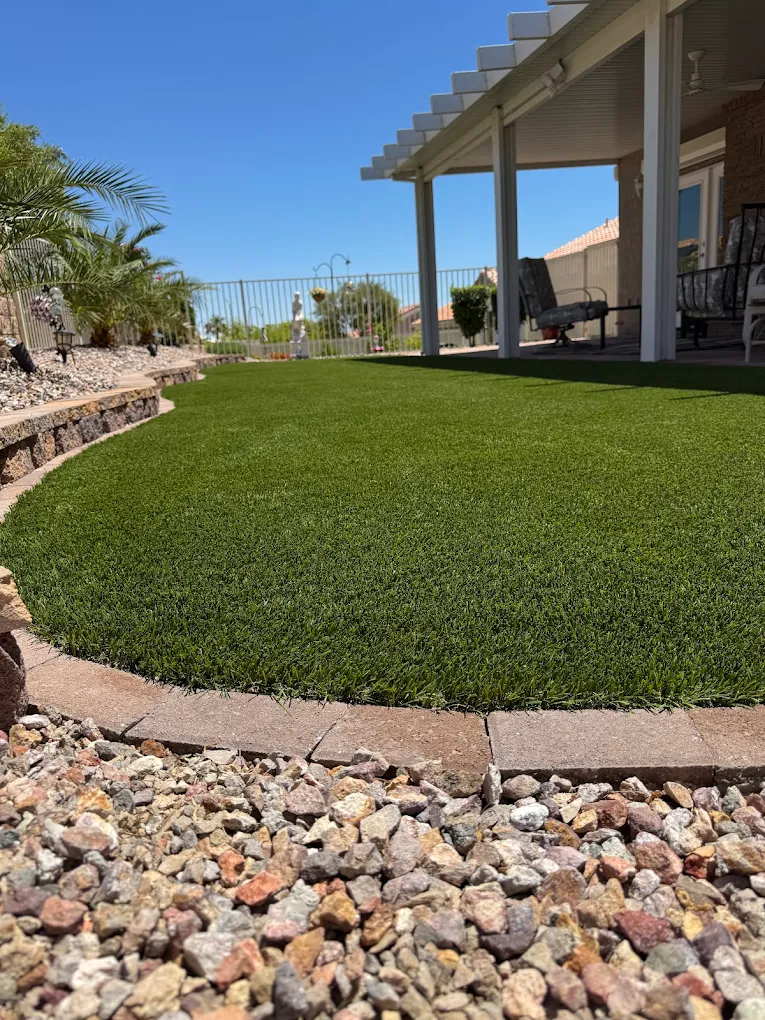
Hybrid grass systems require significant irrigation because they contain living natural grass that needs water to survive. While hybrid grass uses somewhat less water than a pure natural lawn due to the synthetic fiber component reducing surface area and slowing evaporation, the savings are modest. A hybrid grass installation in Henderson would still require approximately 40 to 55 gallons per square foot annually, compared to 73 gallons for natural grass and essentially zero for artificial turf.
In a region where the Southern Nevada Water Authority actively pays homeowners to remove natural grass and water rates continue rising, installing any surface that requires significant irrigation runs counter to both regulatory direction and economic sense. SNWA grass replacement rebate specifically excludes hybrid systems that contain living grass components, meaning you sacrifice the financial incentive while still bearing substantial water costs. For neighborhoods across Spring Valley, North Henderson, and Enterprise, the water math simply does not work for hybrid grass.
Hybrid grass systems require ongoing irrigation that conflicts with Southern Nevada Water Authority conservation mandates. SNWA rebates do not apply to hybrid grass installations, and water restrictions may make maintaining a hybrid system impractical during drought conditions.
Maintenance: Simple vs Demanding
Artificial turf maintenance in Henderson involves weekly blowing and rinsing, monthly brushing, and periodic professional cleaning. The total time investment is modest, the skills required are basic, and the schedule is flexible. You can skip a week of maintenance without significant consequences, and seasonal adjustments involve minor changes to cleaning frequency rather than fundamentally different care routines.
Hybrid grass maintenance is exponentially more complex. You must manage a living organism in one of the harshest climates in North America. Mowing, fertilizing, aerating, overseeding, pest control, and precise irrigation scheduling are all required alongside the synthetic fiber maintenance. The natural grass component needs different care in summer versus winter, and a single mistake in irrigation timing during a Henderson heat wave can kill the natural grass entirely, leaving you with a partially synthetic, partially dead surface that looks worse than either option alone.
Want Us to Handle It Instead?
Get a free quote for your Henderson property. Same-day appointments available.
Desert Heat Performance
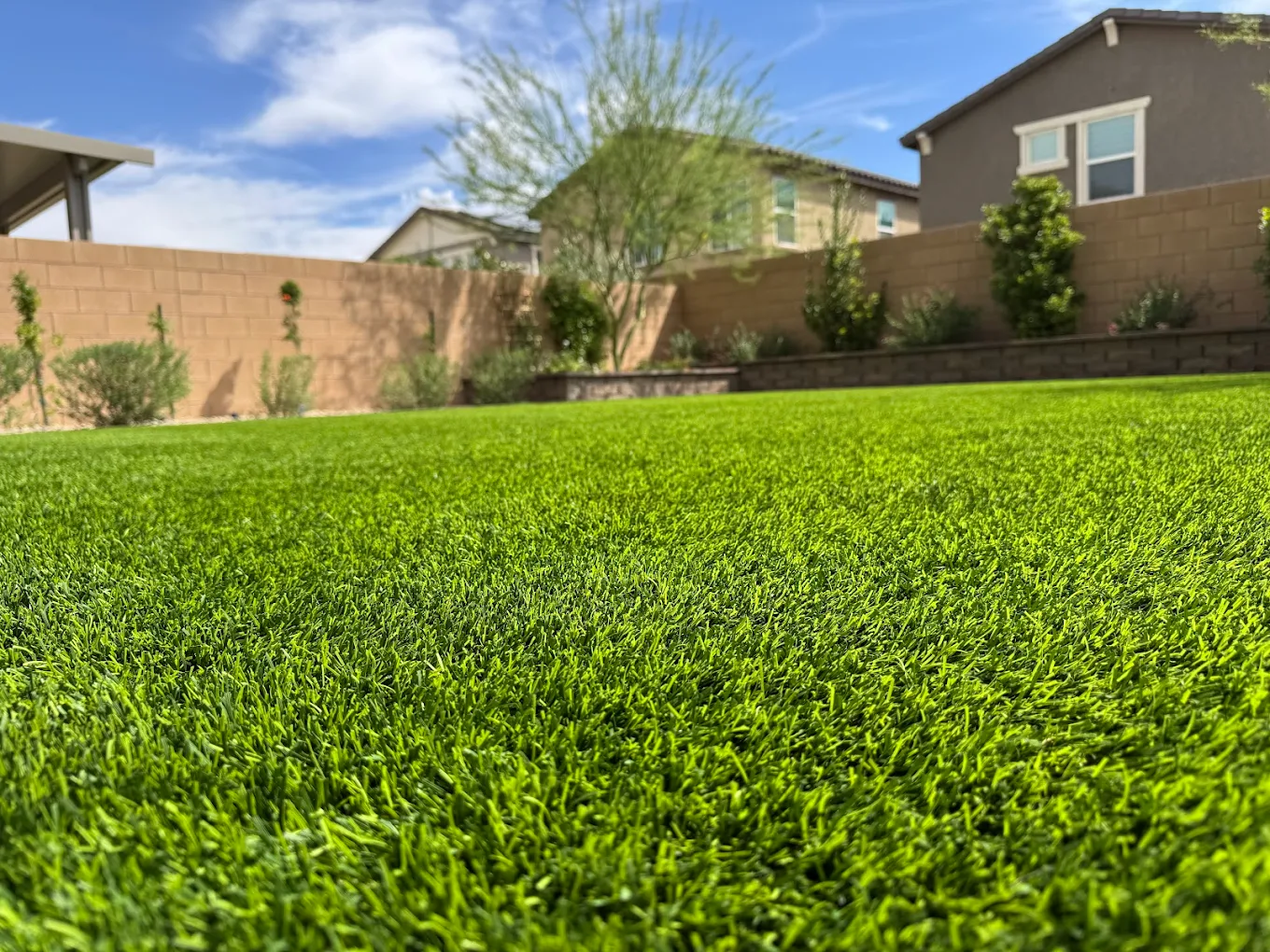
One area where hybrid grass theoretically excels is surface temperature. Natural grass actively cools itself through transpiration, and even a partial natural grass component can reduce surface temperatures compared to full synthetic turf. On a 110-degree Henderson day, hybrid grass surfaces run 20 to 40 degrees cooler than artificial turf, making barefoot use comfortable for longer periods.
This cooling benefit depends on the natural grass being alive and healthy, which circles back to the water and maintenance challenges. During the hottest months when cooling matters most, the natural grass component is under severe stress and may go dormant or die without extensive watering. Bermuda grass, the most common warm-season species used in Henderson hybrid systems, can survive extreme heat but requires substantial irrigation to maintain the transpirational cooling that makes hybrid grass attractive in the first place. For homeowners in Centennial Hills and Green Valley, this creates a frustrating cycle of high water consumption to achieve the temperature benefit.
Total Cost of Ownership Comparison
Hybrid grass installations cost substantially more than either natural grass or artificial turf alone. Installation runs 15 to 30 dollars per square foot due to the specialized materials and expertise required, compared to 8 to 14 dollars for quality artificial turf. Annual maintenance costs for hybrid grass in Henderson add 2 to 4 dollars per square foot for irrigation, fertilization, mowing, and specialized care, dwarfing the 0.50 to 1 dollar per square foot annual maintenance cost of artificial turf.
Over a 10-year period, a 500-square-foot hybrid grass installation in Henderson would cost approximately 17,500 to 35,000 dollars in installation and maintenance combined. The same area in quality artificial turf would run 6,500 to 12,000 dollars. This cost disparity makes hybrid grass a difficult financial proposition for residential homeowners in Paradise, Boulder City, or any Henderson neighborhood where water costs and conservation regulations add pressure to the equation.
When Hybrid Grass Might Make Sense
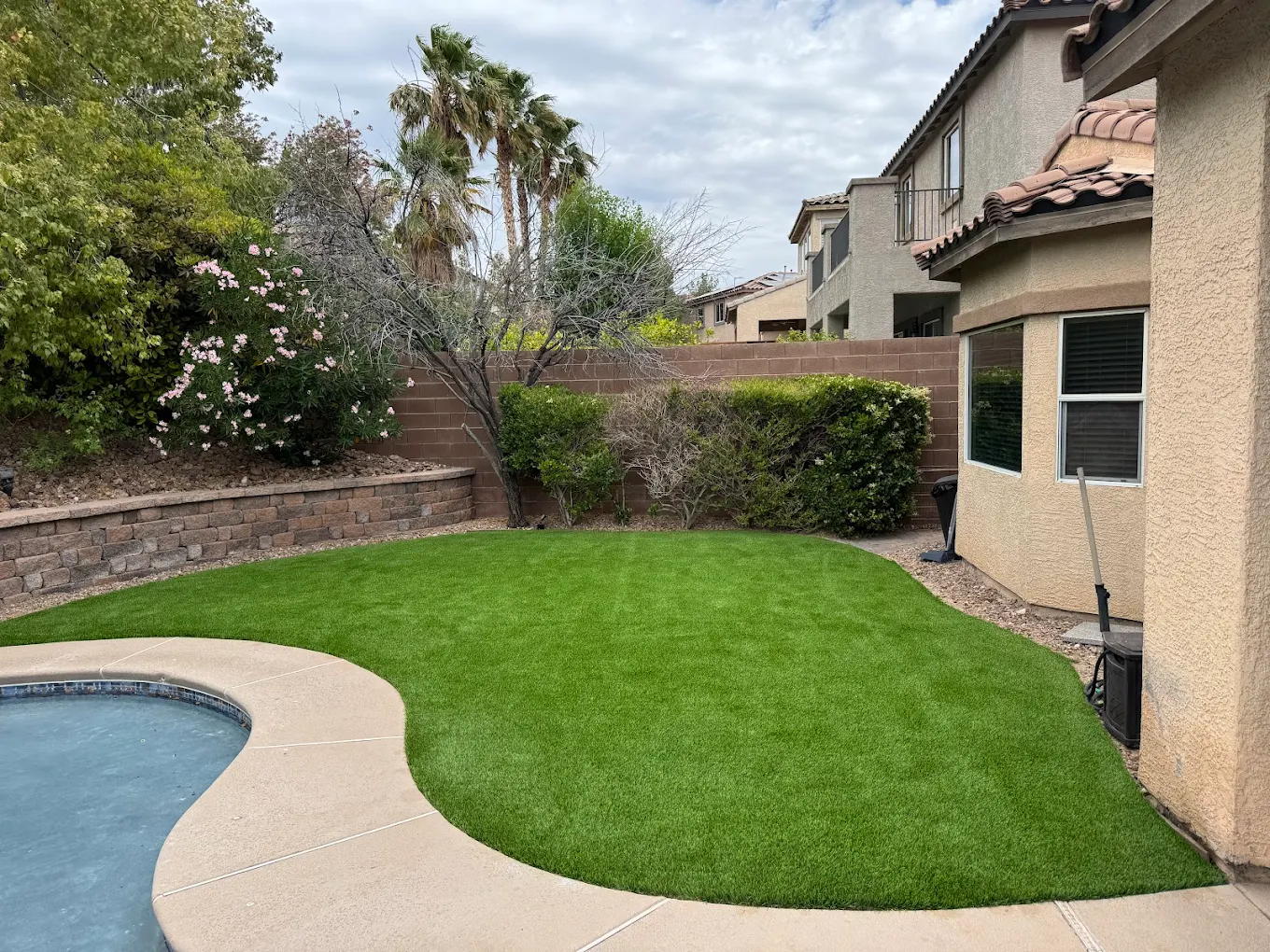
Despite its challenges in Henderson, hybrid grass has legitimate applications in specific situations. Professional sports facilities with dedicated maintenance budgets and staff can justify the cost and complexity for the superior playing surface hybrid grass provides. Golf courses and high-end commercial properties like resort pool areas may find the natural grass aesthetic and cooling benefits worth the premium investment.
For residential Henderson homeowners, hybrid grass rarely makes practical or financial sense. The water requirements conflict with conservation mandates, the maintenance demands exceed what most families can sustain, and the cost premium over artificial turf is substantial. Full artificial turf with cooling infill delivers the green, usable outdoor space that Henderson families want without the irrigation burden, complex maintenance, or water authority conflicts that hybrid grass entails.
If the natural feel of real grass is truly important to you, consider a small section of native grass or drought-tolerant turf grass variety in a shaded, protected area alongside your main artificial turf installation. This gives you a touch of genuine green without committing your entire yard to the demands of maintaining living grass in the desert.
Some Henderson homeowners compromise by installing a small patch of drought-tolerant Bermuda grass in a shaded area for the sensory experience, while using artificial turf for the majority of their yard. This hybrid approach on your own terms avoids the drawbacks of a true hybrid grass system.