Cats and Artificial Turf: A Different Relationship
Most turf advice out there is written for dog owners, but Henderson cat parents have their own questions and concerns. Cats interact with turf in different ways. They walk more carefully, are picky about where they do their business, groom their paws obsessively, and are more sensitive to both chemical residues and surface textures. All of this means turf selection, installation, and maintenance for cat households need a different approach.
Good news: artificial turf is generally safe for cats when you use the right products and stay on top of maintenance. Cats are actually gentler on turf than dogs in most cases, creating less wear, less digging damage, and way less urine volume. That said, cats are more sensitive to certain chemicals and more particular about surface textures, which makes product selection more critical than in a dog-only household.
Henderson is seeing a big trend toward outdoor cat enclosures, often called catios, creating a whole new market for cat-specific turf setups. Summerlin and Henderson homeowners are building enclosed outdoor spaces that give indoor cats safe access to fresh air and sunshine, and artificial turf has become the go-to flooring material for these structures.
Health and Safety Concerns for Cats
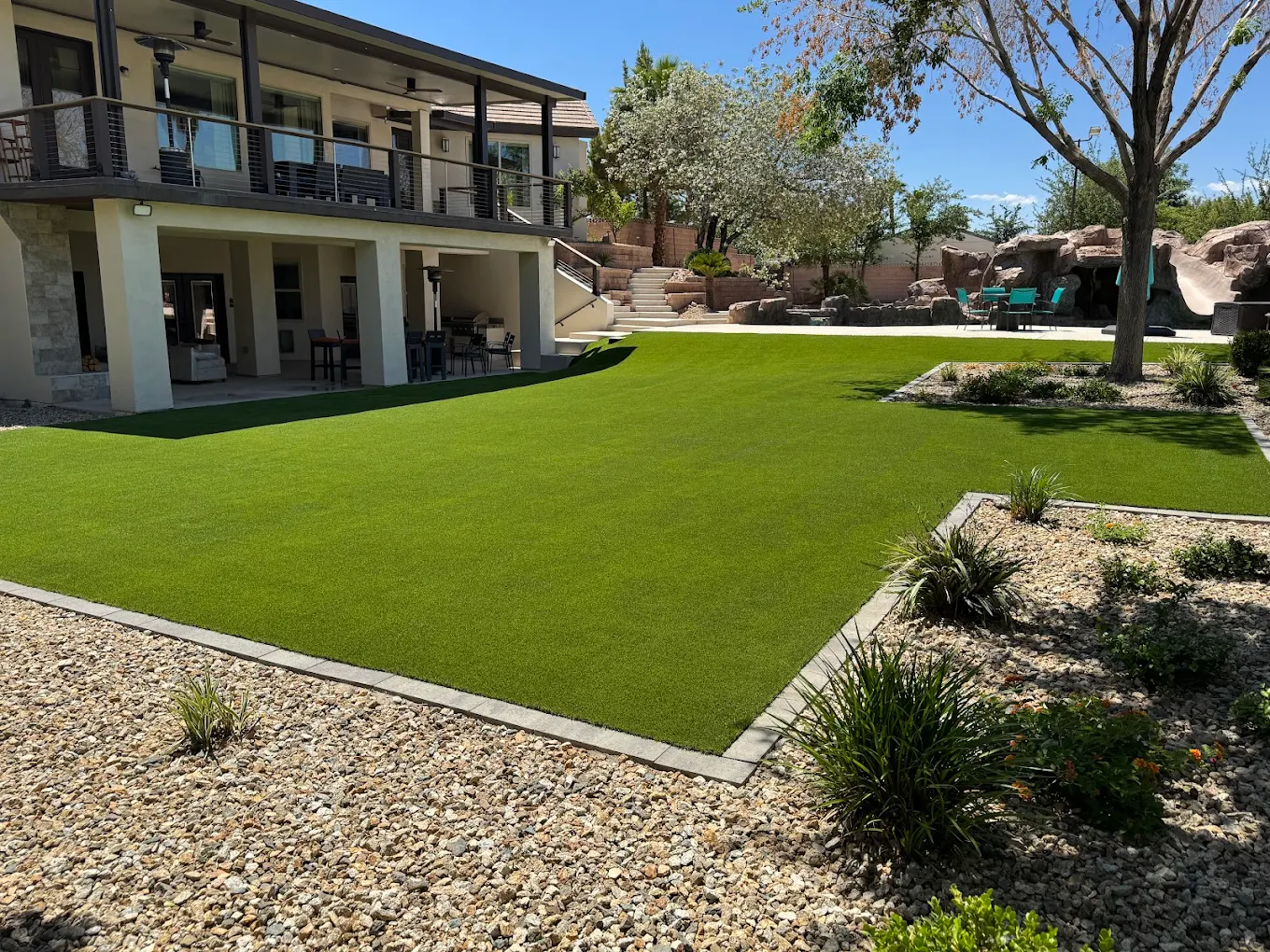
Cats are more vulnerable to certain chemical exposures than dogs because their liver enzymes process toxins differently. That makes the safety of turf materials and cleaning products an even bigger deal for cat owners. Always go with turf products certified free of lead, heavy metals, and volatile organic compounds. Skip crumb rubber infill entirely in cat areas since cats may ingest small particles during their constant grooming.
Heat safety matters just as much for cats in Henderson, though cats tend to be smarter about avoiding hot surfaces. A cat is less likely than a dog to charge across superheated turf, but they can still get paw burns if their enclosure lacks adequate shade. Enterprise and Southern Highlands cat owners should make sure any outdoor turf area offers both sunny and shaded spots so cats can self-regulate their temperature.
Cleaning products for cat turf areas need extra scrutiny. Many common disinfectants and cleaners contain phenols, essential oils, or permethrin that are toxic to cats even in tiny amounts. Stick exclusively to enzyme-based cleaners and sanitizers specifically labeled as cat-safe. When in doubt, rinse the turf thoroughly with plain water after any cleaning before letting your cat back out.
Never use products with phenols, pine oil, tea tree oil, or permethrin on turf where cats go. These ingredients are highly toxic to cats and can cause serious illness just from paw contact followed by grooming.
Designing a Catio with Artificial Turf
Catios have exploded in popularity in Henderson as cat owners look for ways to give their indoor cats outdoor enrichment without the risks of free roaming. Artificial turf makes an excellent catio floor: it is comfortable, easy to clean, and feels natural under paws for cats who would otherwise never experience the outdoors. A basic catio can be as simple as an enclosed patio section, while fancy designs include climbing structures, tunnels, and multi-level platforms.
When picking turf for a catio, go with a soft, dense pile that feels good under cat paws. Cats are way more texture-sensitive than dogs, and some cats will flat-out refuse to walk on stiff, coarse turf fibers. A medium-pile product (1.25 to 1.75 inches) with soft polyethylene fibers gives cats the plush surface they prefer. Green Valley and Paradise cat owners say their cats actively choose to lounge on turf over hard surfaces when they have the option.
Catio drainage is less critical than in a dog yard since most cat owners do not expect their cats to use the turf as a bathroom. Still, basic drainage matters for spilled water bowls, rain, and the occasional accident. Make sure the catio floor has a slight slope toward one edge and that the turf backing lets water pass through to a drainable surface below.
Want Us to Handle It Instead?
Get a free quote for your Henderson property. Same-day appointments available.
Will Cats Use Artificial Turf as a Bathroom?
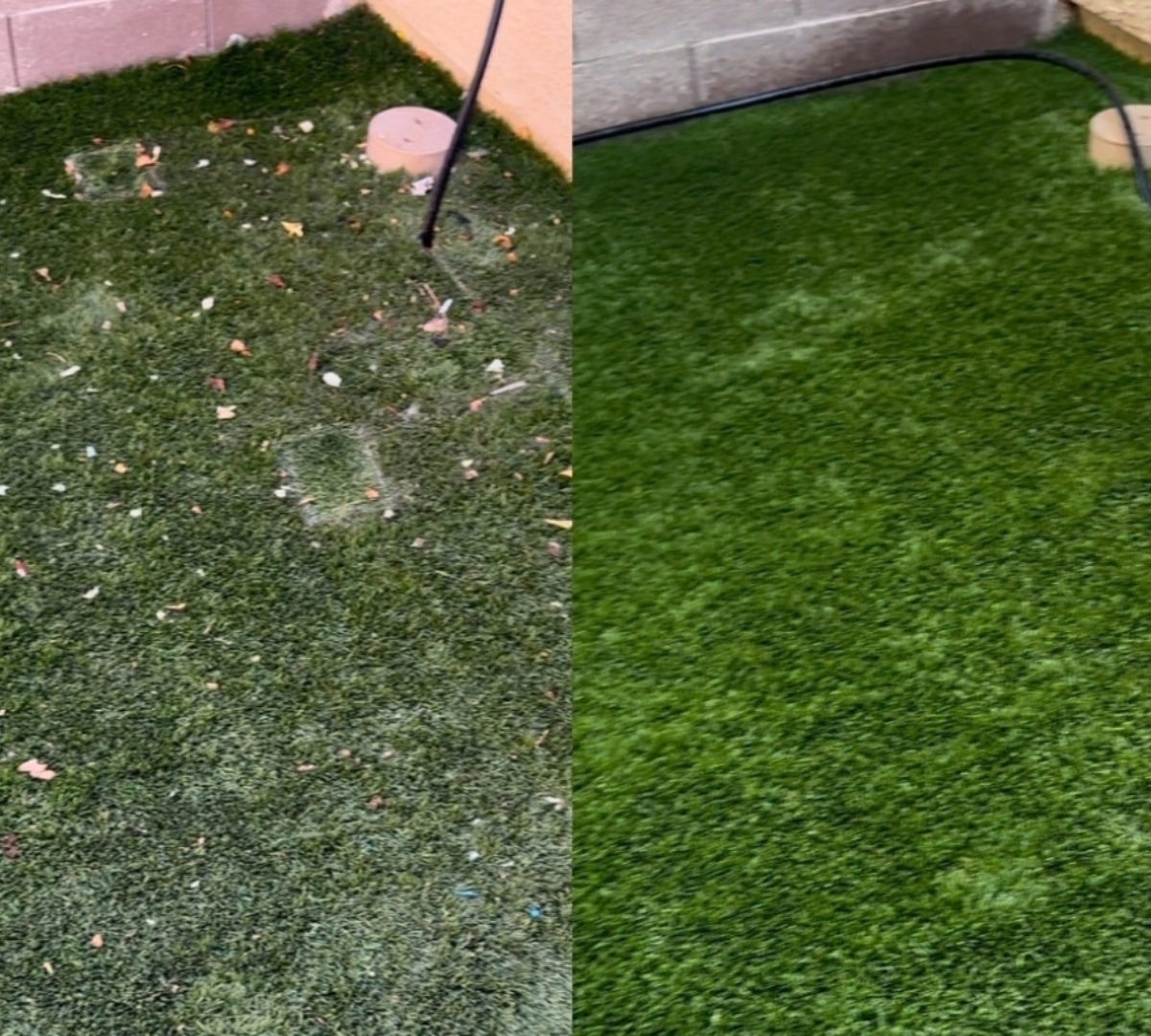
This is the question Artificial Turf Cleaning Henderson hears most from cat owners considering turf. The answer depends on your individual cat and the setup. Cats have a strong instinct to bury their waste, and artificial turf does not allow the digging and covering that litter or loose soil does. Most indoor cats with established litter box habits will not switch to using turf for elimination, especially if their litter box stays easily accessible.
Outdoor or semi-outdoor cats who are used to garden beds may try using the turf as a bathroom, but most quickly figure out they cannot bury their waste and look for alternatives. If your catio borders garden beds with loose soil, your cat will almost certainly prefer the soil. Centennial Hills and North Henderson cat owners who have both turf and garden areas in their catios confirm this strong preference for diggable surfaces.
If you specifically want your cat to use the outdoor area as a bathroom, place a shallow litter tray filled with outdoor-safe litter on the turf. This keeps waste contained and easy to clean while giving your cat the burying satisfaction they crave. The turf around the tray might need occasional enzyme cleaning for any overshoot, but the maintenance is minimal compared to dog-use turf areas.
Want to prevent turf bathroom incidents? Keep a clean litter box in or near the catio. Cats almost always prefer their established litter box over any unfamiliar surface.
Turf Maintenance for Cat Owners
Maintenance on cat turf is way lighter than dog turf, mainly because cats produce way less outdoor waste. If your cat uses the turf purely for recreation and not as a bathroom, upkeep is just periodic rinsing to clear dust and debris, monthly brushing to keep fibers upright, and seasonal deep cleaning for hairball deposits, spilled food, or tracked litter.
Cat hair is the unique maintenance challenge for turf in cat areas. Long-haired breeds leave a lot of fur on the surface, which can get embedded in fibers and infill over time. A weekly pass with a rubber-bristled brush or leaf blower removes surface hair before it works its way deep into the turf. Spring Valley and Paradise cat owners with Persians and Maine Coons find this weekly hair removal prevents the buildup that makes deep cleaning a pain.
If your cat does use the turf for elimination sometimes, treat those spots just like you would dog waste: remove solids immediately, rinse the area, and apply enzyme cleaner. Cat urine actually contains higher concentrations of urea and felinine (a sulfur-containing amino acid) than dog urine, producing a particularly strong and stubborn odor. Quick treatment with enzyme cleaner is especially important because cat urine odor compounds crystallize rapidly in Henderson dry heat.
Turf-Compatible Enrichment for Outdoor Cats
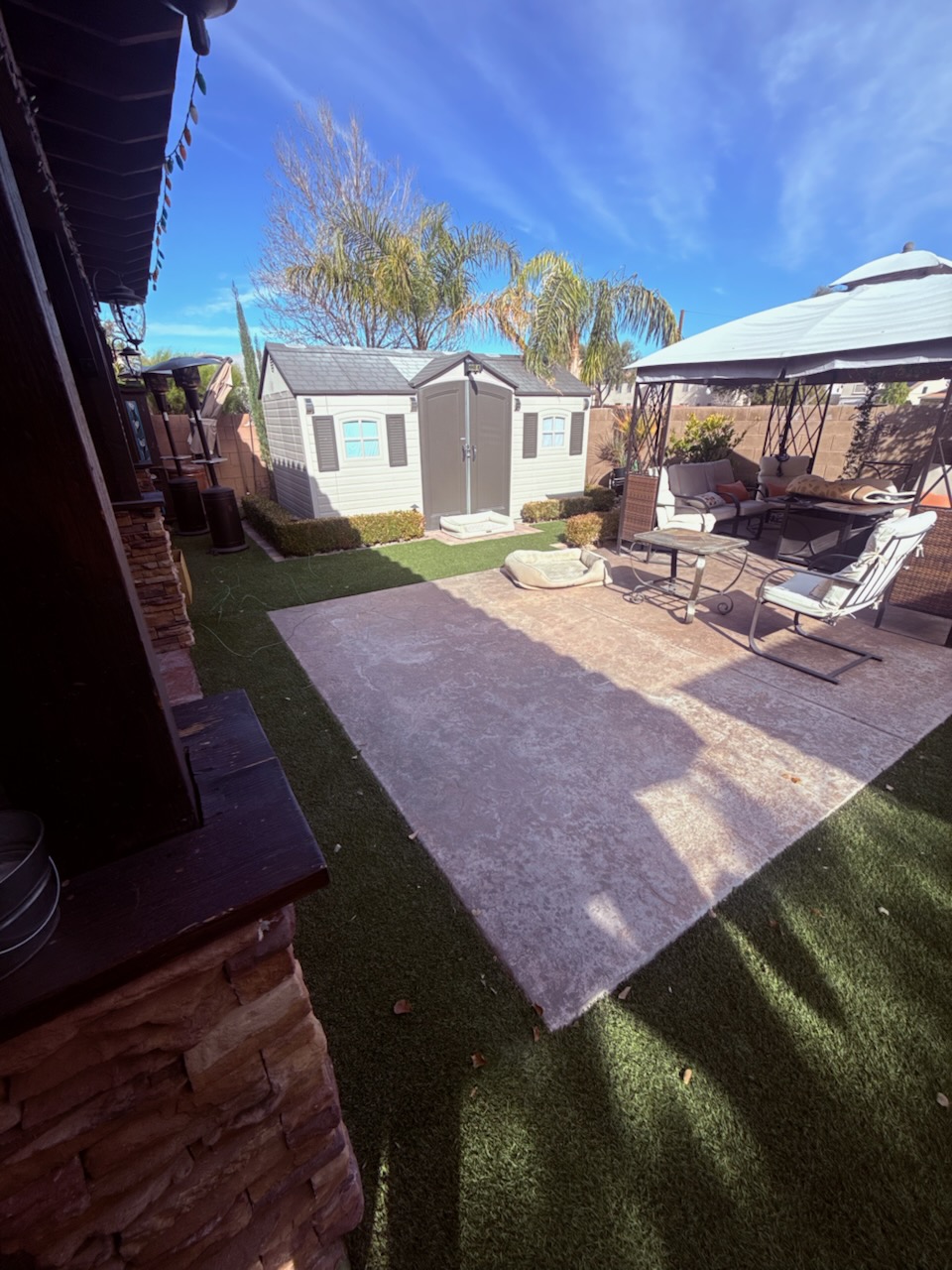
Artificial turf is a great base for all kinds of cat enrichment features that make outdoor time fun and stimulating. Cat grass (wheatgrass or oat grass) in containers on the turf gives cats a safe outlet for their natural grass-chewing instinct. Unlike artificial turf fibers, which some cats might try to chew, real cat grass is digestible and can reduce the urge to nibble on the synthetic surface.
Climbing structures, scratching posts, tunnels, and elevated walkways can all be installed on or anchored to turf without damaging the surface. Use weighted bases or through-turf anchoring instead of adhesives that could wreck the turf backing. Many Boulder City and Henderson cat owners create elaborate multi-level catios with turf as the ground floor and various climbing and perching options above, giving cats the vertical space they love.
Sensory enrichment is especially valuable for indoor cats experiencing the outdoors for the first time. Set potted cat-safe plants like catnip, valerian, and spider plants around the turf perimeter. Add a small water feature or fountain for visual and auditory stimulation. Combined with the natural sights, sounds, and breezes of a Henderson evening, these touches provide a huge quality-of-life boost for cats who would otherwise spend their entire lives indoors.
- Container-grown cat grass for safe chewing and better digestion
- Vertical climbing structures and elevated walkways for exercise
- Scratching posts on weighted bases sitting right on the turf
- Cat-safe potted plants like catnip, valerian, spider plants, and cat thyme
- Small water features for sensory stimulation and hydration
Protecting Cats from Henderson Heat on Turf
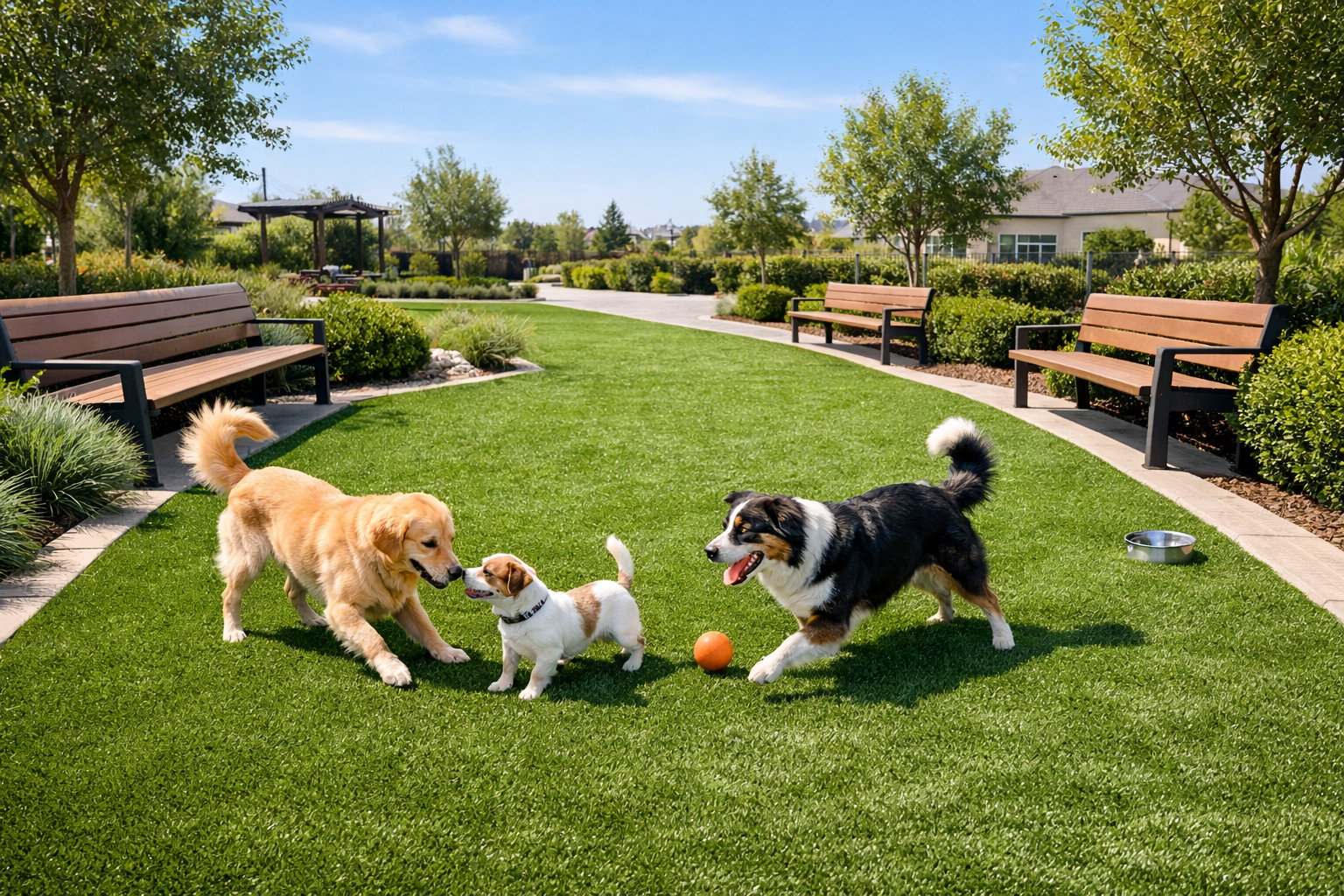
Cats are generally better at managing their own heat exposure than dogs, instinctively seeking shade and cool surfaces when things warm up. But Henderson heat can overwhelm even a cat natural caution, especially in enclosed catios where escape options to cooler areas may be limited. Make sure any outdoor cat space has at least 70 percent shade coverage during summer and that your cat can always retreat to air conditioning through a cat door or open entry point.
Unlike dogs, who sometimes stubbornly stay on hot turf because they are focused on play or need a bathroom break, cats will simply refuse to step onto uncomfortably hot surfaces. If your cat stops using their outdoor space in summer, turf temperature is probably the culprit. All the cooling methods that work for dog turf, including shade sails, misting systems, and periodic hosing, work just as well for cat areas. A shaded catio with misting stays cool enough for cats even during Henderson July and August afternoons.
Put out multiple water sources in any outdoor cat area and keep an eye on water temperature during hot months. Water left in a bowl under direct Henderson sunlight can get so hot that cats refuse to drink it, leading to dehydration. Insulated or self-filling water stations placed in shaded spots keep your cat hydrated during outdoor time.