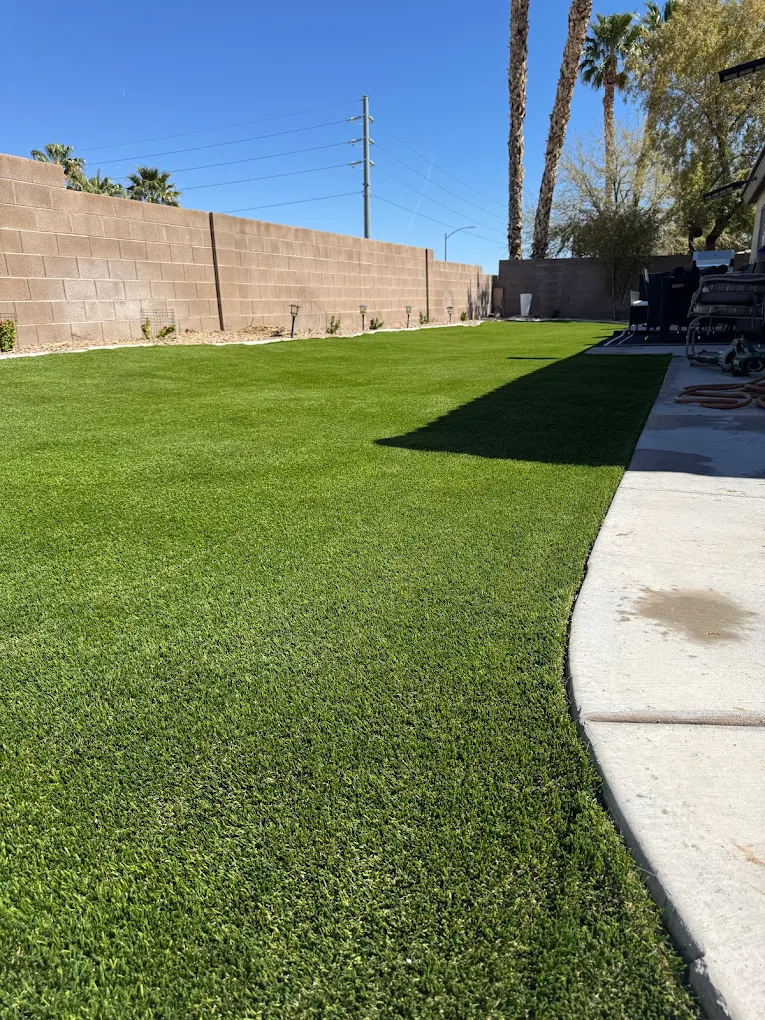
How Hot Does Turf Get in Henderson?
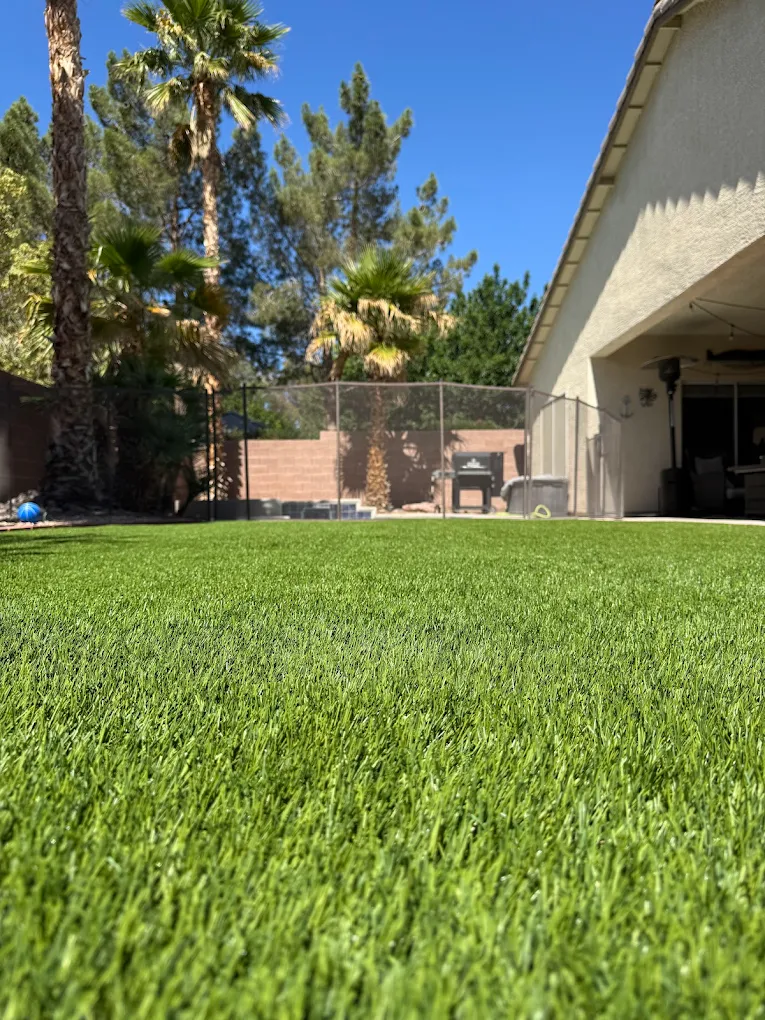
Your turf in direct Henderson sun regularly hits 150 to 170 degrees during summer. Some days it cracks 180. That is 40 to 70 degrees hotter than the air temperature and way past the burn zone for paw pads. We are talking second-degree burns in 10 seconds on a 150-degree surface.
Here is why. The dark backing, infill, and fibers soak up solar radiation and turn it into heat. Unlike natural grass that cools itself by releasing water vapor, your turf has zero self-cooling ability. Once it heats up, it stays hot for hours after the sun moves on. Even at 8 PM in Summerlin, your turf can still be dangerously hot from the afternoon sun.
For pet owners, this is serious. Without active cooling, your turf is off-limits during daytime from May through September in Henderson. That is five months where cooling strategies become essential, not optional.
Water-Based Cooling Methods
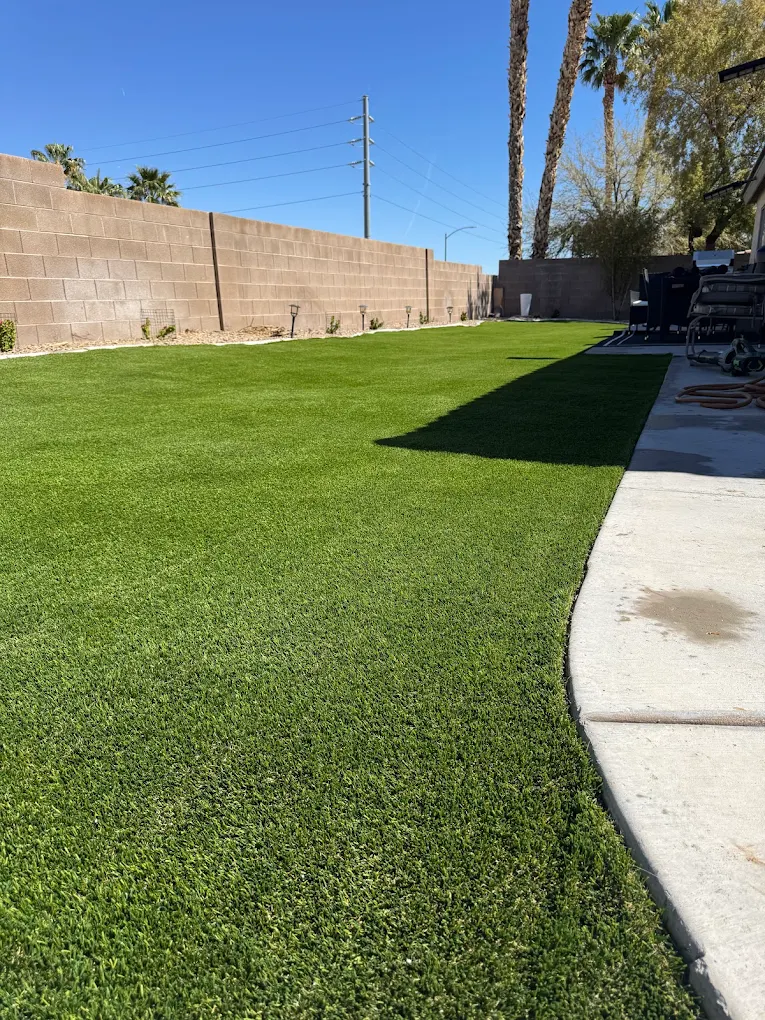
Water is the fastest way to cool your turf. A good hose-down drops the surface temperature by 30 to 50 degrees in minutes. A 160-degree surface comes down to 110 to 130 degrees. Still warm, but most adult dogs can handle it for brief outdoor sessions.
The cooling lasts about 30 to 60 minutes depending on air temp, humidity, and wind. During peak Henderson summer, you may need to re-wet the turf several times throughout the day. A timer-controlled sprinkler system dedicated to your turf area automates the whole thing, running two to three minutes every hour during peak heat.
Misting systems above the turf deliver continuous light cooling with minimal water. A residential misting line along a fence or shade structure uses just 0.5 to 1 gallon per minute and cools both air and surface at the same time. Many Paradise and Spring Valley homeowners combine periodic sprinkler soaking with continuous misting to create a pet-friendly space even in July and August.
Hook your turf sprinkler to a smart outdoor timer with a temperature sensor. It automatically cools the turf whenever temps exceed your set threshold, with zero wasted water during cooler periods.
Shade Structures That Make a Difference
Shade by itself cuts turf surface temps by 20 to 40 degrees compared to direct sun. For long-term cooling, permanent structures like pergolas, ramadas, and attached patio covers offer the most consistent protection. Choose shade structures that block at least 80 percent of UV radiation. Commercial shade fabric hits that mark at a fraction of the cost of solid roof construction.
Shade sails are the most popular and affordable way to cover large turf areas in Henderson. A quality shade sail costs $200 to $600 for residential use and blocks 90 to 95 percent of UV. You can layer multiple sails or position them to cover different zones as the sun angle shifts. Enterprise, Southern Highlands, and Green Valley homeowners increasingly see shade sails as standard equipment for any pet-friendly turf setup.
Trees give you natural shade plus a little evaporative cooling from their leaves. The downside is they take years to mature and drop leaves, seeds, and sap onto your turf. Best compromise: plant desert-adapted shade trees on the west side where they block the most intense afternoon sun, while using shade sails for immediate protection.
Want Us to Handle It Instead?
Get a free quote for your Henderson property. Same-day appointments available.
Cooling Infill Technologies
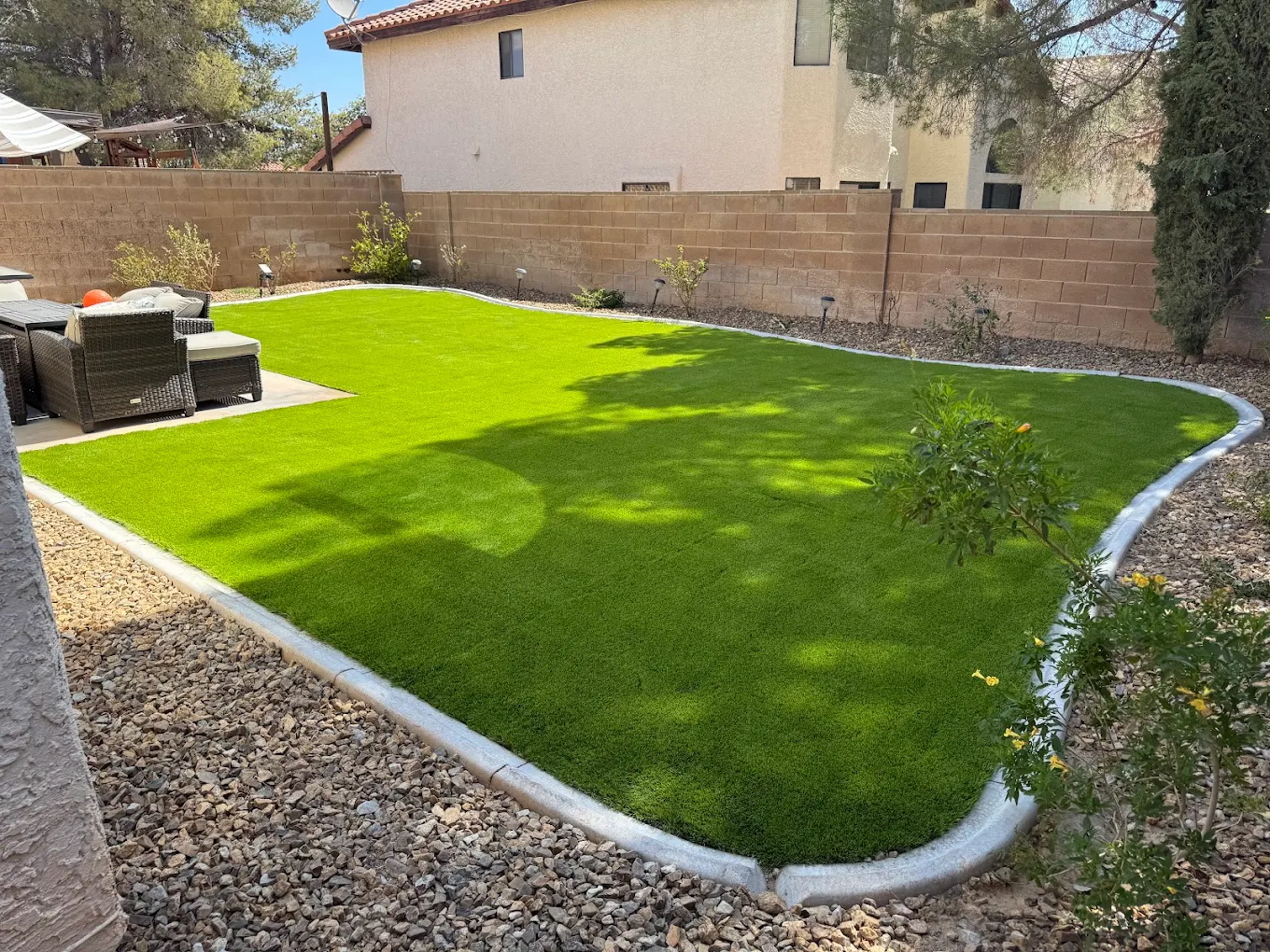
Specialized cooling infill products are engineered to reflect solar radiation instead of soaking it up. Products like HydroChill use a coating that absorbs and slowly releases water, providing evaporative cooling for hours after being wetted. This stretches the cooling effect from 30 minutes to several hours, so you do not have to keep re-wetting all day.
Standard silica sand infill absorbs heat and radiates it back up through the turf blades. Switching to light-colored or coated infill cuts surface temps by 10 to 15 degrees compared to dark standard infill, even without watering. That alone will not make turf pet-safe during peak Henderson summer, but it helps when paired with shade and water cooling.
For homeowners in Centennial Hills, North Henderson, and anywhere else maximum cooling is the goal, a layered approach works best. Combine cooling infill with regular watering and shade structures. No single product solves the heat problem during Henderson summer, but the combination can reduce peak surface temps by 50 to 70 degrees, bringing turf into a safe range for supervised pet use.
- HydroChill infill: soaks up water and delivers hours of evaporative cooling
- Light-colored Envirofill: reflects more solar radiation than dark standard infill
- Zeolite infill: lighter color offers a modest temperature drop versus standard sand
- Durafill: acrylic-coated sand with some heat-reflective properties
- Best results come from combining cooling infill with shade and water
Smart Scheduling for Pet Outdoor Time
Even with cooling measures in place, smart scheduling is still the most reliable way to protect your pets from turf heat. The safest outdoor windows are before 8 AM and after 7 PM from June through September, when air temps drop below 100 degrees and turf surfaces have cooled to safe levels. During May and October, the safe window stretches to roughly 9 AM and 6 PM.
If your dog needs a midday bathroom break in summer, quickly pre-wet the potty zone and then let them out. Keep these midday sessions under five minutes and supervise the whole time. For small dogs, carry them to and from the wet zone so they do not have to cross uncooled dry turf.
If your dog needs more extended outdoor time during the day, look into alternatives like potty pads, doggy daycare with climate-controlled play areas, or supervised visits to public parks with real grass and shade. Many Boulder City and Henderson dog owners combine morning and evening backyard time with midday daycare or indoor play during the hottest months.
Before letting your dog out during warm months, press the back of your hand on the turf for a full seven seconds. If you cannot hold it there comfortably, the surface is too hot for your dog.
Paw Protection for Hot Turf
When you cannot get the turf fully cooled, paw protection products add an extra safety layer. Dog booties made for hot surfaces are the most effective physical barrier, though plenty of dogs fight wearing them and need gradual acclimation. Start with short indoor wearing sessions weeks before summer hits so your dog is comfortable in booties by the time temps climb.
Paw wax products like Musher's Secret create a protective coating on the pads that provides moderate heat insulation. Not as protective as booties, but wax is tolerated by virtually all dogs and offers enough protection for brief turf crossings. Apply it before each outdoor session during summer. Many North Henderson and Centennial Hills dog owners keep paw wax by the back door as a standard summer habit.
No matter what paw protection you use, watch your dog for signs of heat distress: heavy panting, drooling, reluctance to walk, lifting or licking paws, and desperately seeking shade. These signs mean your dog is uncomfortable and should come inside right away. Keep a cool water bowl and a wet towel to stand on just inside the door to help them cool down fast.