What Infill Does and Why It Matters in Henderson
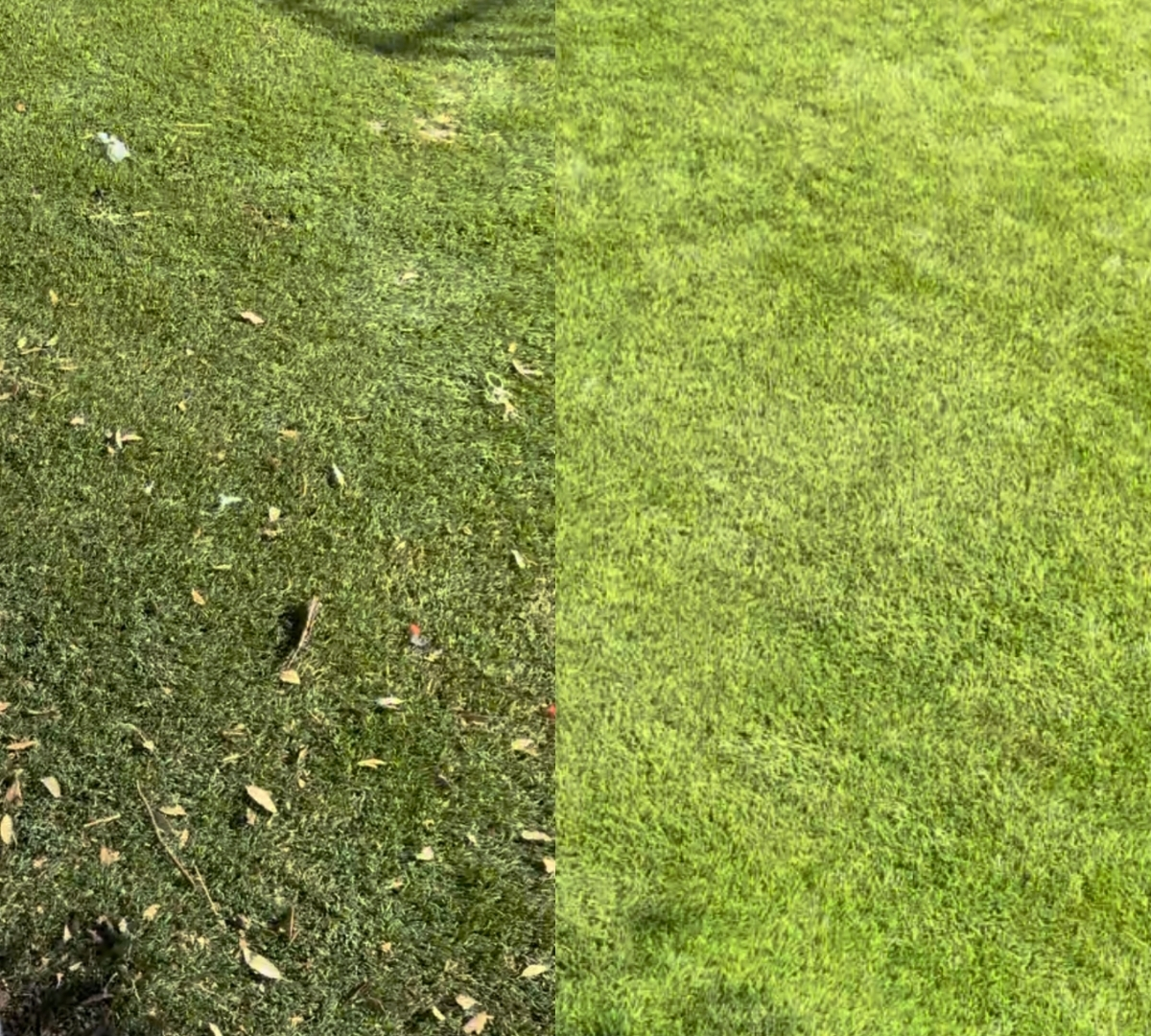
Infill is the granular material spread between artificial turf fibers after installation, and it serves multiple critical functions that affect how your turf performs daily. It weighs down the turf to prevent shifting and wrinkling, supports fiber blades in their upright position, provides cushioning underfoot, aids drainage, and helps moderate surface temperature. In the Henderson desert, where turf faces extreme heat, UV exposure, and occasional high winds, infill plays an especially important role in maintaining turf stability and performance.
Common infill materials for Henderson installations include silica sand, crumb rubber, and newer alternatives like acrylic-coated sand, zeolite, and organic infills made from coconut husk or cork. Each material handles heat differently, which is a critical consideration when summer surface temperatures regularly exceed 150 degrees in neighborhoods across Summerlin, Henderson, and Paradise. Choosing the right infill type is just as important as choosing the right turf fiber for desert performance.
No-infill turf products have gained popularity in recent years, marketed as simpler to install and maintain. These products use heavier backings, denser fiber patterns, or built-in thatch layers to achieve stability without granular infill. But whether no-infill turf can truly perform in the extreme Henderson climate requires careful examination.
Benefits of Traditional Infill Turf
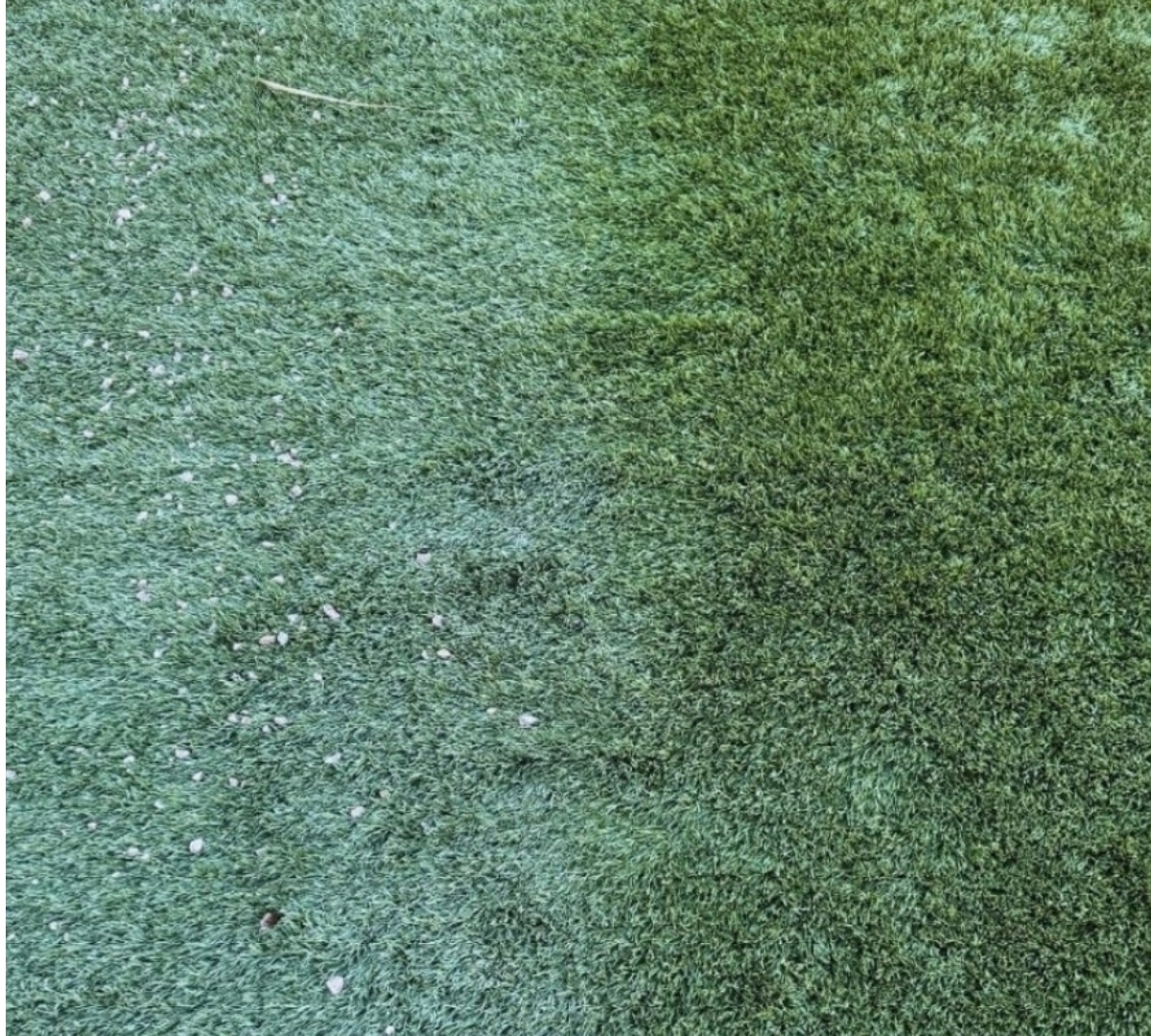
Infill turf remains the industry standard for Henderson installations for compelling reasons. The weight of infill material anchors turf securely against the strong winds that sweep through the valley, particularly during spring windstorms that gust above 50 miles per hour. Without adequate weight, turf edges can lift, wrinkle, and even separate from the base in exposed installations throughout North Henderson, Spring Valley, and Centennial Hills.
Temperature management is another significant benefit. Cooling infill products like acrylic-coated sand and zeolite actively reduce surface temperatures by 10 to 20 degrees compared to standard installations. Zeolite infill absorbs moisture and releases it slowly through evaporative cooling, mimicking the natural cooling effect of soil under real grass. For Henderson homeowners who want to use their yards during summer evenings, cooling infill can make the difference between comfortable and unbearable surface temperatures.
- Anchors turf against Henderson wind gusts exceeding 50 MPH
- Supports fiber blades in upright position for natural appearance
- Cooling infill reduces surface temperature by 10 to 20 degrees
- Provides impact-absorbing cushion for play areas
- Aids drainage by creating channels for water flow
- Extends turf lifespan by reducing fiber stress at the base
Benefits of No-Infill Turf Systems
No-infill turf products offer genuine advantages in specific applications. Installation is faster and simpler because the infill spreading, brushing, and leveling steps are eliminated, reducing labor costs by 10 to 20 percent. Maintenance is also simpler in some respects because there is no infill to redistribute, replenish, or keep out of pools and flower beds. For small installations like balconies, rooftop patios, and indoor spaces in Henderson high-rise condominiums, no-infill turf can be a practical choice.
Pet owners sometimes prefer no-infill turf because organic waste does not get trapped in infill material, making surface cleaning more straightforward. Rinsing pet areas on no-infill turf tends to be more effective because liquid waste passes through the backing without being absorbed or diverted by infill particles. Some newer no-infill products incorporate antimicrobial treatments in the backing that resist bacteria growth even without the barrier effect of infill.
No-infill turf products typically cost 15 to 25 percent more per square foot than standard turf because they require denser fiber counts and heavier backings to compensate for the absence of infill support.
Want Us to Handle It Instead?
Get a free quote for your Henderson property. Same-day appointments available.
Performance Comparison in Desert Conditions
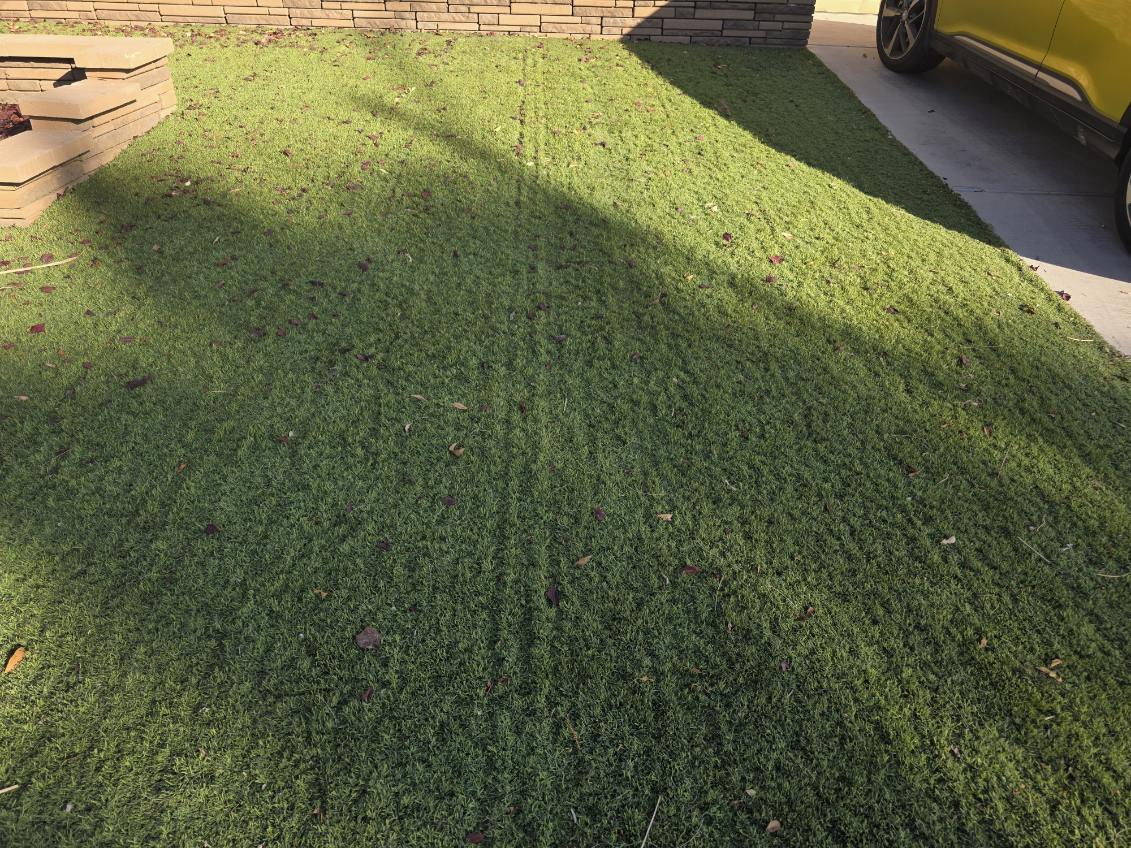
In the Henderson desert climate, infill turf outperforms no-infill products in several critical areas. The most significant advantage is heat management. Without infill acting as a thermal buffer between the sun and the backing material, no-infill turf surfaces run hotter and transfer more heat to the backing, accelerating degradation. Cooling infill options available for standard turf have no equivalent in no-infill systems, eliminating one of the most effective temperature management tools available.
Wind stability is another area where infill turf excels in our desert environment. Henderson is prone to sudden, powerful wind events that test turf installations throughout the valley. The weight of infill material provides consistent downward pressure across the entire surface. No-infill turf relies entirely on perimeter anchoring, which creates more stress on edges and seams during high winds. Installers in Enterprise and Boulder City who deal with exposed, windy sites almost universally recommend infill systems for reliability.
Cleaning and Maintenance Considerations
Infill turf requires periodic infill replenishment as material settles, compacts, and migrates over time. In Henderson, this typically means adding infill every 12 to 18 months and redistributing existing infill through regular brushing. Professional deep cleaning must account for the infill layer, using techniques that sanitize without displacing too much material. This adds complexity compared to no-infill turf maintenance.
No-infill turf maintenance is simpler in terms of surface care but introduces different challenges. Without infill to support fibers, matting occurs more quickly in high-traffic areas, requiring more frequent brushing to maintain appearance. The backing is more exposed to UV radiation without the protective layer of infill, potentially accelerating backing degradation in the intense Henderson sun. Homeowners in Green Valley and Southern Highlands with no-infill installations report that while daily maintenance is easier, the turf may need replacement sooner than infill-supported alternatives.
Making the Right Choice for Your Henderson Installation
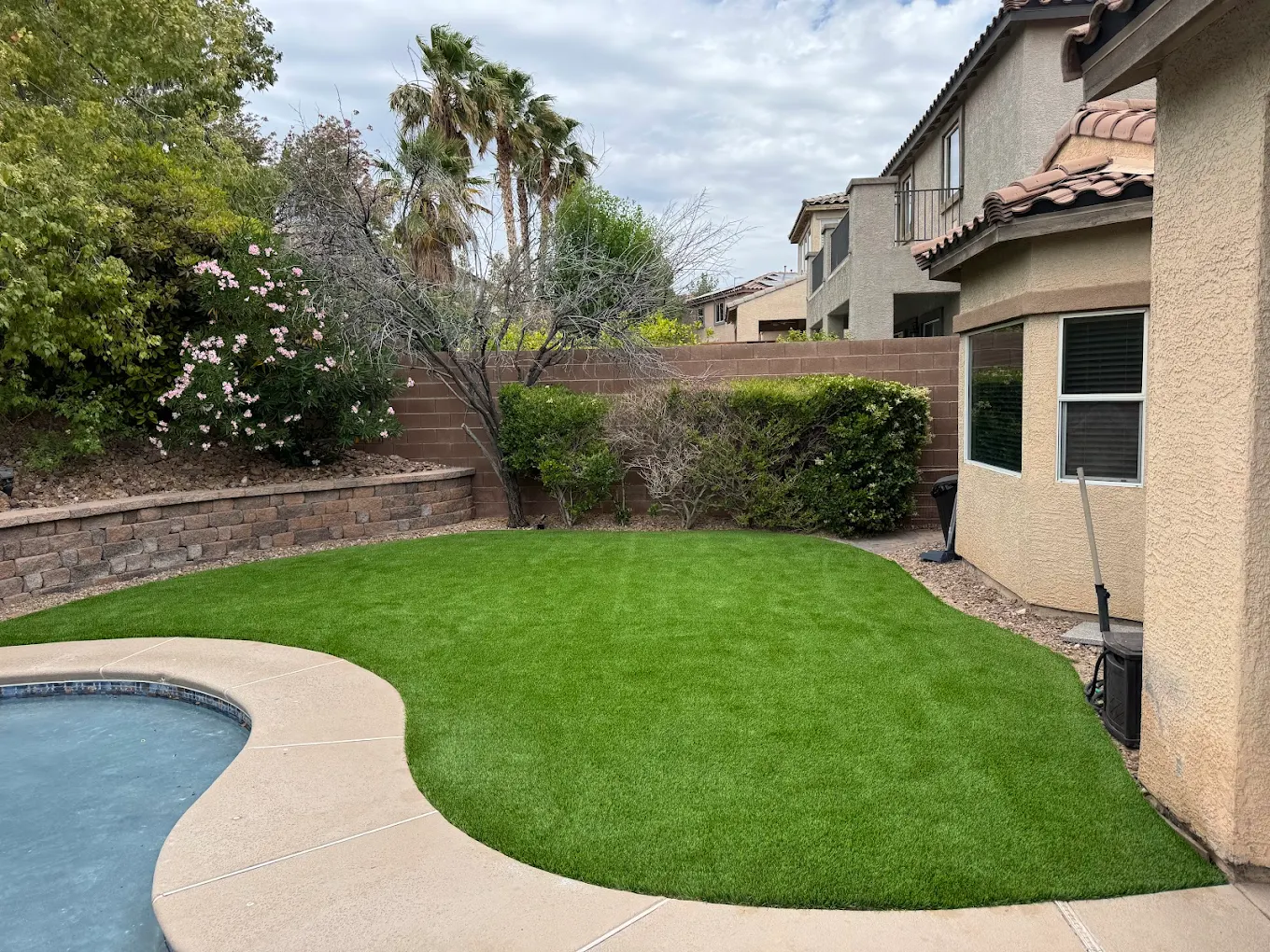
For most Henderson residential and commercial installations, infill turf is the recommended choice. The combination of wind stability, heat management capability, fiber support, and proven long-term durability in desert conditions makes it the more reliable option. Homeowners investing in a full backyard installation in neighborhoods like Summerlin, Henderson, or Paradise should opt for infill turf with a cooling infill product to maximize comfort and lifespan.
No-infill turf makes sense for small, sheltered installations where wind exposure is minimal and the surface will not face extreme heat. Covered patios, indoor applications, balconies, and small decorative accent areas are all good candidates. If you have pets and prioritize the easiest possible waste cleanup, no-infill turf in a dedicated pet zone can work well when installed on a proper drainage base.
If you are considering no-infill turf for a large, sun-exposed Henderson yard, discuss the decision thoroughly with your installer and request information about the product UV rating and wind resistance testing. A reputable installer experienced with Henderson conditions will provide honest guidance about whether a no-infill product can handle the specific demands of your site.
If you choose infill turf, consider zeolite-based cooling infill for Henderson installations. Zeolite absorbs moisture and provides evaporative cooling that can reduce surface temperatures by up to 20 degrees on hot summer afternoons.