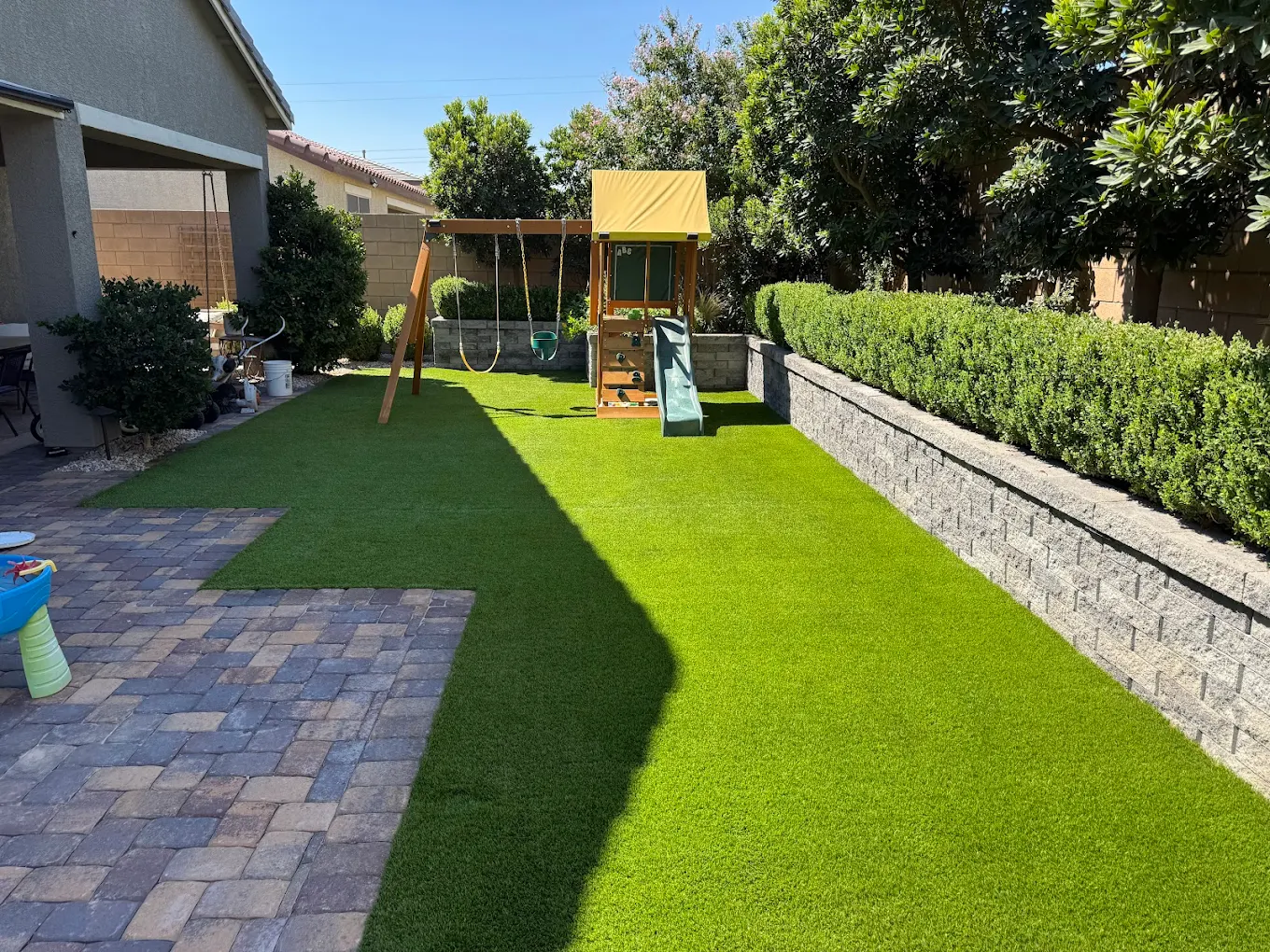
Why Dogs Dig at Artificial Turf
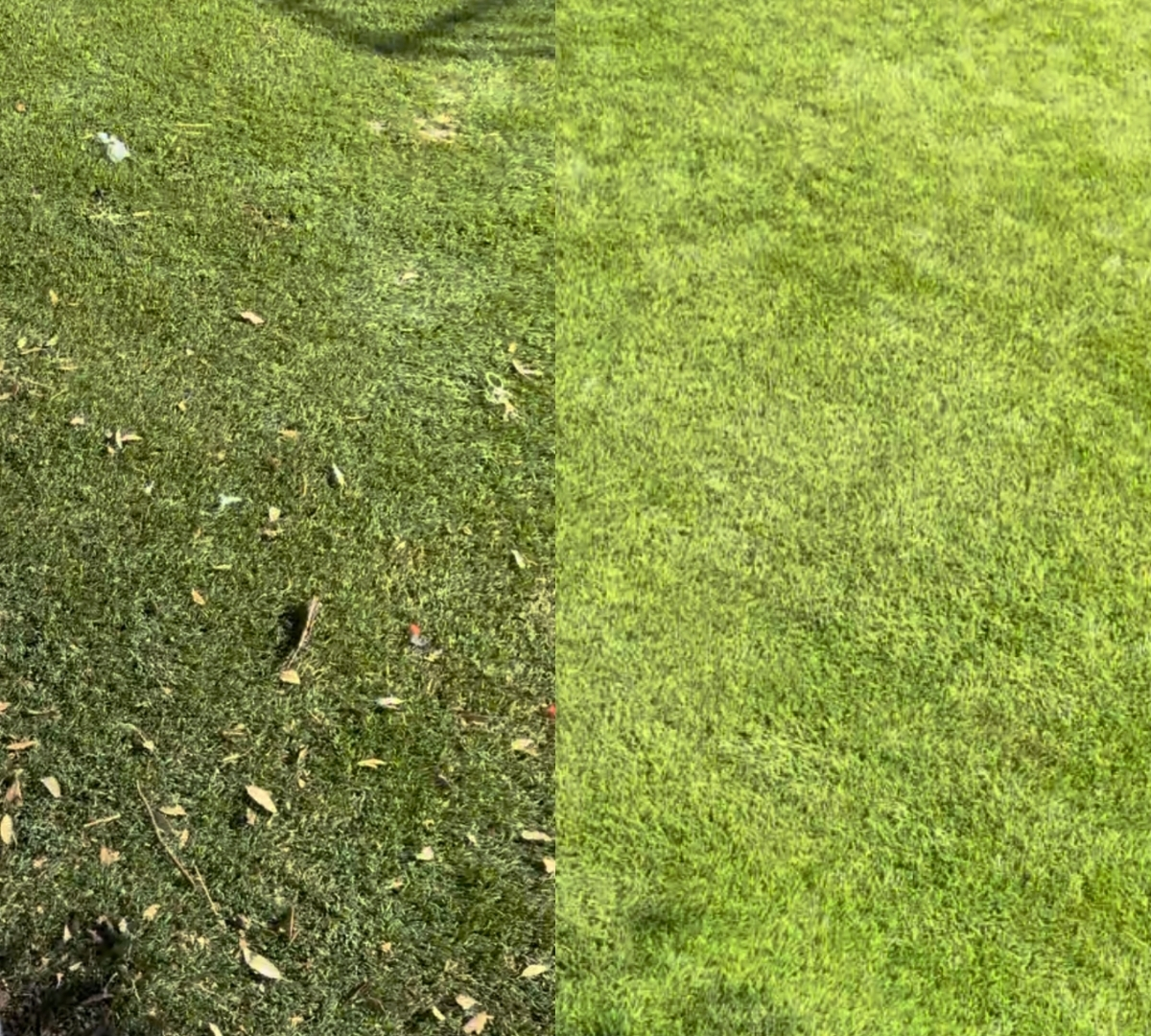
Before you can fix the digging, you need to understand why it is happening. Dogs dig on artificial turf for the same reasons they dig in dirt: boredom, anxiety, trying to cool off, prey drive, and plain old instinct. Henderson extreme summer heat makes things worse because dogs instinctively try to reach cooler ground under the hot turf surface. Once turf temps climb past 130 degrees, your dog natural move is to dig through to the cooler substrate below.
Certain breeds are just hardwired to dig. Terriers, dachshunds, huskies, and malamutes are all notorious diggers that need extra management beyond what works for calmer breeds. If you own one of these dogs in Summerlin or Henderson, plan your digging prevention from day one of your turf install instead of waiting for the damage to start.
Separation anxiety and boredom are behind most destructive turf digging. Dogs left alone in Henderson backyards for hours, especially during those long, hot summer days when they cannot comfortably exercise, tend to channel their frustration right into your turf edges and seams. Tackling the root cause will always beat physical barriers alone.
Reinforcing Turf Edges Against Digging
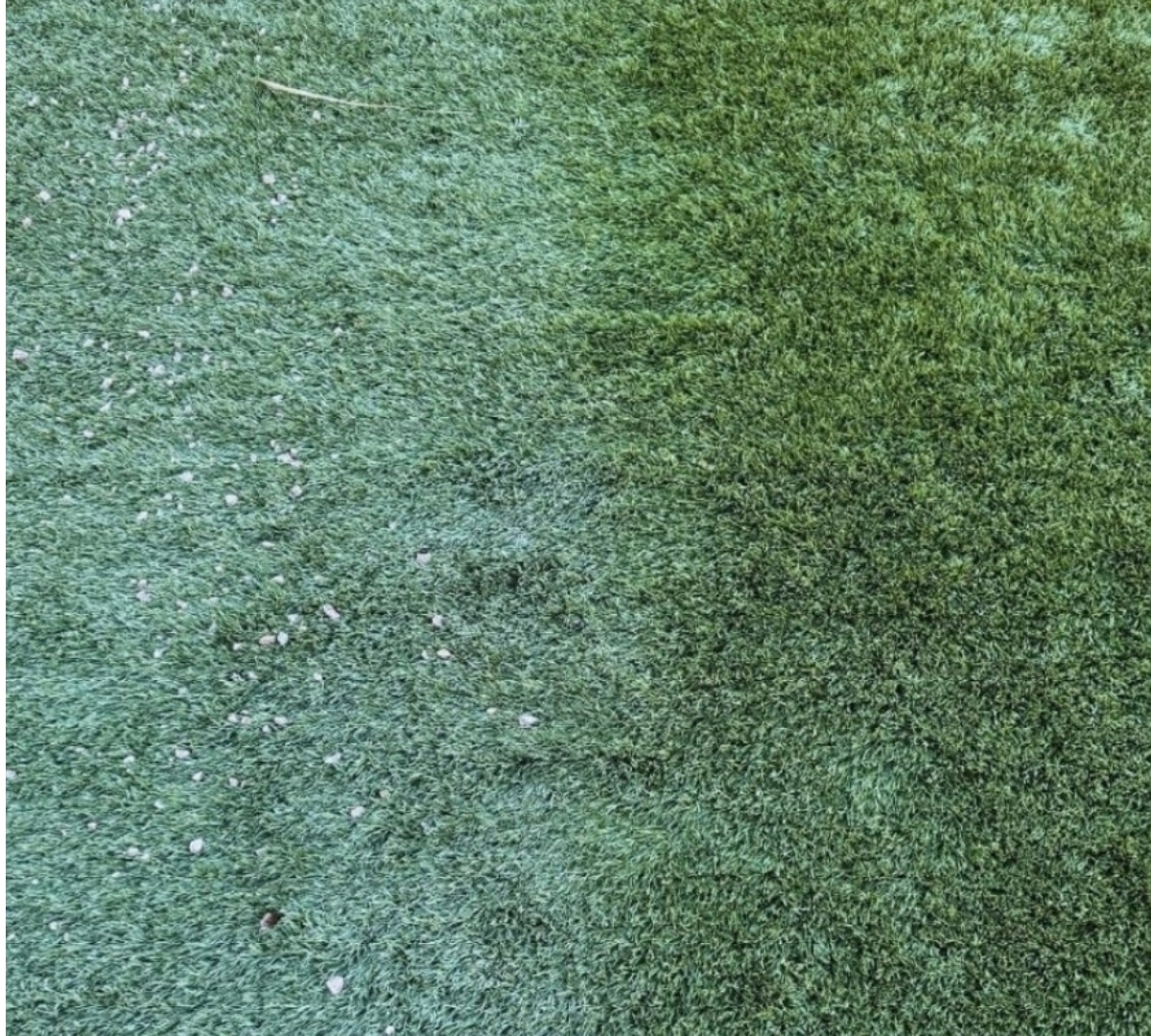
Most turf digging damage happens at the edges where dogs can grab onto a corner or seam. The best physical deterrent is a concrete or stone border like a mow strip, installed flush with or slightly above the turf surface. That hard border eliminates the gap between turf and adjacent surfaces that gives your dog a starting point.
If a concrete border is not in the cards for your existing setup, heavy-gauge landscape staples every two to three inches along vulnerable edges add serious resistance. Back those up with a row of decorative river rock or large pavers along the turf perimeter. Dogs do not like pawing at rocks, and many Paradise and Spring Valley homeowners find this staple-plus-rock combo solves edge digging within a few weeks.
For the truly determined diggers, buried wire mesh or hardware cloth along the turf perimeter adds another layer of defense. Install a 12-inch strip of galvanized hardware cloth under the turf edge, extending six inches onto the turf and six inches beyond it. This hidden barrier stops dogs from getting underneath even if they manage to lift an edge.
- Put in concrete mow strips or stone borders around the full perimeter
- Place landscape staples every 2 to 3 inches along any vulnerable edges
- Line borders with decorative river rock to discourage pawing
- Bury hardware cloth under turf edges if your dog is a persistent digger
- Secure all seams with heavy-duty joining tape and turf adhesive
Creating an Approved Digging Zone
Instead of trying to eliminate the digging instinct altogether, redirecting it works way better. Build a designated digging box in one corner of your yard. A simple 3-by-4-foot wooden frame filled with play sand or loose soil does the trick. Bury treats and toys in there to make it way more appealing than your turf.
When you catch your dog going at the turf, calmly interrupt and redirect them to the digging box. Give them big praise when they dig in the right spot. This positive redirection approach usually shows results within two to three weeks, and dog trainers across Centennial Hills, North Henderson, and the broader Henderson area swear by it. The key is consistency. Every family member has to redirect to the same spot every single time.
Refresh the digging box with new treats and toys every few days so it stays more exciting than the turf. Dogs naturally gravitate toward wherever they get the best rewards.
Want Us to Handle It Instead?
Get a free quote for your Henderson property. Same-day appointments available.
Solving Heat-Related Digging in Henderson
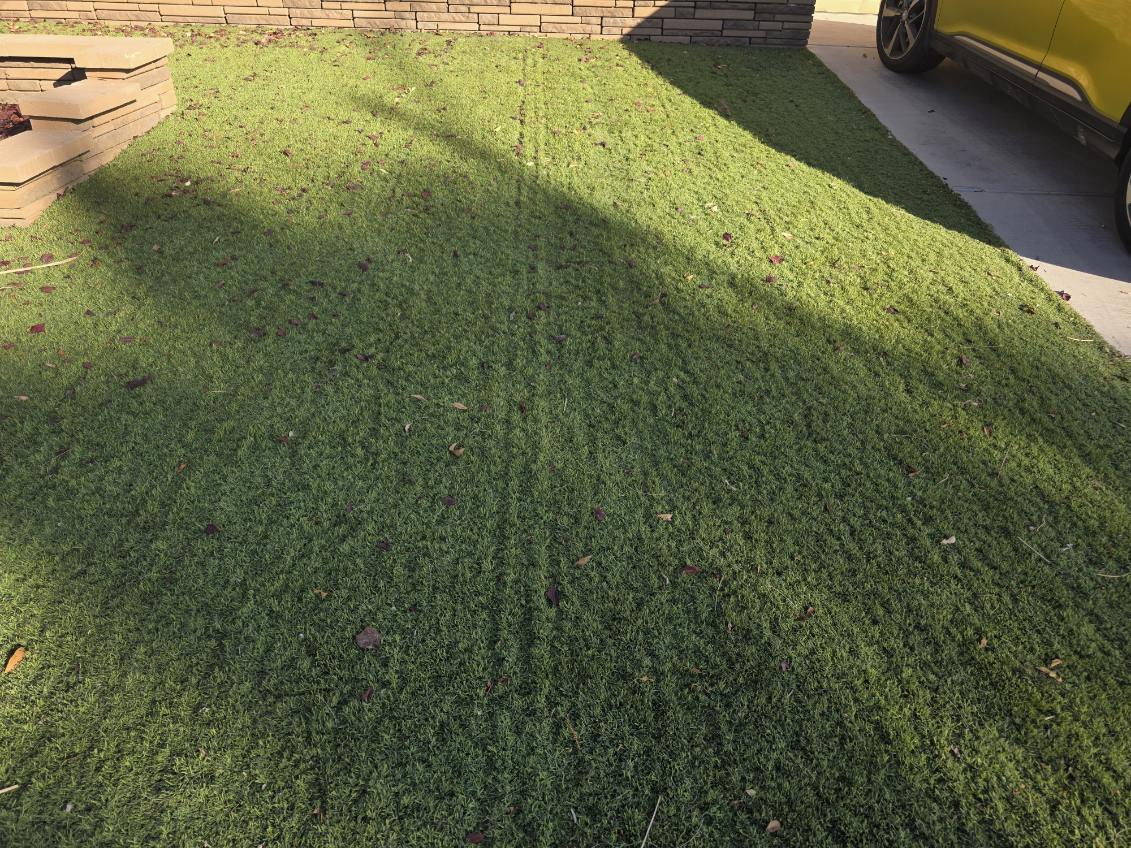
If your dog mostly digs during hot afternoons, the behavior is almost certainly about temperature. They are trying to reach cooler ground beneath the heated surface. The fix is managing the surface temperature, not trying to train away a survival instinct. Shade structures, misting systems, and timed sprinklers that wet the turf during peak heat hours all tackle the real problem.
Set up a shaded rest area with a cooling mat or elevated dog bed to give your dog a comfortable alternative to digging for relief. Put these options in the shadiest part of your yard, ideally under a pergola, shade sail, or mature tree. Enterprise and Southern Highlands homeowners have found that providing these cool-down options virtually eliminates heat-motivated digging, even in breeds that love to dig.
If your dog is outdoors during peak heat, consider a timer-controlled sprinkler that mists the turf for two minutes every hour during the hottest part of the day. This keeps the surface cool enough that your dog has no reason to dig for temperature relief. Water usage is minimal, and the cost of a basic timer system is way less than fixing turf that has been shredded by persistent digging.
Exercise and Enrichment to Reduce Digging
You have probably heard it before. A tired dog is a good dog. That applies directly to digging. Many turf digging problems in Henderson backyards come down to under-exercised dogs with too much energy and not enough to do. Getting your dog proper physical exercise and mental enrichment dramatically cuts down on destructive behavior of all kinds.
In Henderson, where outdoor exercise is pretty much off the table during summer afternoons, creative indoor enrichment becomes a must. Puzzle feeders, frozen Kong toys, nose work games, and quick indoor training sessions burn the mental energy that would otherwise go into backyard destruction. Mix in early morning or evening walks, swimming at dog-friendly facilities, or structured play during cooler hours. Green Valley and Boulder City dog owners who keep up consistent exercise routines see way less turf damage than those who count on backyard time alone for their dog activity.
- Get in at least 30 to 60 minutes of exercise before leaving your dog in the yard
- Use puzzle feeders and frozen treats to keep their brain busy
- Schedule play sessions for cooler morning and evening hours
- Swap out toys regularly so they stay interesting
- Look into dog daycare on scorching days when outdoor time is not an option
Repairing Turf Damage from Digging
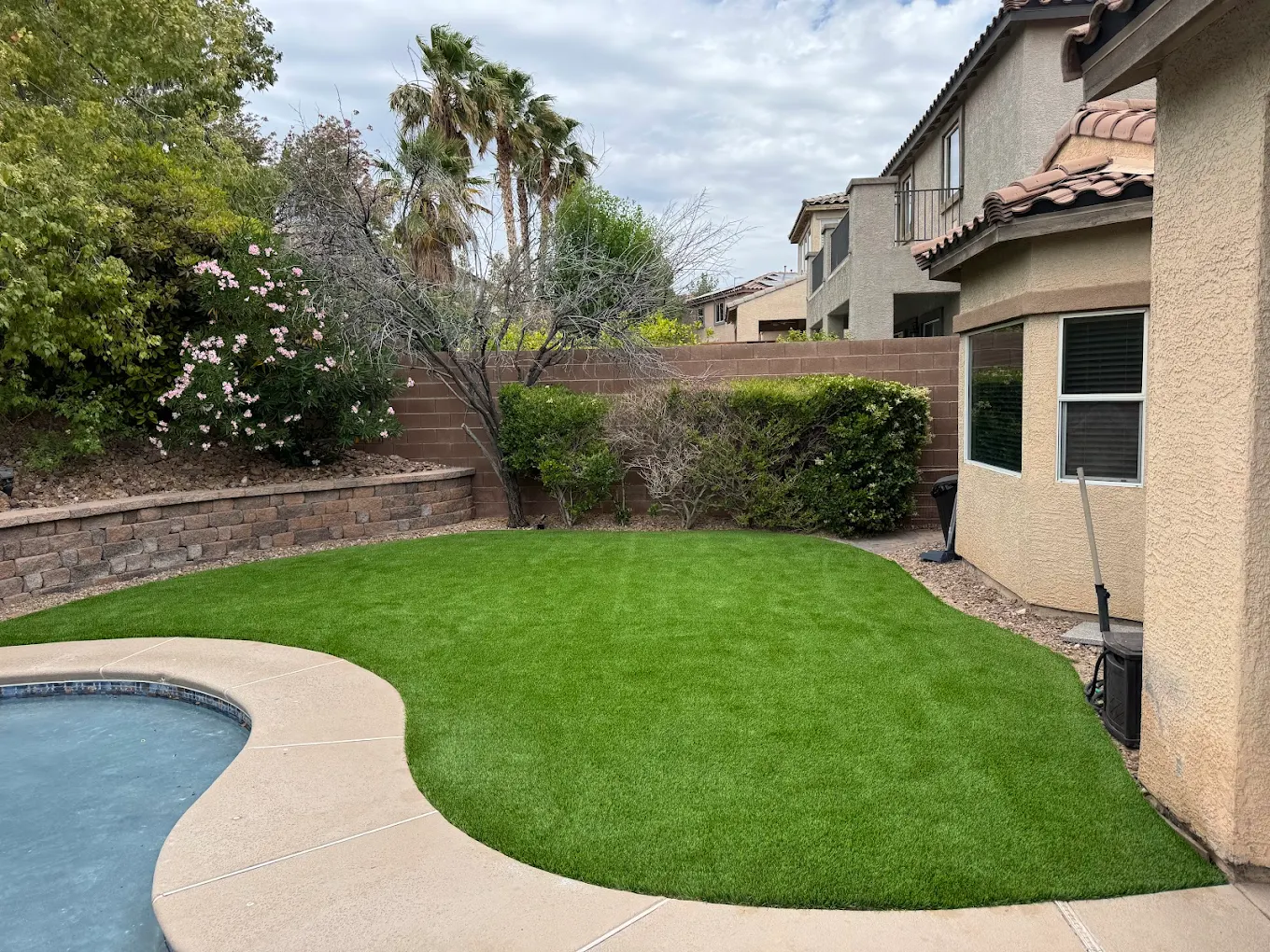
If the damage is already done, fixing it quickly prevents things from getting worse. Small areas where turf has been pulled up but not torn can usually be re-secured by lifting the section, smoothing the sub-base, replacing displaced infill, and re-stapling firmly. This approach works great for the edge lifting and corner displacement commonly seen in North Henderson and Paradise yards.
For torn or shredded turf, you will need a patch repair. Cut out the damaged section with a sharp utility knife, then cut a matching piece from a turf remnant. Always ask your installer for leftover material to keep on hand. Secure the patch with joining tape and turf adhesive, then stake the edges. Patches might be slightly visible up close, but they stop the damage from spreading and restore your turf integrity.
After any repair, deal with the underlying cause before giving your dog unsupervised access again. Reinforce those edges, add shade if heat was driving the behavior, ramp up exercise, or put in physical barriers. Fixing the turf without changing what caused the digging in the first place is basically guaranteeing it will happen again.
Hang onto turf remnants from your original installation for future patches. Store them flat in a cool, dry spot like your garage. Having matching material makes repairs way less noticeable and longer-lasting.