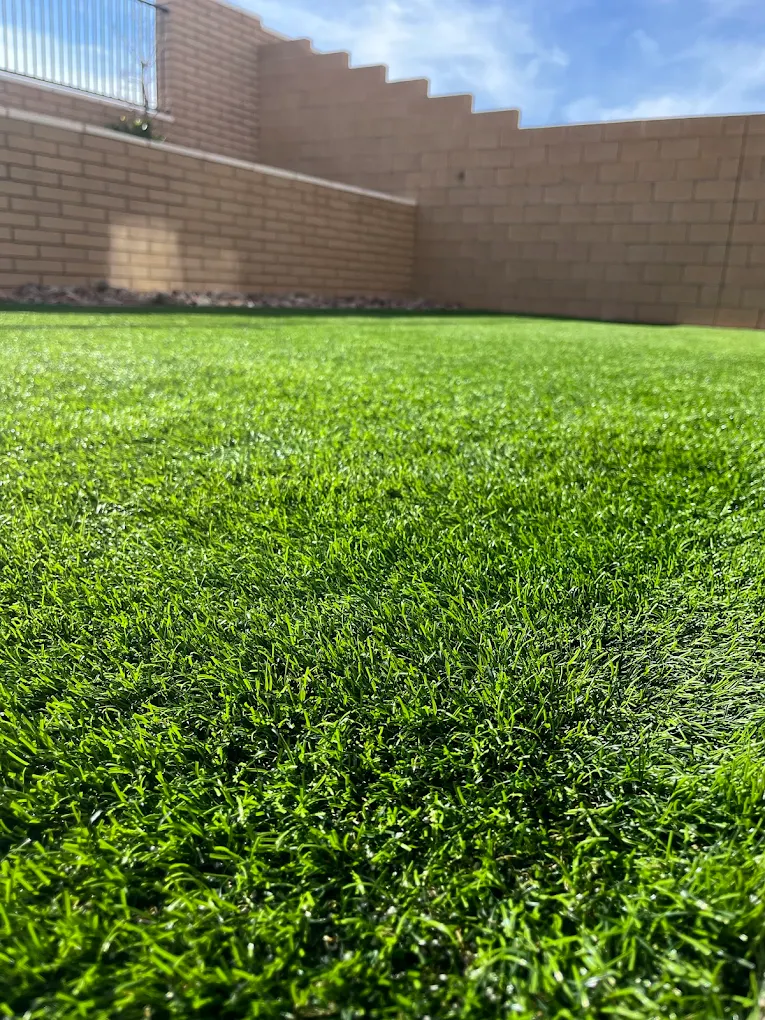
Why Turf Color Matters More Than You Think
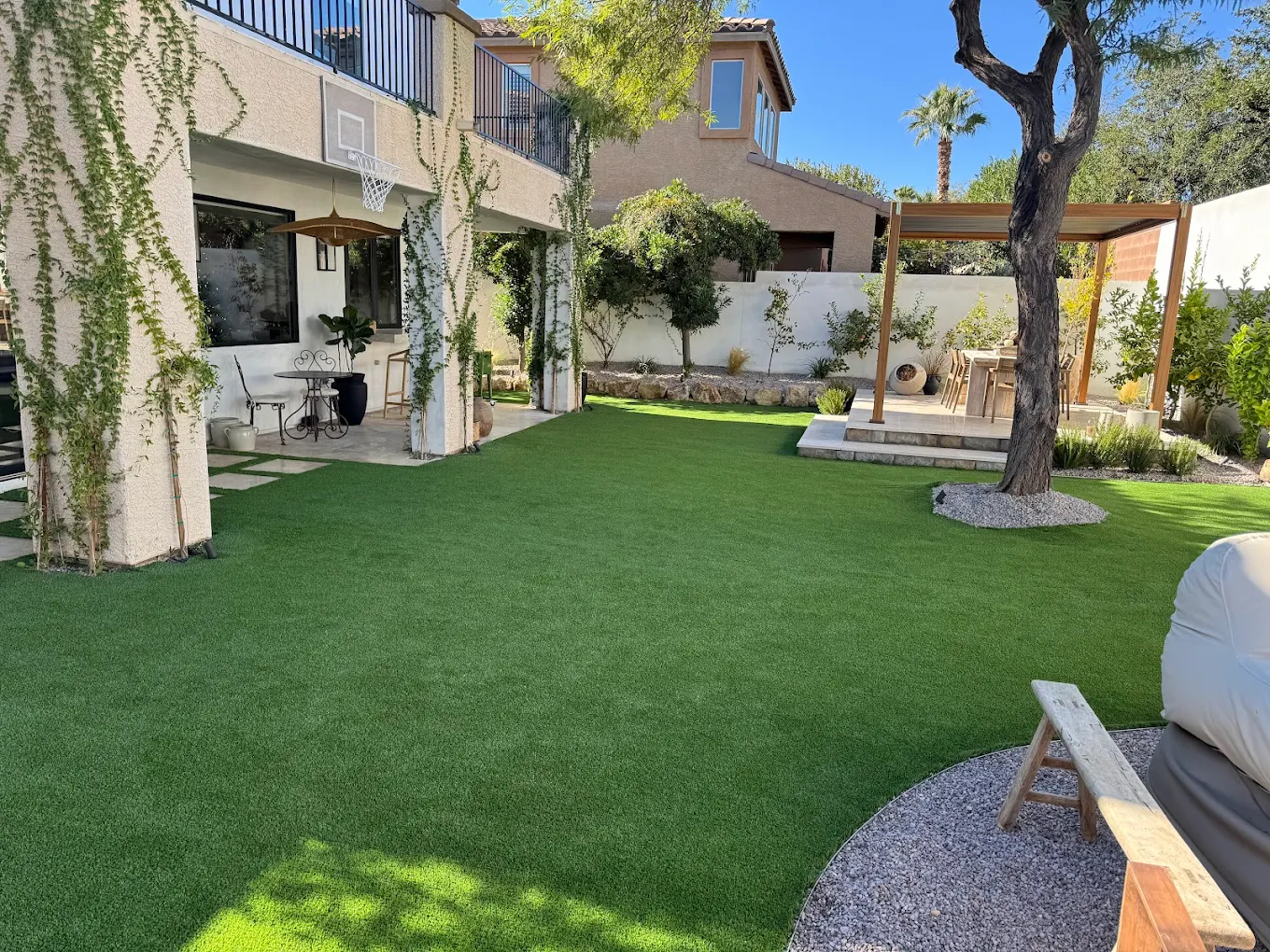
When most Henderson homeowners shop for artificial turf, they focus on pile height, fiber type, and price. Color often gets treated as an afterthought: it is green, that is what matters. But turf color has a significant impact on how realistic your lawn looks, how much heat the surface absorbs, how well it coordinates with your home and landscape, and how gracefully it ages under the intense desert sun. The wrong color choice can make an otherwise quality installation look obviously artificial from the street.
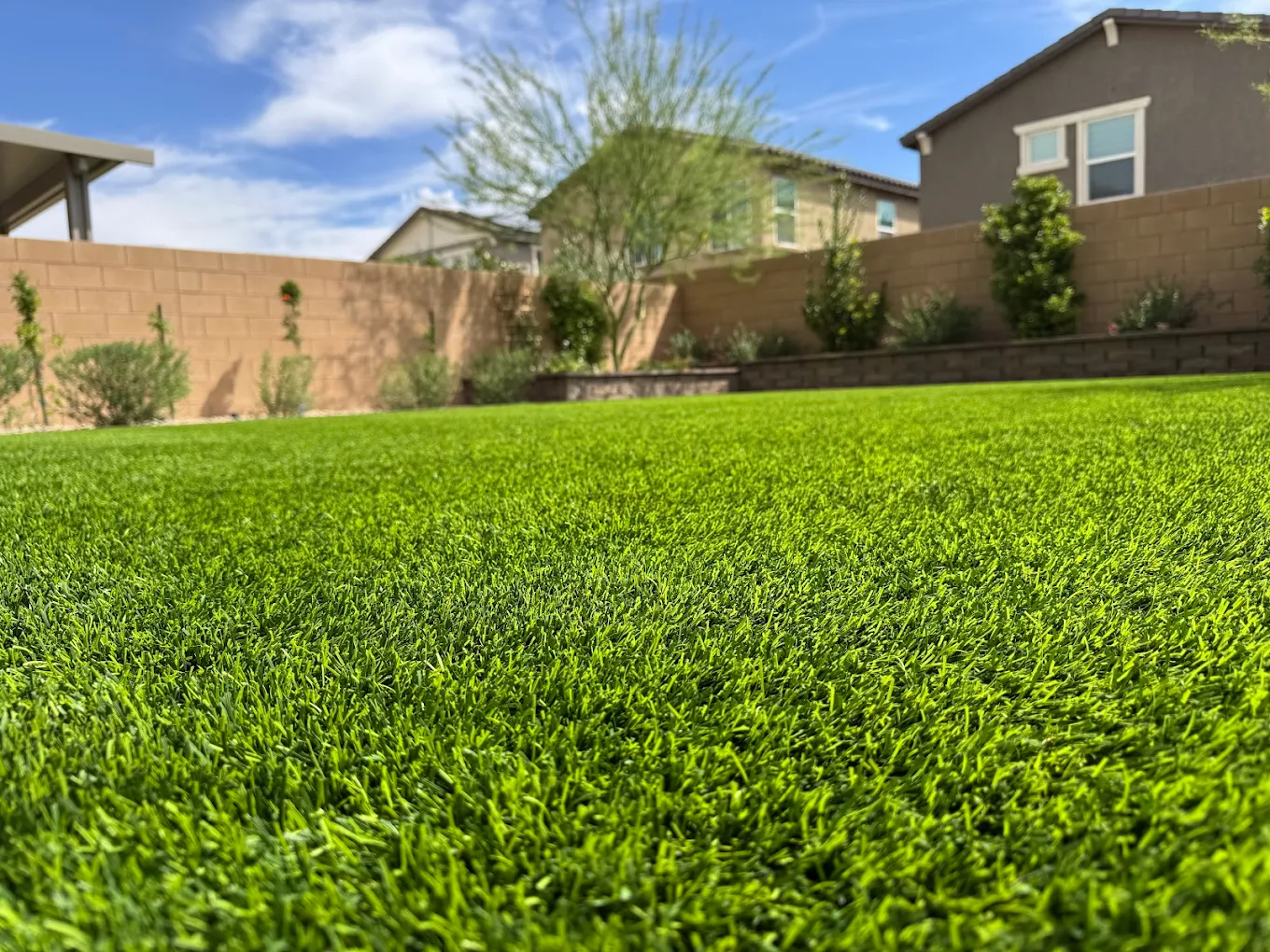
Modern artificial turf is available in far more than a single shade of green. Product lines range from vibrant spring green to muted olive, from warm sage to cool emerald, and from single-tone to complex multi-tone blends featuring four to six distinct colors. These color options exist because real grass is not one uniform color either. A natural lawn contains a complex mix of green, yellow, brown, and tan tones that shift with season, sun exposure, and health. Replicating this visual complexity is what separates realistic turf from the obviously fake carpet-like products of past decades.
For Henderson specifically, color choice carries additional weight because the surrounding landscape provides a distinctive backdrop. The tan desert floor, red rock formations, and intense sunlight create a color context that differs from Pacific Northwest or Southeastern landscapes. A turf color that looks perfect in Portland may appear glaringly artificial against the Mojave Desert palette visible from homes in Henderson, Boulder City, and across the valley.
Bright and Standard Green Turf
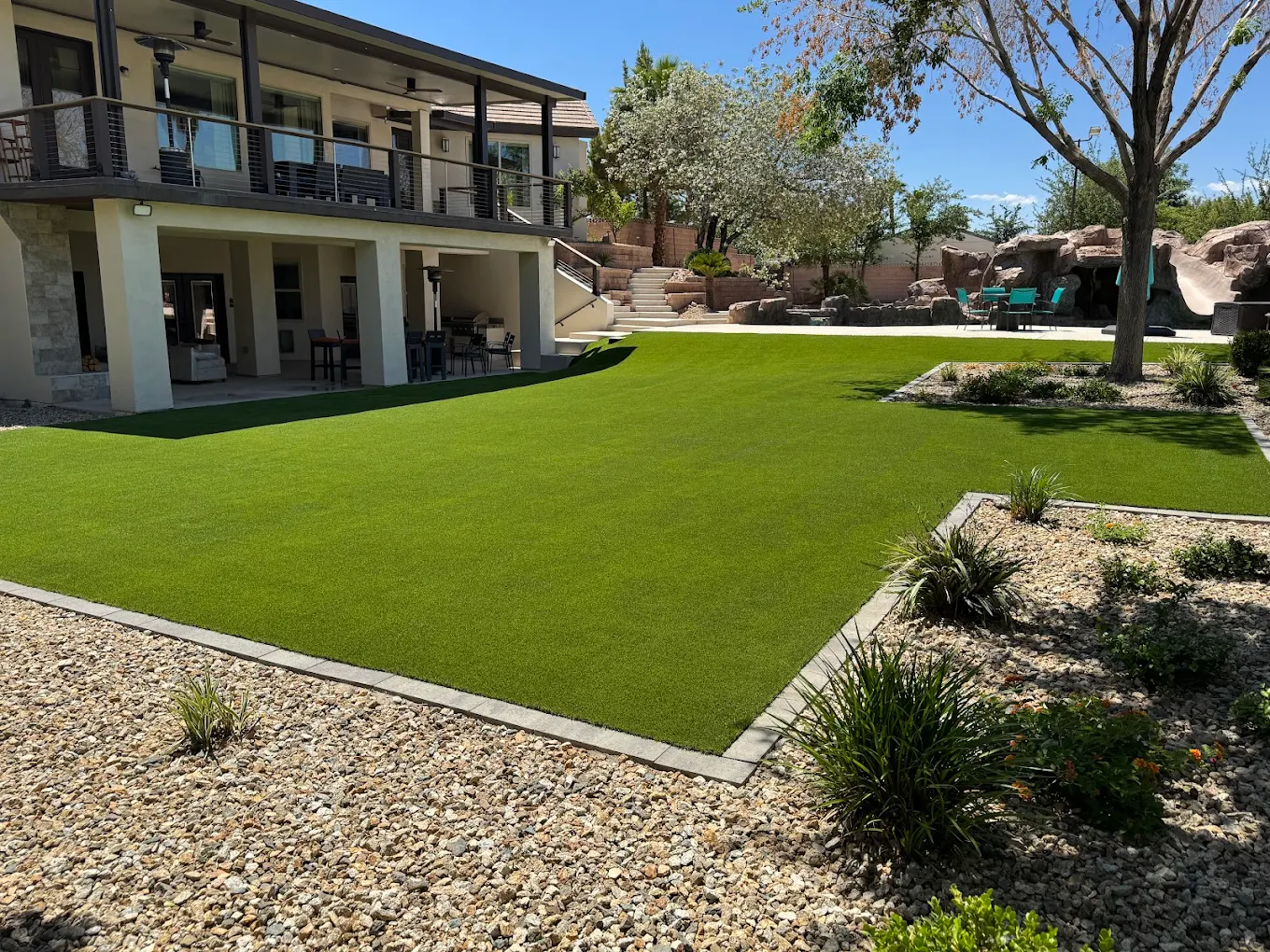
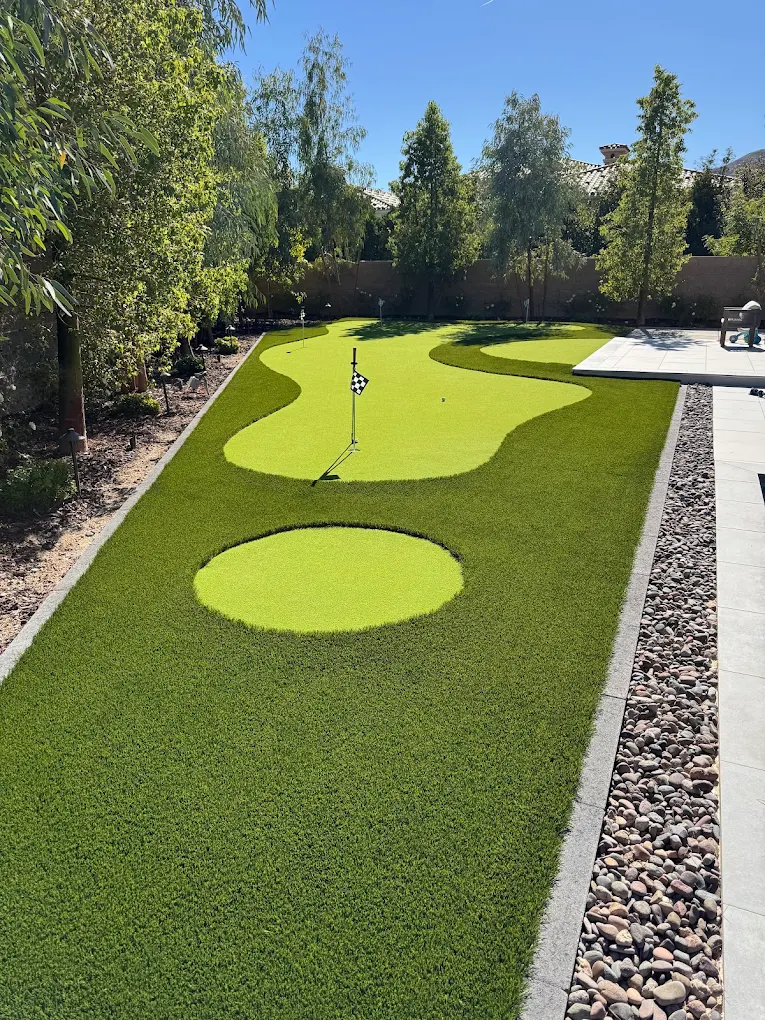
Bright green turf products, sometimes marketed as spring green or emerald, deliver the vivid, saturated color associated with a healthy, well-watered lawn. These products make a bold visual statement, creating a striking contrast against the desert landscape and your home exterior. In neighborhoods like Summerlin and Southern Highlands where lush landscaping is valued, bright green turf can complement other planted greenery and create a tropical oasis effect.
Bright green turf has notable drawbacks in the Henderson context. The color can appear unrealistic because no natural grass species maintains that level of vivid green in desert conditions, immediately signaling to viewers that the surface is synthetic. Darker green fibers also absorb more solar radiation than lighter tones, contributing to higher surface temperatures during summer months. And bright green shows fading more noticeably over time, with UV degradation gradually shifting the color toward a yellow-green that looks washed out rather than naturally weathered.
Olive, Sage, and Muted Green Tones
Olive and sage-toned turf products have gained popularity in Henderson because they look more natural in the desert setting. These muted greens mimic the color of warm-season grasses like Bermuda and Buffalo grass that actually grow in the Southwest, lending an authenticity that vivid green products cannot match. When installed alongside desert plantings, stone, and DG borders in yards across Paradise, Green Valley, and Enterprise, olive-toned turf reads as a natural, intentional part of the landscape.
From a practical standpoint, lighter olive and sage tones reflect more sunlight, keeping surface temperatures several degrees lower than darker green alternatives. The muted coloring also ages more gracefully under UV exposure. Instead of fading from vivid to washed-out, olive turf transitions subtly from one natural-looking tone to another over the years. This aging pattern is less noticeable and more forgiving than the dramatic fading that bright green products experience.
When selecting turf color, view samples outdoors in direct Henderson sunlight rather than under showroom lights. Sunlight dramatically changes how turf colors appear, and a color that looks perfect indoors may look completely different in your yard.
Want Us to Handle It Instead?
Get a free quote for your Henderson property. Same-day appointments available.
Multi-Tone Blends: Maximum Realism
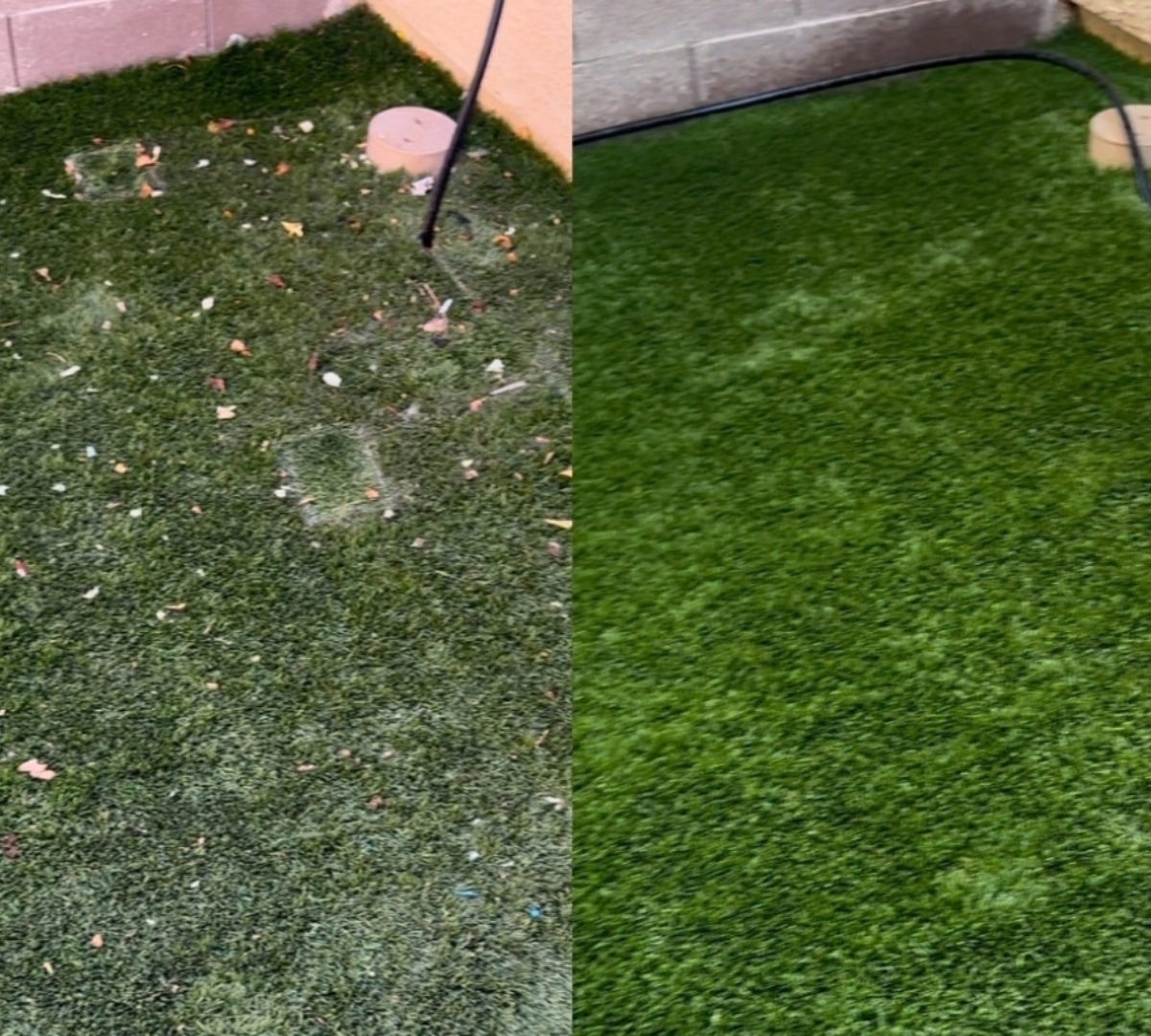
Multi-tone turf products represent the state of the art in artificial grass realism. These products incorporate four to six distinct fiber colors, including various greens, tan or brown tones, and sometimes yellow or amber accents that mimic dead grass blades found in natural lawns. The combination creates visual depth and complexity that makes multi-tone turf genuinely difficult to distinguish from real grass at normal viewing distances.
Premium multi-tone products also include a thatch layer of tightly curled fibers in tan or brown tones near the base, simulating the layer of dead grass that accumulates at the soil line in natural lawns. This thatch layer adds dimensional realism by creating shadows and color variation throughout the turf surface. Homeowners in Centennial Hills and North Henderson who invest in multi-tone products with integrated thatch consistently receive comments from visitors who mistake their turf for exceptionally well-maintained natural grass.
The trade-off with multi-tone products is cost. They typically run 15 to 30 percent more than single-tone or dual-tone alternatives due to the more complex manufacturing process. Whether this premium is justified depends on how much you value visual realism and how prominently the turf is visible from the street, sidewalk, or entertaining areas.
Matching Turf Color to Your Henderson Neighborhood
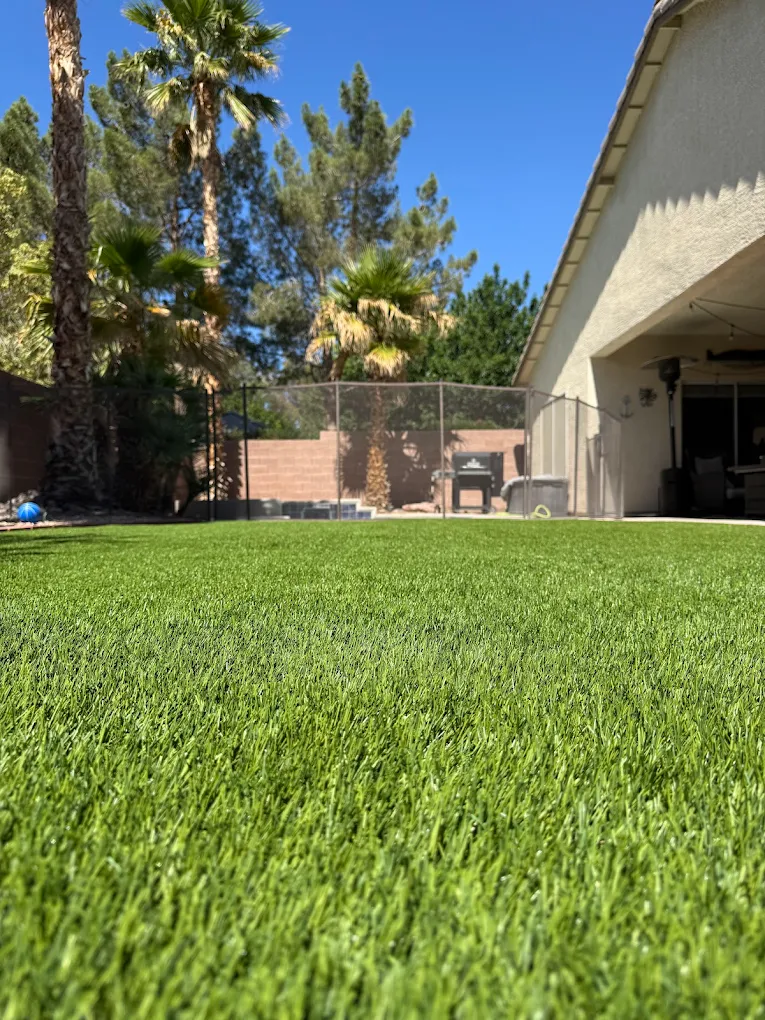
Your neighborhood context should influence your turf color selection. In established neighborhoods where some homes still maintain natural grass lawns, matching your turf color to the local grass species creates the most seamless appearance. Bermuda grass, common in older Henderson neighborhoods, displays a warm green with olive undertones that multi-tone turf products replicate well. Choosing a color that resembles what neighbors are growing helps your turf installation blend rather than stand out.
In newer communities throughout Henderson and Enterprise where most yards feature desert landscaping, a slightly different approach works better. Rather than mimicking a specific grass species, choose a multi-tone product with enough warm undertones to complement the surrounding desert palette. Avoid extremely bright greens that create a jarring contrast with the dominant tan and brown tones of the neighborhood. The goal is a turf installation that looks lush and inviting without appearing foreign to its desert context.
UV Fading Patterns by Color
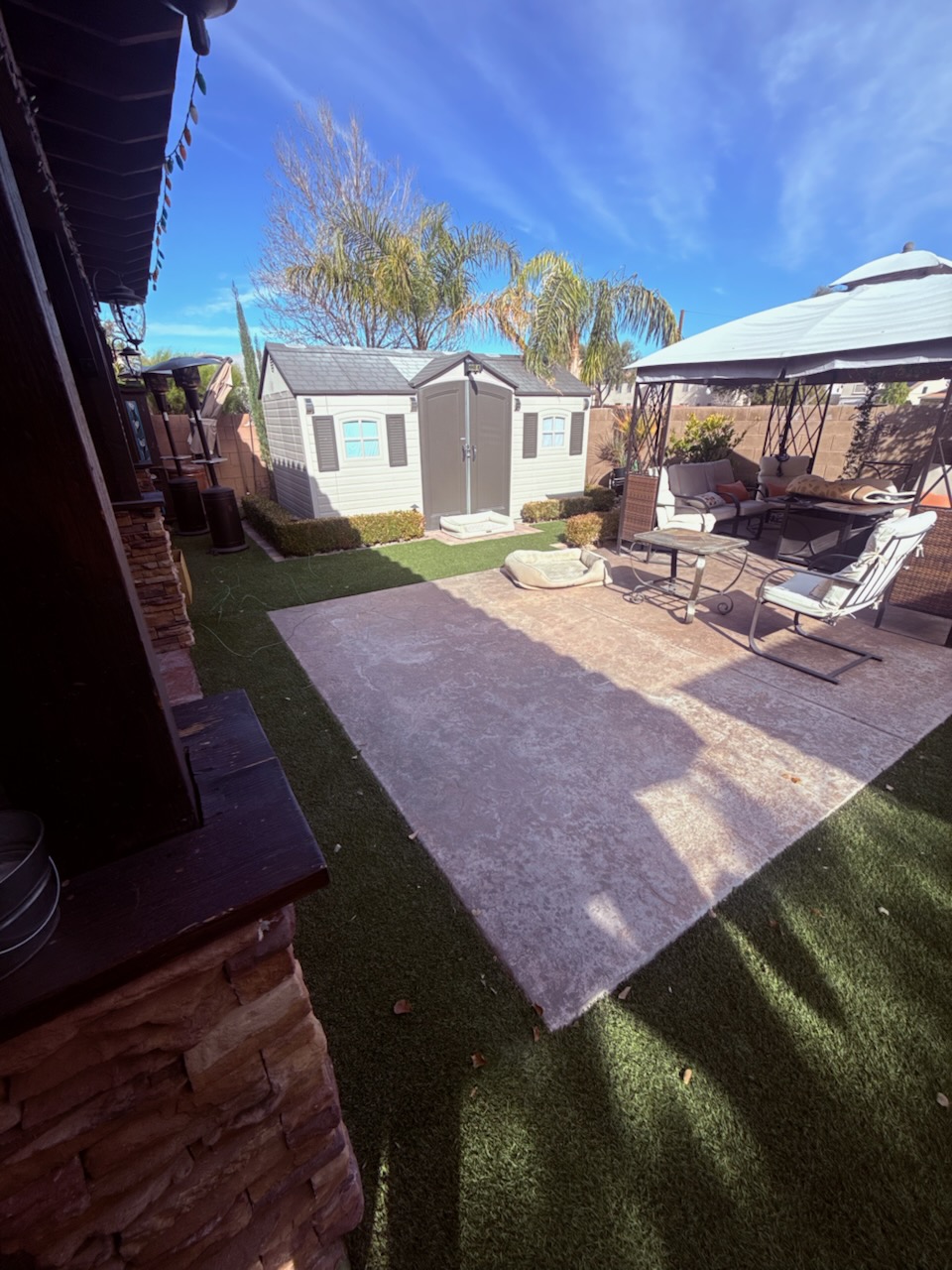
All artificial turf colors fade over time under Henderson UV exposure, but the rate and visual impact vary by starting color. Bright, saturated greens show the most dramatic fading because the intense pigmentation has the most room to degrade. A vivid spring green that looks stunning at installation may appear noticeably washed out within 3 to 5 years even with quality UV stabilization. The visual decline is gradual but cumulative, and by year 10, heavily faded bright green turf can look distinctly tired.
Olive and multi-tone products age more gracefully because their starting point is already closer to a naturally weathered appearance. Fading on olive turf shifts the color subtly rather than dramatically, and the multiple tones in multi-tone products create an averaging effect where individual fiber color changes are less visible against the complex color palette. For homeowners in Spring Valley, Paradise, and across the Henderson valley who want their turf to look good for 15 or more years, starting with a slightly muted, multi-tone color provides the best long-term visual outcome.
Request a UV-aged sample from your turf manufacturer or installer. Reputable brands offer samples showing how their products look after 5 and 10 years of UV exposure, helping you predict long-term color performance in the Henderson sun.