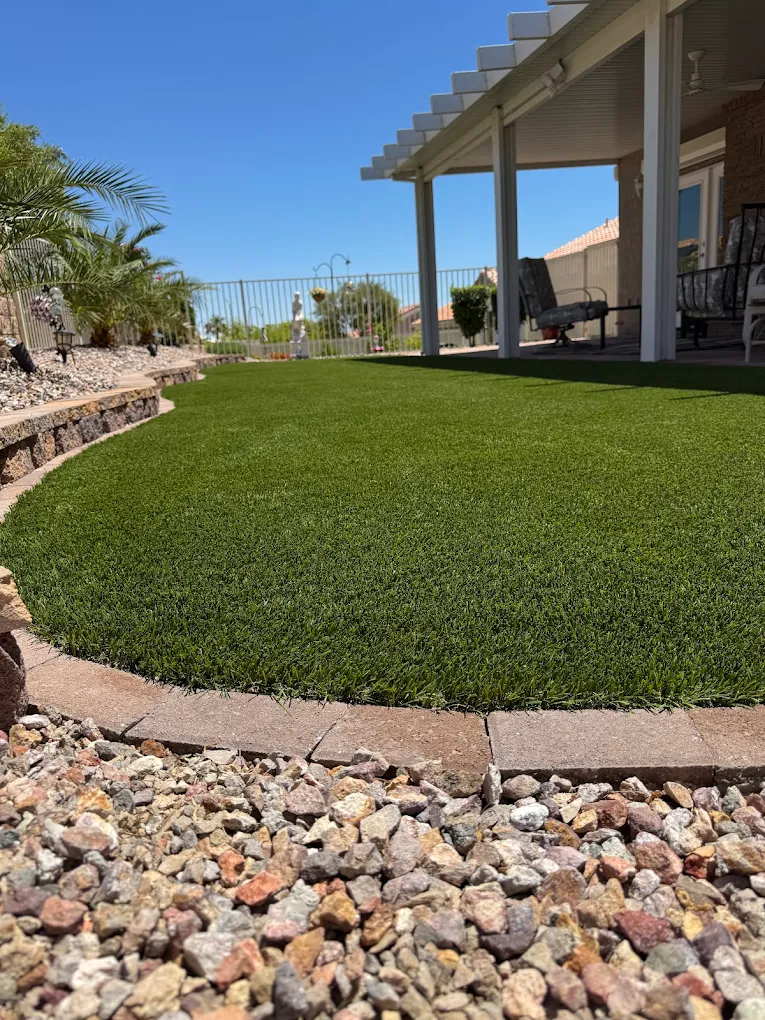
Understanding Henderson Wind Patterns and Their Impact on Turf
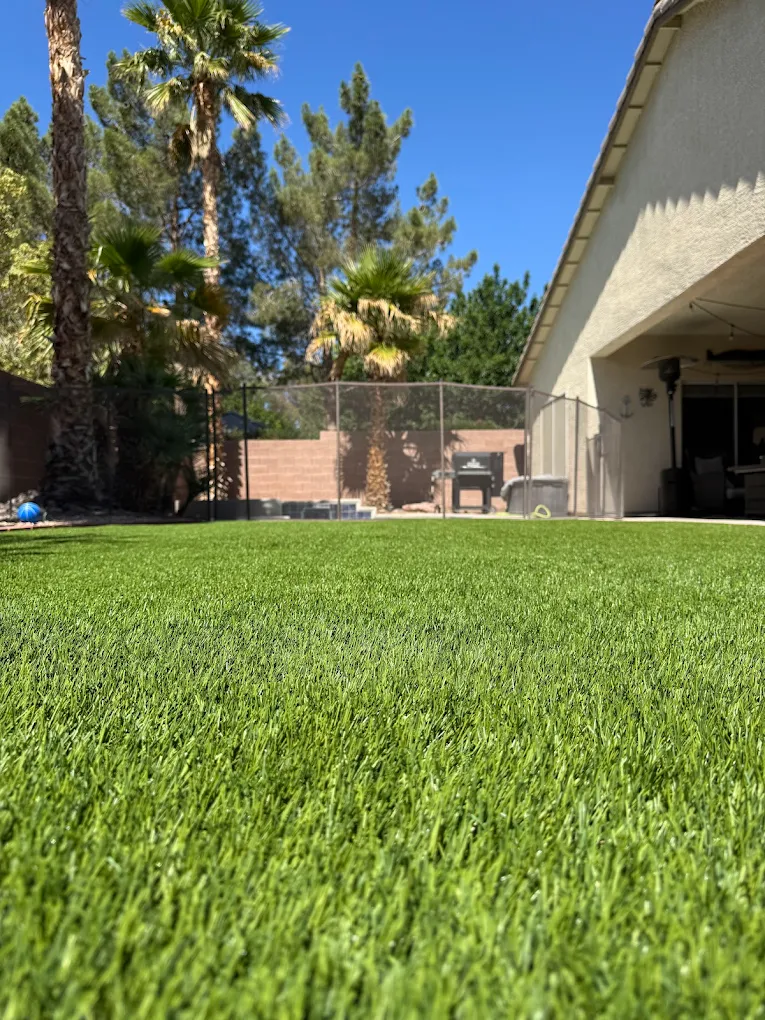
Henderson experiences two primary high-wind seasons that artificial turf installations must withstand. Spring winds from March through May regularly produce sustained speeds of 25 to 35 mph with gusts exceeding 50 to 60 mph, driven by pressure differentials between the warming desert and cooler air masses passing through the region. The second wind season coincides with monsoon storms from July through September, when outflow winds from thunderstorms can produce sudden gusts of 60 to 80 mph with almost no warning. Both wind patterns create big stress on turf installations across Summerlin, Henderson, and the entire valley.
The desert terrain surrounding Henderson amplifies wind effects on residential properties. Unlike cities surrounded by forests or varied topography that break wind flow, the flat open desert allows wind to build speed and momentum before reaching developed neighborhoods. Properties on the western edge of Summerlin, the northern reaches of Centennial Hills, and the southern portions of Enterprise face especially strong wind exposure because they sit closer to open desert with fewer structures to provide wind buffering.
Wind does not just tug at turf edges. It also carries abrasive sand and debris that scours turf surfaces, deposits material that clogs drainage, and can drive objects across the turf that cause impact damage. A comprehensive wind management strategy for Henderson artificial turf must address all three of these concerns: physical lifting and displacement, abrasive surface wear, and debris impact protection.
Types of Wind Damage to Artificial Turf
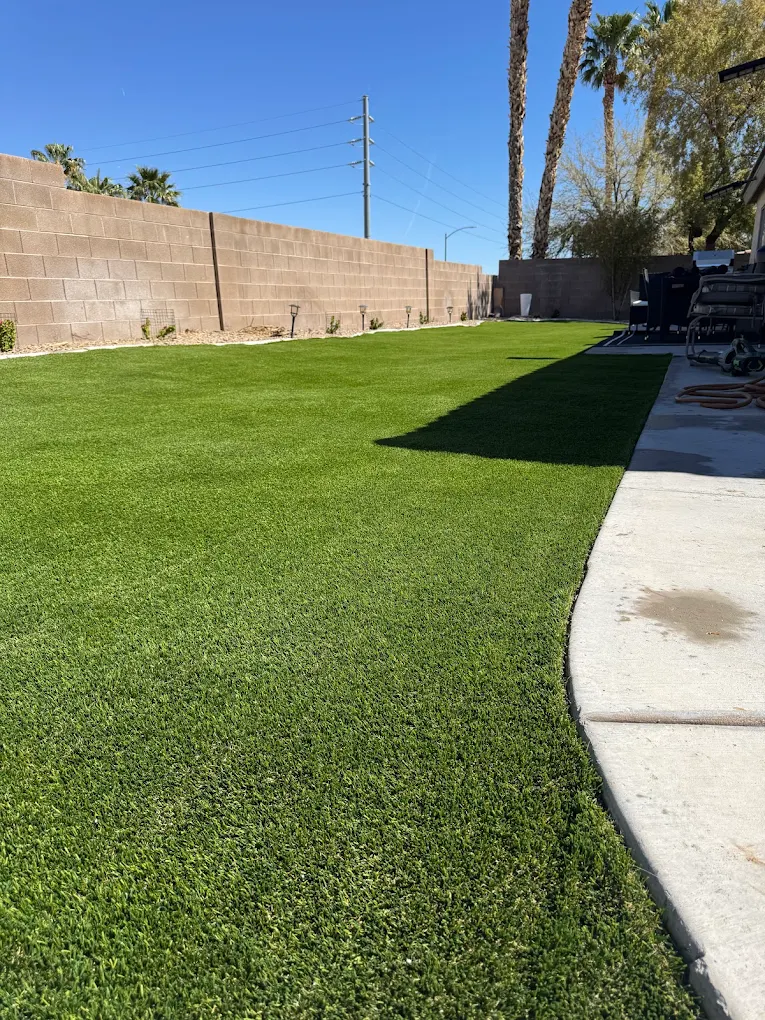
The most common wind damage to artificial turf is edge lifting, where sustained wind gets underneath the turf perimeter and progressively peels it away from the edge anchoring system. This typically starts at corners or along the windward edge of the installation and can progress rapidly once the wind finds a grip point. Properties in North Henderson and Boulder City that experience frequent directional winds often develop lifting along specific edges that face the prevailing wind direction.
Seam separation is another wind-related concern, especially in installations where seam adhesive was not applied generously or where thermal cycling has already stressed the bond. Wind creates a rippling action across the turf surface that flexes seams repeatedly, and over time this mechanical stress can work seam tape loose. Once a seam begins to separate, wind accelerates the damage by catching the open edge and applying lateral force.
- Edge lifting along windward perimeters where wind gets under the turf
- Seam separation from repeated wind-driven flexing and ripple action
- Infill displacement as strong gusts move lightweight infill material
- Surface abrasion from wind-driven sand particles scouring turf fibers
- Debris impact damage from objects blown across or onto the turf surface
Proper Anchoring Methods for Desert Wind Conditions
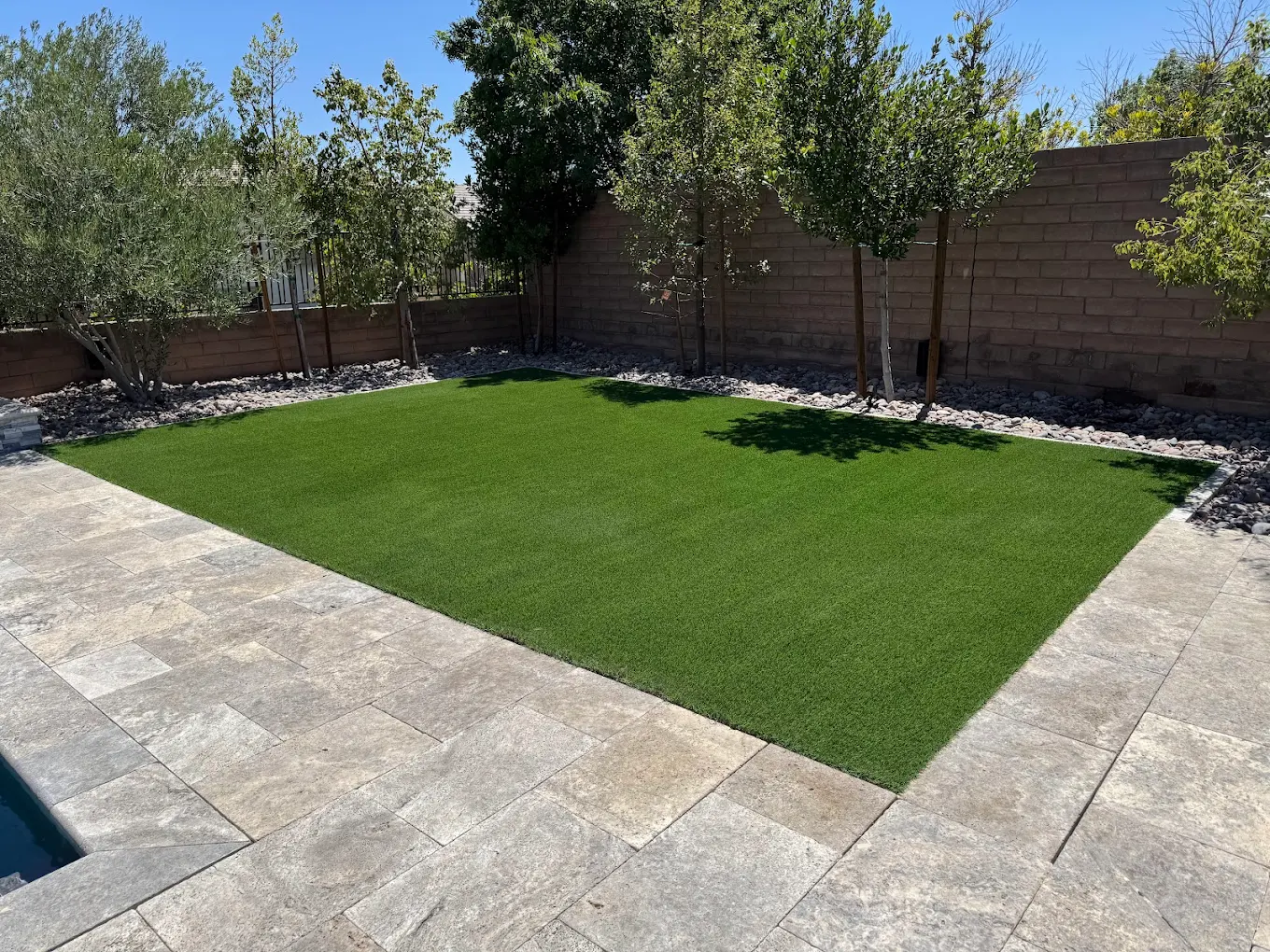
Henderson turf installations require more robust anchoring than standard specifications call for in calmer climates. Perimeter nailing should use 6-inch galvanized nails spaced no more than 3 to 4 inches apart along all edges, compared to the 6-inch spacing that may be adequate in less windy regions. Along edges facing prevailing winds, typically the western and southern exposures for most valley properties, reducing spacing to 2 to 3 inches provides additional holding power against sustained gusts.
In addition to perimeter nailing, proper edge treatment includes tucking turf into a trench cut along hardscape borders or securing it beneath a concrete or metal edge strip that clamps the turf mechanically. This belt-and-suspenders approach ensures that even if individual nails lose grip in the compacted base material, the mechanical edge restraint prevents wind from getting underneath the turf. For properties in Spring Valley and Paradise exposed to strong monsoon outflows, this dual anchoring system is considered essential by experienced local installers.
Infill weight is a critical but often overlooked component of wind resistance. Properly distributed infill adds 2 to 5 pounds per square foot to the turf surface, making it way harder for wind to lift the material. Ensuring infill is evenly distributed and maintained at the correct depth is one of the simplest and most effective wind protection measures available. After high-wind events, check infill distribution and redistribute as needed, paying special attention to areas near edges and seams.
Ask your installer to use 6-inch nails at 3-inch spacing on all exposed perimeter edges and 2-inch spacing on windward edges. This increased anchoring density costs very little extra but provides way better wind resistance for Henderson conditions.
Want Us to Handle It Instead?
Get a free quote for your Henderson property. Same-day appointments available.
Inspecting Turf After High-Wind Events
After any wind event that produces sustained winds above 40 mph or gusts above 55 mph, a systematic turf inspection helps catch developing problems before they worsen. Walk the entire perimeter of your installation checking for any lifting, pulling away, or visible nail heads that have worked loose. Pay particular attention to corners and the edges of your Henderson or Enterprise property that face the direction the wind was blowing from, as these receive the most lifting force.
Check all seams by running your hand along them and feeling for any separation or loose sections. Even a small gap in a seam that is not yet visible can become a major problem in the next wind event if not repaired promptly. Inspect the turf surface for debris damage, displaced infill, or areas where wind-driven sand has accumulated in drifts against borders or structures. Documenting any issues with photos helps track whether problems are progressing and provides useful information if you need to engage a repair professional.
Windbreak Landscaping to Protect Your Turf
Strategic windbreak landscaping reduces the wind force reaching your turf surface and can be integrated seamlessly into Henderson desert landscape designs. Block walls along the western and southern property lines provide the most effective wind protection, reducing wind speed by 50 percent or more for a distance of 5 to 10 times the wall height downwind. Most Henderson properties already have perimeter block walls, but ensuring they are solid rather than decorative openwork maximizes their wind-blocking effectiveness for turf areas in Southern Highlands and Green Valley.
For properties where additional wind protection is needed, dense desert plantings can serve as living windbreaks. Species like oleander, Texas sage, and desert willow planted in a staggered row create a natural wind filter that reduces speeds without creating the turbulence that solid barriers can produce at their top edge. These plantings also provide aesthetic benefits and wildlife habitat, complementing the clean appearance of your artificial turf installation while solving a functional problem.
Repairing Wind Damage to Artificial Turf
Minor edge lifting can often be repaired by homeowners using landscape staples or 6-inch nails to resecure the turf to the base material. Clean the edge area of any dust or debris, pull the turf back to its original position, and secure it with nails every 2 to 3 inches. For edges along hardscape, apply fresh landscape adhesive under the turf before pressing it down and weighting it with bricks or pavers while the adhesive cures. Most edge repairs in Centennial Hills and Paradise properties can be completed in under an hour with basic tools.
Seam separation requires more careful repair to ensure a durable, invisible fix. For small separations of less than 12 inches, lift both sides of the seam, clean the seam tape of old adhesive, apply fresh seam adhesive, and press the turf edges together firmly. Weight the repair with sand bags or heavy objects for 24 hours while the adhesive cures fully. Larger seam failures or multiple separations typically warrant professional repair, as improper seam work can create bumps, gaps, or weak points that fail again in the next wind event.
If wind damage is extensive or recurring, the underlying anchoring system may need upgrading rather than simple repair. A professional assessment can determine whether the original installation used adequate anchoring for Henderson wind conditions and recommend reinforcement if needed. This is especially relevant for older installations in the valley that may have been built to less rigorous standards before the industry developed desert-specific best practices.
Never attempt to repair turf during active high winds or when wind advisories are in effect. Wind can catch partially lifted turf sections and cause rapid, extensive damage. Wait for calm conditions before beginning any edge or seam repairs.