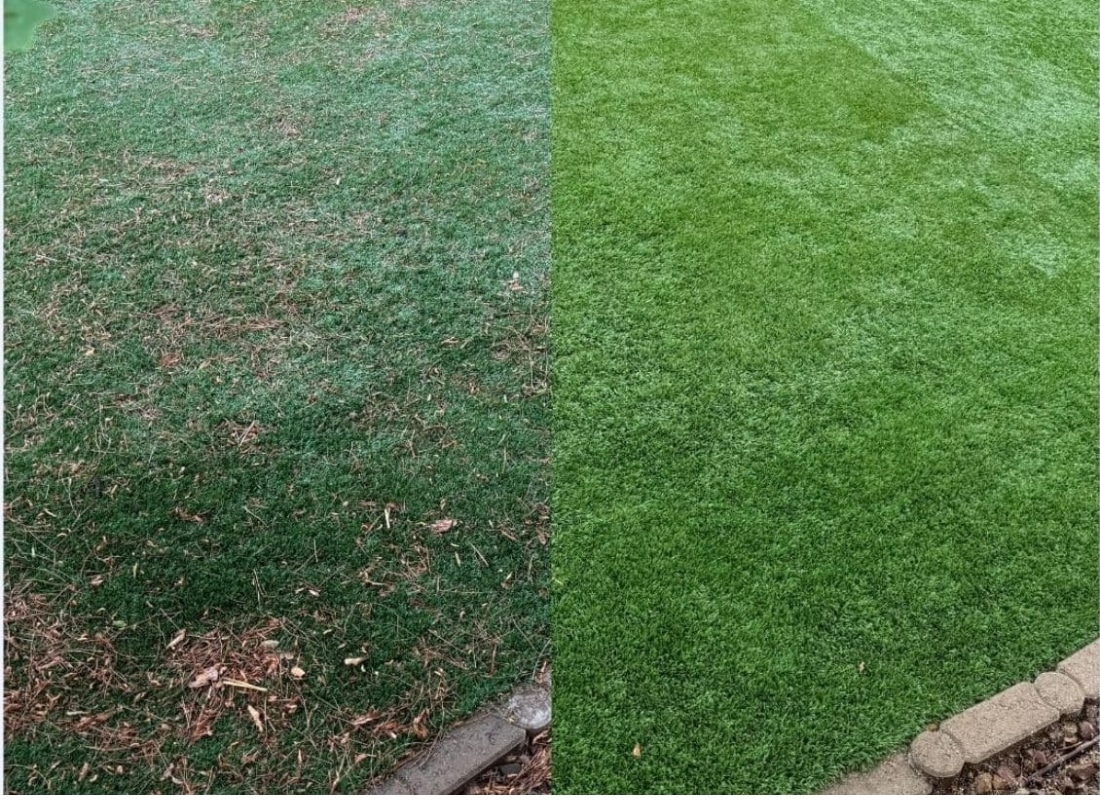
What Causes Mold Growth on Artificial Turf
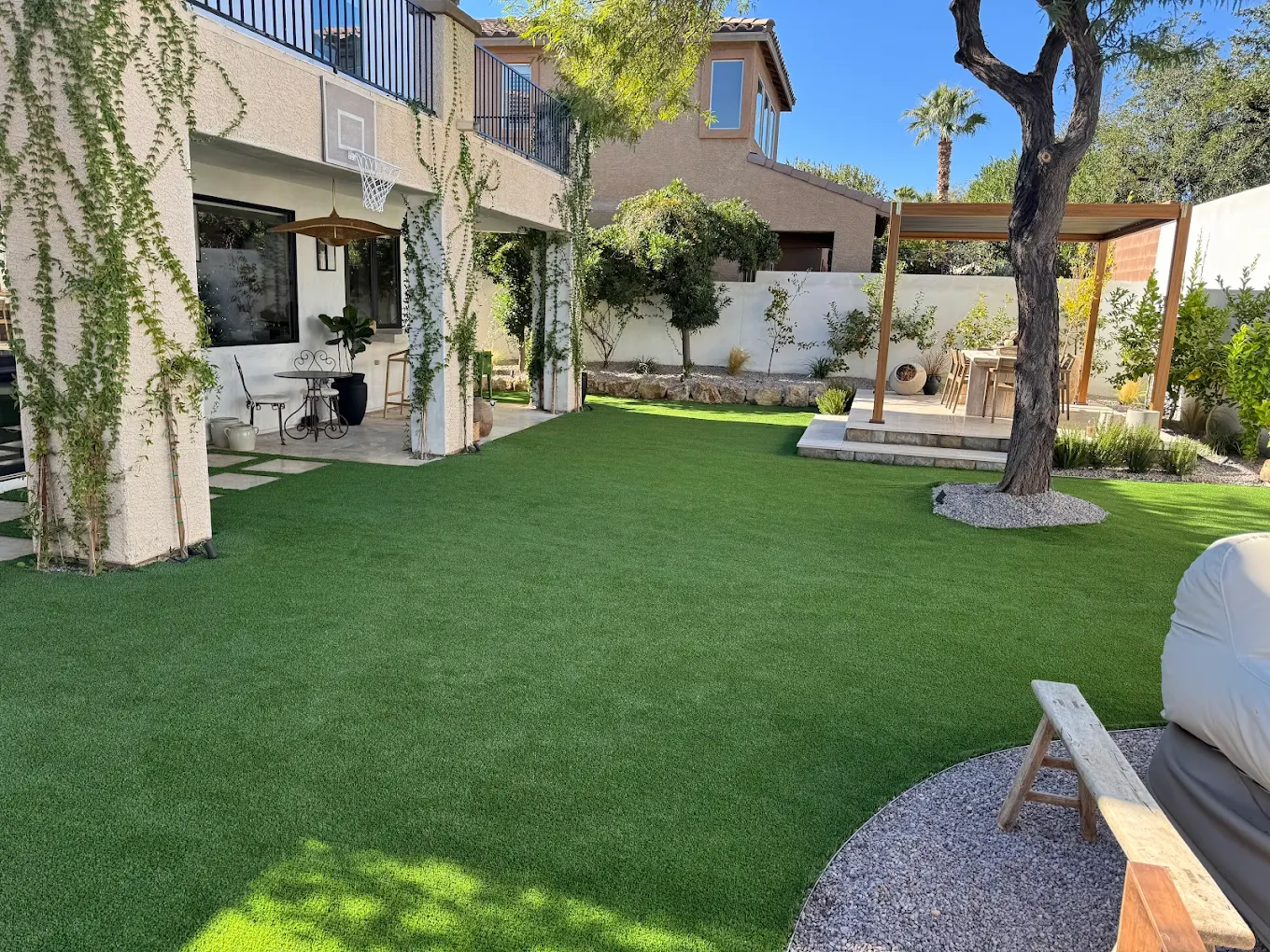
Mold on artificial turf surprises many Henderson homeowners who assume the desert climate is too dry for fungal growth. While it is true that mold is less common here than in humid regions, it absolutely occurs when the right conditions align. The three ingredients mold needs are moisture, warmth, and organic food sources, and all three can exist on poorly maintained turf even in the driest parts of Summerlin, Henderson, and the broader valley.
The moisture component in Henderson usually comes from irrigation overspray, pool splash, poor drainage trapping water in the sub-base, or condensation that forms on turf during cool winter nights and persists in shaded areas until midday. The warmth is obviously abundant, and the organic food comes from decomposing leaves, pet waste, food particles, and accumulated biological debris in the infill. When these elements converge in a shaded corner against a north-facing wall or under dense tree cover, mold can establish and spread rapidly.
The infill layer is where most mold growth actually begins, hidden beneath the visible turf surface. Organic matter that washes down through the fibers feeds fungal colonies in the warm, moist environment beneath the surface, and the mold may grow extensively before any visible signs appear on the fibers above. By the time you see surface mold in your Spring Valley or Paradise yard, the infestation is usually well established in the infill below.
Identifying Mold on Your Artificial Turf
Mold on artificial turf can appear in several forms depending on the species and conditions. Black mold shows up as dark spots or patches on the turf surface and is often found in the dampest, most shaded areas of the installation. White mold may appear as a powdery or fuzzy coating on fiber blades, particularly visible in the early morning before heat burns it back. Green mold can be difficult to distinguish from algae but tends to have a fuzzy or raised texture rather than the flat, slimy film typical of algae.
Beyond visual signs, mold often announces itself through smell before it becomes visible. A persistent musty, earthy odor coming from your turf, even after cleaning, strongly suggests mold growth in the infill layer. If you notice this smell in areas of your Centennial Hills or Enterprise turf that stay consistently shaded, investigate by parting the fibers and examining the infill surface for any discoloration, fuzzy growth, or unusual texture.
Health Risks of Mold on Artificial Turf
Mold on artificial turf is not just an aesthetic problem, it poses genuine health risks that make prompt removal important. Mold spores become airborne when disturbed by foot traffic, brushing, or wind, and inhaling these spores can trigger allergic reactions including sneezing, coughing, watery eyes, and skin irritation. For individuals with asthma, mold exposure can provoke serious respiratory episodes that require medical attention. Children and elderly family members are particularly vulnerable to mold-related health effects.
Certain mold species produce mycotoxins that can cause more serious health issues with prolonged or repeated exposure. While outdoor turf mold is generally less concentrated than indoor mold problems, the Henderson valley frequent outdoor use patterns mean that residents may spend significant time in close proximity to contaminated turf. If anyone in your household experiences unexplained allergic symptoms that worsen after time spent on or near the turf, mold should be investigated as a potential cause.
Wear a dust mask, gloves, and eye protection when cleaning mold from artificial turf. Disturbing mold colonies releases concentrated spore clouds that can cause immediate allergic reactions and respiratory irritation, even in people without chronic allergies.
Want Us to Handle It Instead?
Get a free quote for your Henderson property. Same-day appointments available.
Step-by-Step Mold Removal Process
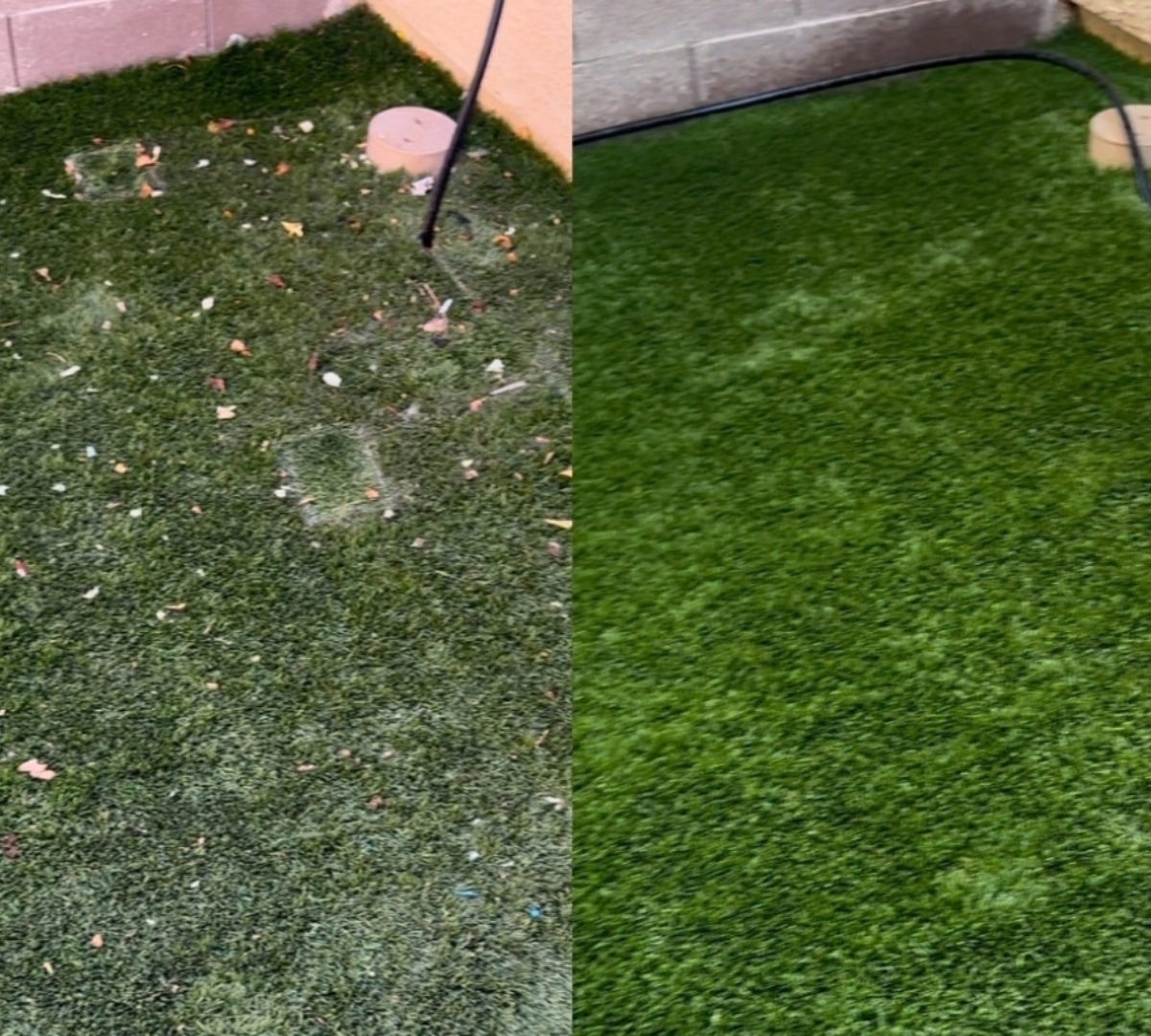
Begin mold removal by putting on protective gear: a dust mask or N95 respirator, rubber gloves, and safety glasses. Mix a cleaning solution of one cup white vinegar per gallon of water, or use a commercial turf-safe antimicrobial product. Apply the solution generously to all visible mold areas and extend at least two feet beyond the visible boundaries to catch unseen growth. Let the solution dwell for 20 to 30 minutes to penetrate into the infill where the root of the mold colony lives.
After the dwell period, scrub the treated areas vigorously with a stiff push broom, working the solution deep into the fibers and infill. Rinse the area thoroughly with clean water using a strong hose spray to flush dead mold material and contaminated infill toward drainage edges. For severe infestations in Green Valley or North Henderson homes, a second application and scrub cycle may be necessary. Check the treated area daily for a week to confirm the mold has not returned, and retreat immediately if any new growth appears.
- Wear protective equipment: mask, gloves, and eye protection
- Apply vinegar solution or turf-safe antimicrobial to affected areas plus a 2-foot buffer
- Allow 20 to 30 minutes of dwell time for solution to penetrate infill
- Scrub vigorously with a stiff synthetic-bristle push broom
- Flush the area with a strong hose spray to remove dead mold and debris
- Repeat treatment if mold reappears within one week
Treating Severe or Deep Mold Infestations
When mold has penetrated deep into the infill and established extensively beneath the turf surface, surface-level treatment alone will not eliminate the problem. Severe infestations may require partial or complete infill replacement in the affected area. This involves carefully pulling back the turf, removing contaminated infill, treating the turf backing and sub-base with an antimicrobial solution, allowing everything to dry completely, and then installing fresh infill before relaying the turf.
Professional turf cleaning services in Henderson have the equipment and expertise to perform deep mold remediation more thoroughly than most DIY efforts. Their commercial-grade antimicrobial treatments penetrate further into the turf system, and high-volume extraction equipment removes contaminated material that hand scrubbing leaves behind. For mold affecting more than about 20 square feet or recurring despite multiple treatment attempts, professional remediation is the most reliable path to complete resolution.
Preventing Mold from Returning
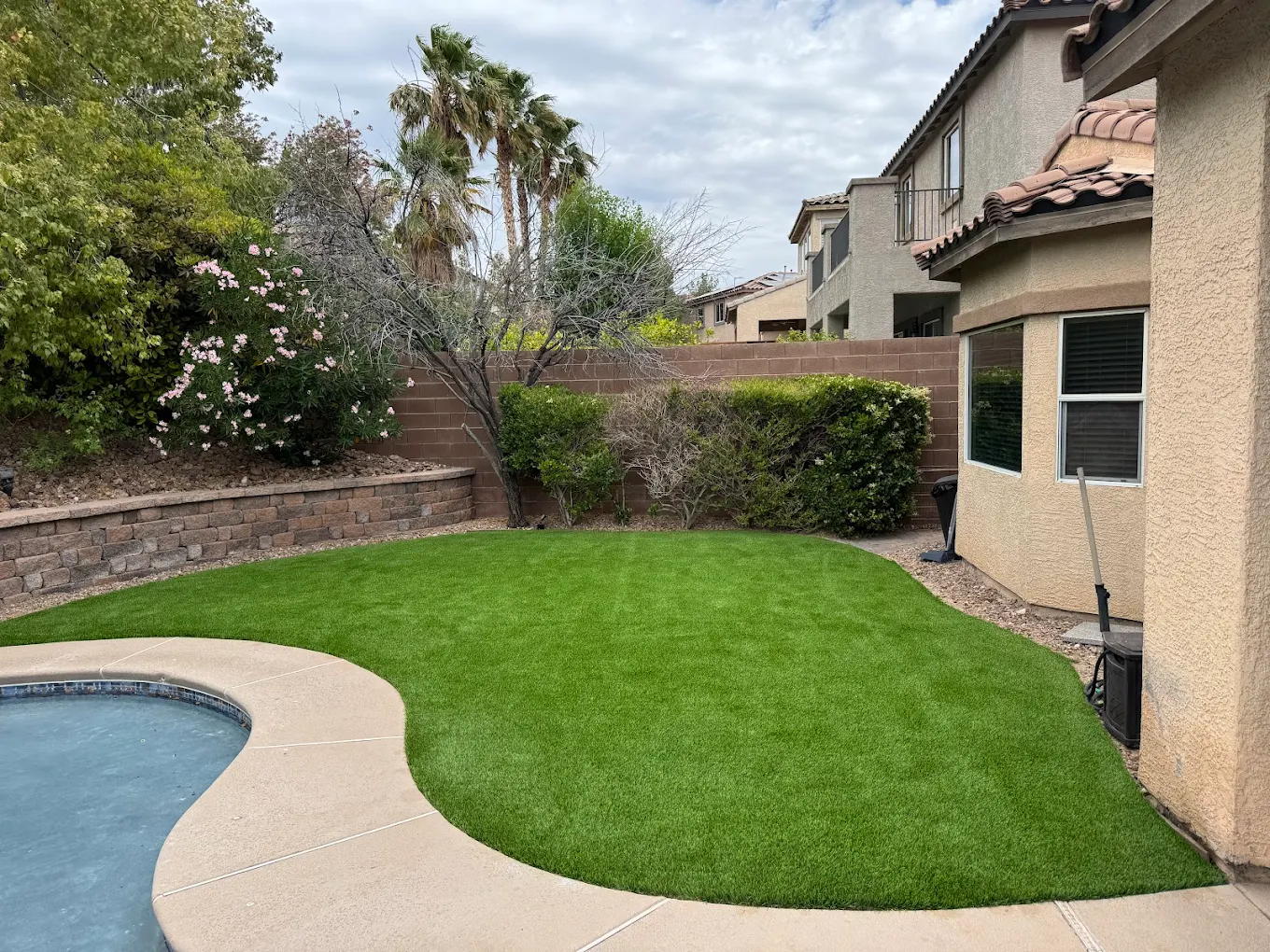
Preventing mold recurrence requires addressing the conditions that allowed it to grow in the first place. Improve drainage in problem areas so water does not linger in the infill or sub-base. Increase sunlight exposure by trimming overhanging vegetation and removing objects that create persistent shade. Adjust irrigation patterns to avoid watering turf areas, especially those that are already prone to moisture retention in shaded sections of your Southern Highlands or Boulder City property.
Regular maintenance is the ongoing defense against mold. Clean your turf every two to four weeks, promptly remove organic debris like leaves and pet waste, and flush the turf with clean water regularly to prevent organic matter from accumulating in the infill. Applying a preventive antimicrobial treatment every three to four months creates an inhospitable environment for mold spores, cutting down the likelihood of new colonies establishing between maintenance sessions.
Consider installing a drip line along the edge of shaded turf areas that connects to a diluted antimicrobial solution reservoir. Periodic low-volume applications keep mold-prone zones treated without requiring manual intervention, which is ideal for hard-to-reach areas.